
Thymosin Alpha-1 Australia: A Comprehensive Scientific Research Guide (2026)
- peptideresearchau
- 8 hours ago
- 11 min read
The precision of T-cell differentiation research depends entirely on the molecular integrity of the peptides utilized. Achieving reproducible results requires more than just a chemical sequence; it demands a compound that retains its structural stability from the laboratory synthesis to the final reconstitution. When sourcing Thymosin Alpha-1 Australia, researchers often face the dual challenge of verifying 99% purity while ensuring the peptide hasn't degraded during transit in the harsh domestic climate. You likely recognize that even a minor loss in bioactivity can skew immunomodulatory data and invalidate complex longitudinal studies.
This guide provides a rigorous technical analysis of the Thymosin Alpha-1 peptide, focusing on its specific mechanisms within Australian laboratory environments. You'll gain a clear understanding of the molecular pathways involved in T-cell maturation and the standardized protocols necessary for handling these fragile compounds. We'll examine the critical factors for maintaining stability during the Australian summer and establish a framework for identifying high-purity, research-grade sources that meet the meticulous standards of modern scientific inquiry.
Table of Contents
Molecular Biology and Origin of the Thymosin Alpha-1 Peptide
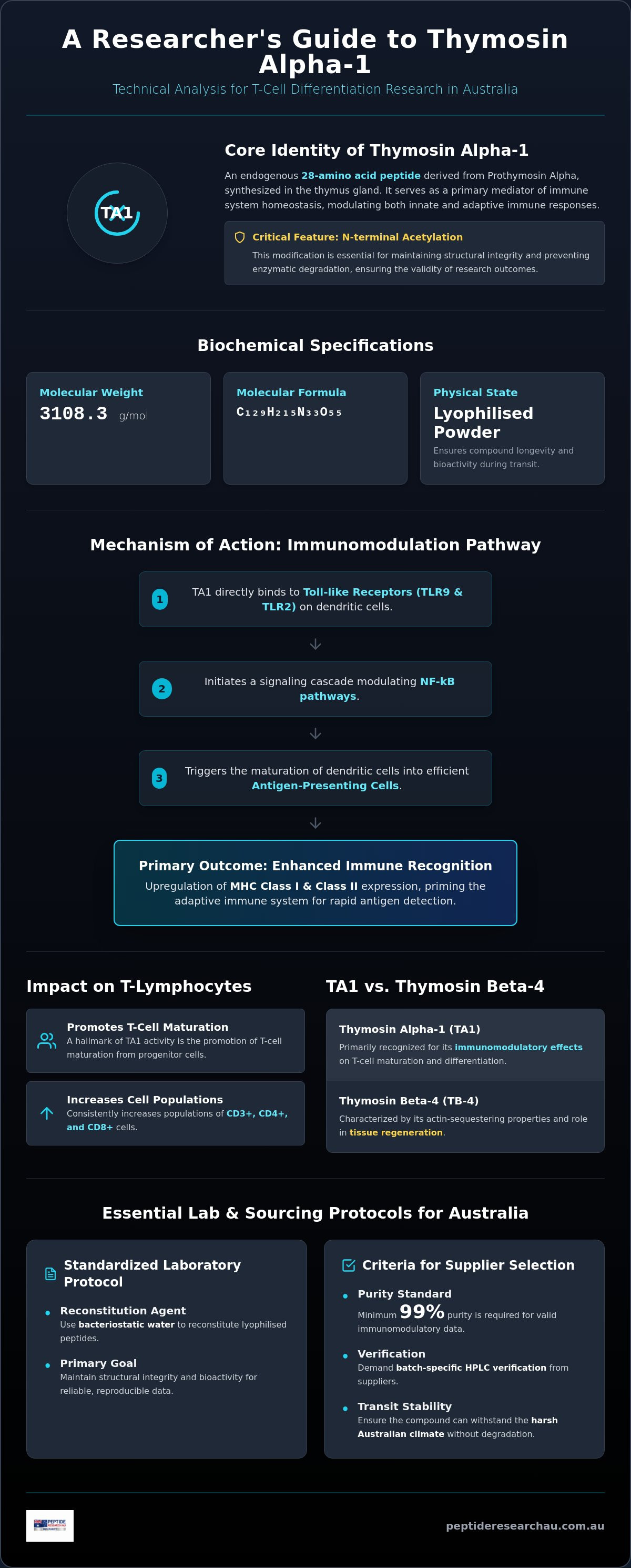
Thymosin Alpha-1 (TA1) is an endogenous 28-amino acid peptide derived from the larger precursor protein, Prothymosin Alpha. Naturally synthesized within the epithelial cells of the thymus gland, this peptide serves as a primary mediator of immune system homeostasis. TA1 is a highly conserved polypeptide that modulates innate and adaptive immune responses in laboratory models. Researchers focusing on Thymosin Alpha-1 Australia prioritize the N-terminal acetylation of the sequence, as this specific modification is essential for maintaining the structural integrity of the compound. Without this acetylation, the peptide remains highly susceptible to enzymatic degradation by exopeptidases, which would compromise the validity of in vitro and in vivo research outcomes.
Biochemical Specifications for Researchers
Precision in laboratory quantification requires strict adherence to the molecular profile of the compound. The biochemical specifications for research-grade TA1 are defined by the following parameters:
Molecular Weight: 3108.3 g/mol
Molecular Formula: C129H215N33O55
Physical State: Lyophilised powder
The linear sequence of TA1 offers distinct advantages in permeability research when compared to cyclic peptides. While cyclic structures often provide enhanced metabolic stability, the linear configuration of TA1 is required for specific receptor-ligand interactions within the Toll-like receptor (TLR) pathways. Additionally, the lyophilised powder form is the industry standard for ensuring compound longevity. This state is particularly relevant for maintaining bioactivity during transit across various Australian climate zones; environmental fluctuations could otherwise induce peptide denaturation and lead to inconsistent experimental data.
Evolution of Thymic Peptide Study
The methodology surrounding thymic research has shifted significantly from the use of crude whole-thymus extracts, such as Thymosin Fraction 5, to the utilization of synthetic, high-purity analogues. In 2026, investigators prefer synthetic Thymosin Alpha-1 Australia due to its superior reproducibility and the absence of confounding proteins found in biological extracts. This transition allows for more granular data collection regarding specific cellular pathways and signaling cascades. It's also necessary to distinguish TA1 from other thymic fragments like Thymosin Beta-4. While TA1 is primarily recognized for its immunomodulatory effects on T-cell maturation and differentiation, Thymosin Beta-4 is characterized by its actin-sequestering properties and role in tissue regeneration. These functional differences dictate their respective applications in specialized laboratory models and ensure researchers don't misattribute biological effects to the wrong peptide fragment.
Mechanism of Action: Immunomodulation and Signaling Pathways
Thymosin Alpha-1 functions as a pleiotropic biological response modifier. Its primary mechanism of action involves the direct activation of Toll-like receptors (TLRs), specifically the TLR9 and TLR2 pathways, located on the surface of myeloid and plasmacytoid dendritic cells. This binding initiates a complex signaling cascade that modulates Nuclear Factor Kappa B (NF-kB) pathways. In laboratory models utilizing Thymosin Alpha-1 Australia, this interaction triggers the maturation of dendritic cells, transforming them into highly efficient antigen-presenting cells capable of orchestrating a targeted immune response.
According to a comprehensive scientific review, the peptide's influence extends to the upregulation of Major Histocompatibility Complex (MHC) Class I and Class II expression. It's a fundamental requirement for the effective presentation of antigens to T-lymphocytes. By increasing the density of these molecules on cell surfaces, TA1 enhances the sensitivity and speed of the immune system's recognition mechanisms in research environments. This upregulation ensures that the cellular machinery is primed for antigen detection and subsequent activation of the adaptive arm of the immune system.
T-Lymphocyte Differentiation and Maturation
The promotion of T-cell maturation from progenitor cells is a hallmark of TA1 activity. Research data consistently shows an increase in the populations of CD3+, CD4+, and CD8+ cells following exposure to the peptide in studies involving Thymosin Alpha-1 Australia. This expansion is critical for researchers studying the dynamics of the adaptive immune system. TA1 also drives the production of Th1-type cytokines, including Interferon-gamma (IFN-g) and Interleukin-2 (IL-2). IFN-g is particularly vital for the activation of macrophages and the induction of MHC expression, creating a positive feedback loop that strengthens the immune response. In models of immune suppression, TA1 is often studied for its ability to restore functional immune parameters toward baseline homeostasis.
Innate Immune System Modulation
TA1 exerts significant influence over the innate immune system by enhancing the cytotoxic activity of natural killer (NK) cells and increasing the phagocytic capacity of macrophages. NK cells identify and destroy virally infected cells and tumor cells that have downregulated MHC Class I, providing a critical first line of defense that complements the adaptive response. The peptide possesses a dual-action profile that's highly valued in immunological research. In environments characterized by immune deficiency, it acts as a robust stimulator. However, in hyper-inflammatory research models, it has been shown to suppress the overproduction of pro-inflammatory cytokines. This regulatory capacity makes it a versatile tool for investigating both viral clearance and chronic inflammatory conditions. Sourcing high-purity research peptides from reliable domestic providers is essential for maintaining the precision required to observe these nuanced signaling behaviors.
Primary Research Applications in Inflammatory and Viral Models
Scientists utilize Thymosin Alpha-1 Australia to investigate a broad spectrum of pathological models within controlled laboratory settings. Its role in viral research centers on measuring the reduction of viral replication rates and the acceleration of clearance in cellular assays. In oncology models, investigators examine how TA1 enhances the anti-tumour immune response by increasing the cytotoxicity of CD8+ T-cells against malignant lineages. This research often focuses on the peptide's ability to sensitize tumours to existing experimental therapies by altering the microenvironment's immunological profile.
Another significant application involves immunosenescence research. As laboratory animals age, thymic involution leads to a decline in naive T-cell production and a general weakening of the adaptive response. Researchers use TA1 to study the potential reversal of this age-related immune decline. By monitoring markers of thymic output and the ratio of naive to memory T-cells, they can quantify the peptide's ability to maintain a youthful immune profile in aging models. This data is essential for understanding how thymic peptides influence longevity and systemic resilience.
In the context of inflammatory disorders, TA1 is used to investigate the modulation of chronic inflammatory cascades. Studies often measure the peptide's influence on the balance between pro-inflammatory and anti-inflammatory signaling molecules in autoimmune-mimicking models. Scientists look for shifts in the expression of Interleukin-10 and other regulatory cytokines to determine if the compound can dampen overactive immune responses without inducing broad systemic suppression.
Synergistic Research: TA1 and TB-500
Comparative studies often contrast the tissue repair focus of TB-500 with the immunomodulatory focus of TA1. While TB-500 is primarily researched for its role in actin-sequestering and cellular migration during wound healing, TA1 provides the necessary immune oversight to prevent secondary complications in recovery models. Combined research models allow for the study of multi-system recovery, where both structural repair and immune homeostasis are monitored simultaneously. It's vital to differentiate their mechanisms; Thymosin Alpha-1 targets T-cell maturation via TLR pathways, whereas Thymosin Beta-4 influences the cytoskeleton and angiogenesis.
Gut Health and Mucosal Immunity
Recent research explores the role of TA1 in maintaining the intestinal barrier and enhancing mucosal immunity. This line of inquiry often links to BPC-157 research for synergistic gut-immune axis studies. While BPC-157 is investigated for its angiogenic and cytoprotective effects on the gastric lining, TA1 is used to study the recruitment of intraepithelial lymphocytes and the production of secretory IgA. Researchers evaluate both oral and systemic administration routes in mucosal models to determine which method most effectively stabilizes the intestinal environment against pathogenic challenges. Sourcing high-purity Thymosin Alpha-1 Australia ensures that these sensitive mucosal assays aren't compromised by contaminants or degraded peptide fragments.
Laboratory Protocol: Reconstitution, Stability, and Storage
Maintaining the structural integrity of Thymosin Alpha-1 Australia requires strict adherence to laboratory handling protocols. The 28-amino acid chain is inherently fragile. Mechanical stress or thermal fluctuations can lead to peptide denaturation, rendering the research compound inert for experimental use. Precision begins with the environment; researchers must ensure all surfaces are sterile and all diluents are at the appropriate temperature before beginning the reconstitution process.
Step-by-Step Reconstitution Protocol
The primary diluent for research-grade TA1 is bacteriostatic water, which contains 0.9% benzyl alcohol to inhibit bacterial growth. This is essential for multi-use vials. To reconstitute, first clean the rubber stopper with an antiseptic wipe. When introducing the diluent, use the side-wall technique. Aim the needle at the glass wall of the vial rather than directly onto the lyophilised powder. This prevents the mechanical degradation of the peptide bonds caused by high-pressure impact. Allow the liquid to flow down slowly and swirl the vial gently until the solution is clear. Never shake the vial. Calculating the final concentration is a function of the total milligram (mg) mass and the volume of diluent added. For instance, adding 2mL of bacteriostatic water to a 10mg vial results in a concentration of 5mg/mL. You can find high-quality laboratory diluents and research compounds through specialized domestic providers.
Storage and Stability in the Australian Climate
Compound stability is a critical variable, particularly when managing Thymosin Alpha-1 Australia during the summer months. Lyophilised powder should be stored in a freezer at temperatures between -20°C and -80°C for long-term preservation. In this state, the peptide can remain stable for several years. However, once the compound is reconstituted, its shelf life decreases significantly. Exposure to UV light and ambient heat exceeding 25°C can trigger rapid denaturing. During transit across Australia, researchers should confirm that suppliers use temperature-controlled packaging or expedited shipping to mitigate these environmental risks. Any cloudiness or particulate matter in the solution after reconstitution indicates a loss of integrity, and the batch should be discarded to maintain experimental accuracy. Follow these temperature requirements strictly:
Lyophilised Powder (Long-term): -20°C to -80°C
Reconstituted Solution (Short-term): 2°C to 8°C
Avoidance: Direct UV light and temperatures exceeding 25°C
Reconstituted TA1 must be refrigerated and ideally used within 8 to 14 days for optimal bioactivity. Maintaining a consistent cold chain from the point of domestic dispatch to the laboratory freezer is the only way to ensure that the molecular pathways being studied are influenced by an active polypeptide rather than degraded fragments.
Sourcing High-Purity Thymosin Alpha-1 in Australia
Procuring Thymosin Alpha-1 Australia for laboratory use requires a meticulous evaluation of supplier standards. In 2026, the Therapeutic Goods Administration (TGA) has intensified its focus on the compliance of unapproved peptides, emphasizing that these compounds must be strictly designated for "laboratory research use only." For researchers, this means sourcing from entities that prioritize chemical transparency and regulatory adherence. Domestic sourcing is particularly critical because it minimizes the duration that temperature-sensitive polypeptides spend in transit, thereby preserving the cold chain integrity established during manufacturing.
Analytical verification is the only objective measure of compound quality. High-Performance Liquid Chromatography (HPLC) is utilized to determine the chemical purity of the peptide, ensuring that the final product is free from synthesis byproducts or truncated sequences. Complementary to this, Mass Spectrometry (MS) confirms the exact molecular mass, verifying that the 28-amino acid sequence matches the theoretical profile. Without these dual verification steps, researchers risk introducing significant variables into their immunomodulatory models, which can lead to non-reproducible data.
Quality Control and Purity Standards
The laboratory gold standard for research peptides is a purity level of 99% or higher. Even a minor variance in purity can represent significant quantities of unknown impurities that may interfere with delicate T-cell assays or cellular signaling pathways. It's essential to demand batch-specific Certificates of Analysis (CoA) rather than generic documents. Peptide Research AU ensures rigorous testing protocols by providing HPLC and MS data for every batch, allowing investigators to proceed with confidence in their molecular data. This level of scrutiny eliminates the ambiguity often associated with international imports that may bypass stringent Australian quality controls.
Logistics and Research Support
Efficiency in logistics is paramount for maintaining the bioactivity of fragile compounds. Express Australian shipping ensures that temperature-sensitive peptides reach their destination within minimal timeframes, reducing the risk of thermal denaturing in transit to remote locations or during peak summer months. Beyond the peptides themselves, a comprehensive research setup requires access to high-quality laboratory diluents. Sourcing bacteriostatic water from the same domestic provider streamlines the procurement process and ensures chemical compatibility between the solvent and the solute. As the landscape of Australian peptide research evolves, the integration of high-purity compounds with standardized handling protocols will remain the foundation for reproducible scientific discovery in 2026.
Advancing Immunological Research Standards
The role of Thymosin Alpha-1 in modern immunology is defined by its ability to modulate complex signaling pathways with surgical precision. Successful research outcomes depend on the molecular integrity of the compound and the rigorous application of handling protocols. By understanding the specific mechanisms of T-cell differentiation and adhering to strict reconstitution standards, researchers can ensure the validity of their experimental data. These variables are fundamental to achieving reproducible results in both viral and inflammatory models.
Sourcing Thymosin Alpha-1 Australia requires a commitment to quality that matches the complexity of the research itself. Maintaining the cold chain and verifying chemical purity through HPLC and Mass Spectrometry testing are non-negotiable steps for any professional laboratory. You can secure high-purity Thymosin Alpha-1 for your research at Peptide Research AU; we provide 99%+ purity verified compounds and express domestic shipping across Australia. Our specialized laboratory-grade research compounds are designed to support the highest standards of scientific inquiry. It's our mission to provide the reliable materials necessary for your next breakthrough in wellbeing research.
Frequently Asked Questions
Is Thymosin Alpha-1 legal in Australia for research purposes?
Thymosin Alpha-1 is legal in Australia strictly for laboratory research use only. It isn't listed on the Australian Register of Therapeutic Goods (ARTG) for human consumption or therapeutic use. In 2026, the TGA maintains rigorous oversight of unapproved peptides, making compliance a high priority for the industry. Researchers must ensure all compounds are utilized within a controlled laboratory framework to maintain adherence to domestic regulations and safety standards.
What is the recommended diluent for TA1 reconstitution?
Bacteriostatic water is the standard diluent for reconstituting Thymosin Alpha-1 in a laboratory setting. This diluent contains 0.9% benzyl alcohol, which acts as a preservative to inhibit bacterial growth in multi-use vials. Sterile saline is a secondary alternative for single-dose applications, but it doesn't provide the long-term antimicrobial protection required for extended storage of reconstituted compounds between 2°C and 8°C.
How does Thymosin Alpha-1 differ from Thymosin Beta-4 (TB-500)?
TA1 and TB-500 differ fundamentally in their biological functions and molecular targets. Thymosin Alpha-1 is an immunomodulator that promotes T-cell maturation through Toll-like receptor signaling. In contrast, TB-500 is a regenerative peptide that influences actin-sequestering and wound healing. While TA1 focuses on immune homeostasis, TB-500 is utilized to study tissue repair and angiogenesis in various injury models.
Can Thymosin Alpha-1 be stored at room temperature during transit?
Lyophilised Thymosin Alpha-1 Australia shouldn't be exposed to ambient temperatures for prolonged periods. While the powder form is relatively stable, heat exceeding 25°C can trigger structural degradation and loss of bioactivity. Maintaining a cold chain is essential for research integrity. Domestic sourcing reduces the transit window, which is vital during the Australian summer to prevent the polypeptide from denaturing before it reaches the laboratory freezer.
What are the primary molecular targets of TA1 in lab models?
The primary molecular targets of TA1 are Toll-like receptors TLR9 and TLR2. These receptors are located on dendritic cells and serve as the entry point for the peptide's immunomodulatory cascade. Binding to these targets triggers the modulation of the NF-kB pathway and the upregulation of MHC molecules. This process is central to studying the maturation of the adaptive immune system in laboratory environments.
What is the typical concentration for TA1 in immunological research?
Typical concentrations for TA1 in immunological research often range between 2mg/mL and 5mg/mL. For a standard 10mg vial, adding 2mL of bacteriostatic water creates a 5mg/mL solution. Researchers must determine the precise concentration required for their specific in vitro or in vivo models. Accurate concentration calculations are necessary to ensure that the dosage delivered to the model is consistent across all experimental groups.
How does TA1 interact with Toll-like receptors (TLRs)?
TA1 interacts with Toll-like receptors by acting as a direct ligand for TLR9 and TLR2. This interaction stimulates the myeloid differentiation primary response gene 88 (MyD88) pathway. The resulting signal leads to the maturation of antigen-presenting cells and the secretion of Th1 cytokines like IFN-g. This mechanism is the primary focus for researchers investigating how the peptide restores immune function in suppressed or compromised models.
Does Thymosin Alpha-1 have any melanotropic (tanning) effects?
Thymosin Alpha-1 doesn't produce any melanotropic or tanning effects. Its molecular structure and signaling pathways are entirely distinct from melanocortin peptides like Melanotan II. TA1 research is focused exclusively on immunomodulation and T-cell maturation. It doesn't interact with the melanocortin receptors responsible for melanin production or skin pigmentation changes in any research models.


Comments