
Semaglutide for Research Purposes in Australia: A 2026 Scientific Overview
- peptideresearchau
- Jul 5
- 11 min read
The distinction between a clinical pharmaceutical and a precision biochemical reagent is often the difference between a reproducible trial and a compromised dataset. As the Therapeutic Goods Administration (TGA) scales up its 2026 compliance priorities to include unapproved peptide products, the protocol for sourcing semaglutide for research purposes australia has become more demanding. Researchers must now navigate an environment where the ban on compounded GLP-1 agonists and heightened scrutiny on importation require absolute clarity on reagent provenance.
You understand that maintaining the integrity of a longitudinal study depends on the analytical purity of your compounds. This guide provides a comprehensive technical overview of semaglutide's molecular mechanisms, laboratory handling protocols, and the specific regulatory requirements governing its use in professional research settings. We will examine the essential criteria for HPLC-verified purity, discuss the 2026 TGA standards for unapproved goods, and establish a framework for identifying reliable Australian suppliers of laboratory-grade materials.
Table of Contents
Defining Semaglutide as a Biochemical Research Tool
Semaglutide is a potent, long-acting glucagon-like peptide-1 (GLP-1) receptor agonist. In a laboratory setting, it serves as a critical biochemical tool for investigating metabolic signaling, cellular pathways, and potential neuroprotective mechanisms. Unlike clinical preparations intended for human administration, semaglutide for research purposes australia is typically supplied as a highly purified, lyophilised powder. This physical state allows for precise mass measurements and specific concentration adjustments required for in vitro and in vivo experimental designs.
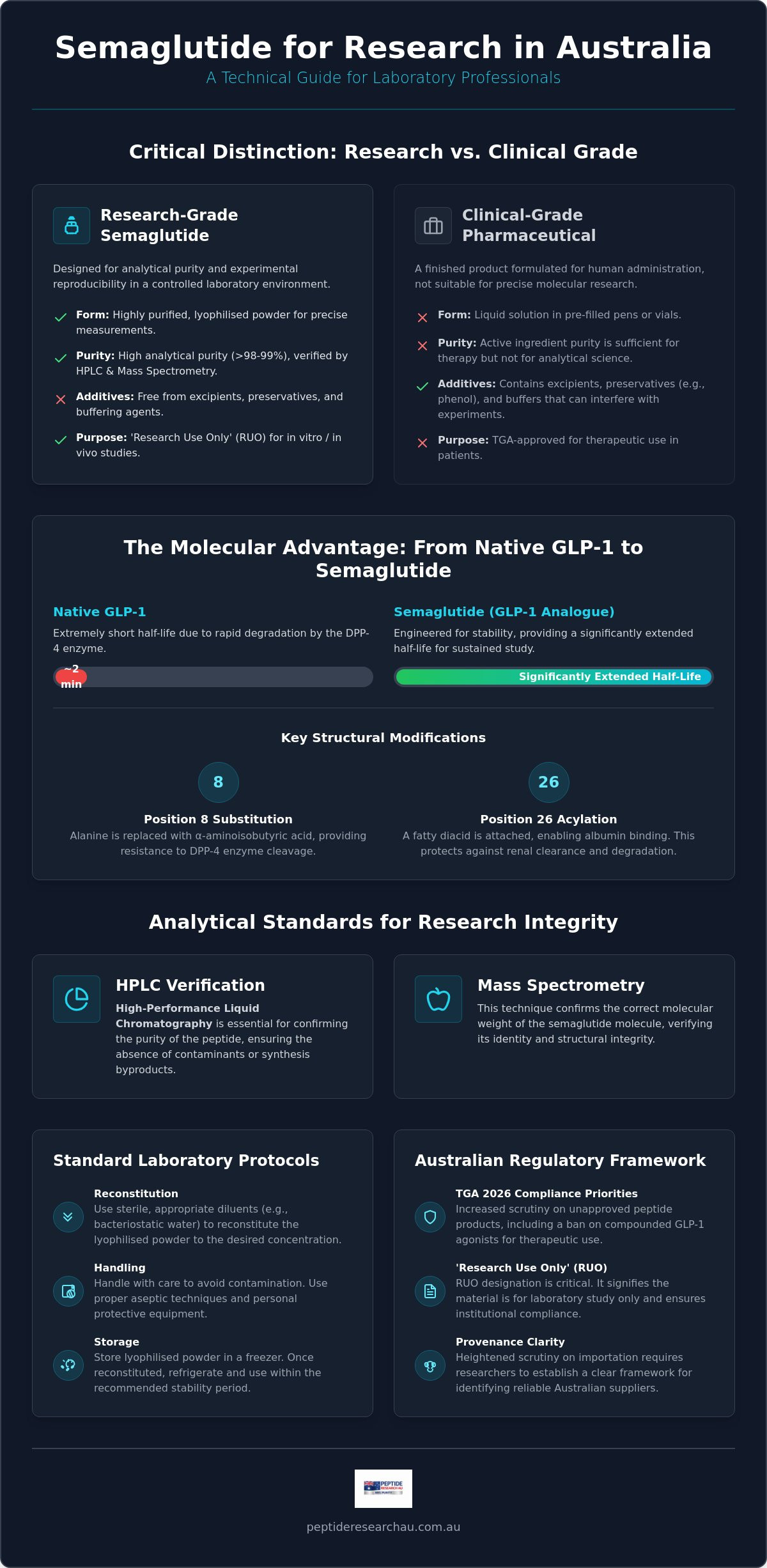
The molecule consists of a 31-amino acid sequence. Its primary structure is modified at position 8 by substituting alanine with alpha-aminoisobutyric acid. A 16-carbon fatty diacid is also attached to the lysine at position 26 via a spacer. These specific chemical modifications are essential for its stability and functional profile. For a broader context on its development and chemical properties, researchers may refer to this Semaglutide Overview.
The Molecular Evolution of GLP-1 Analogues
Native GLP-1 has an extremely short half-life of approximately two minutes due to rapid degradation by the enzyme dipeptidyl peptidase-4 (DPP-4). The evolution of the semaglutide molecule addressed these limitations through targeted structural engineering. The substitution at position 8 provides direct resistance to DPP-4 cleavage. Additionally, the fatty acid acylation facilitates high-affinity binding to albumin. This reversible binding protects the peptide from renal clearance and enzymatic breakdown, extending its half-life significantly and allowing for sustained molecular study.
Research-Grade vs. Clinical Grade: Key Differences
When sourcing semaglutide for research purposes australia, laboratory managers must prioritize analytical purity over pharmaceutical convenience. It's vital for investigators to distinguish between clinical products and Research Use Only (RUO) compounds. Clinical formulations contain various excipients, preservatives, and buffering agents designed for physiological stability and patient safety. These additives can interfere with analytical assays or introduce confounding variables in molecular study.
In contrast, research-grade semaglutide is provided as a salt-free or acetate-salt lyophilised powder. This format ensures:
The absence of phenolic preservatives that might alter cell viability or enzymatic activity.
Consistent molar concentrations for precise dosing in rodent models or cell cultures.
Compatibility with a wide range of laboratory diluents and specialized buffers.
The RUO designation in Australia signifies that the compound is intended strictly for laboratory exploration. This distinction is particularly relevant following the 2026 TGA compliance updates, which prioritize the regulation of unapproved peptide products. Research compounds haven't undergone the specific clinical finishing processes required for therapeutic use, making them the superior choice for establishing reproducible, high-fidelity data in controlled environments.
Current Directions in Semaglutide Metabolic and Neuroprotective Research
Scientific inquiry into GLP-1 receptor agonists has expanded significantly beyond the scope of glycemic regulation. Current laboratory studies utilize semaglutide for research purposes australia to investigate systemic physiological responses in multi-organ models. Researchers are particularly focused on how these compounds modulate cellular signaling in tissues where GLP-1 receptor expression was previously under-mapped, such as the kidneys, heart, and specific regions of the central nervous system. These studies require high-purity reagents to ensure that observed biological changes are attributable to the peptide sequence rather than contaminants.
Investigation into endothelial function and vascular inflammation represents a growing field of study. By examining GLP-1 receptor expression in peripheral tissues, scientists are uncovering how semaglutide influences nitric oxide production and oxidative stress markers. This research is foundational for understanding the compound's potential role in cardiovascular inflammatory models. For researchers establishing these protocols, sourcing consistent research compounds is essential for longitudinal data integrity.
Metabolic Pathway Mapping and Insulin Signaling
In rodent models of metabolic dysfunction, semaglutide is a primary tool for studying beta-cell preservation and proliferation. Investigators use the peptide to map the intracellular pathways that lead to enhanced insulin sensitivity and reduced hepatic glucose production. There's also a significant focus on non-alcoholic steatohepatitis (NASH) research, where the compound is evaluated for its impact on liver fat accumulation and fibrotic markers. Many of these metabolic studies explore the biological synergy between semaglutide and other peptides to determine if multi-peptide complexes offer distinct signaling advantages over monotherapy.
Neuroprotective Potential in Laboratory Models
The ability of semaglutide to cross the blood-brain barrier in laboratory subjects has opened new avenues for neurobiological research. Current studies in Alzheimer's and Parkinson's disease models focus on the peptide's capacity to reduce the expression of pro-inflammatory cytokines in glial cells. By modulating these neuroinflammatory pathways, researchers aim to observe changes in neuronal viability and synaptic plasticity. This work is often performed in vitro using primary glial cell cultures to monitor real-time changes in cytokine secretion.
When designing these neuroprotective or metabolic experiments, investigators must remain updated on the Australian Regulations for Compounded Semaglutide. Adhering to these standards ensures that laboratory reagents meet the necessary safety and quality benchmarks for professional study. The precision of these models depends heavily on the use of lyophilised compounds that lack the stabilizers found in clinical formulations, which can otherwise interfere with sensitive neurobiological assays.
Analytical Standards: Purity and Quality Control in 2026
The integrity of experimental outcomes depends on the molecular precision of the reagents used. When procuring semaglutide for research purposes australia, investigators must demand comprehensive analytical validation to ensure data reproducibility. High-Performance Liquid Chromatography (HPLC) is the primary methodology for quantifying the purity of the peptide sequence, while Mass Spectrometry (MS) serves as the gold standard for molecular weight confirmation. These tests ensure the synthesized peptide matches the target 31-amino acid sequence exactly.
Reagents with purity levels below 98% introduce unacceptable risks of confounding variables. Residual solvents, truncated peptide fragments, or synthesis byproducts can trigger unintended cellular responses that skew results. While The Royal Australian College of General Practitioners on semaglutide provides valuable context on the clinical shortages and health implications in Australia, researchers face distinct challenges regarding reagent quality that clinical practitioners don't encounter.
A Certificate of Analysis (COA) should be scrutinised for batch-specific data rather than generic template values. Scrutinising a COA involves more than checking a single percentage; investigators should look for clear chromatograms and mass spectra graphs rather than simple text summaries. The document must include the date of testing, the batch number, and the specific methodology used. This level of detail is critical for institutional compliance and ensures that the laboratory reagents meet international standards for scientific study.
The Role of HPLC in Peptide Verification
HPLC operates by separating individual components within a mixture based on their chemical properties as they pass through a stationary phase under high pressure. This process effectively isolates the target semaglutide sequence from synthesis byproducts. The resulting purity percentage represents the relative area of the main peak on the chromatogram. HPLC is the primary tool for ensuring reagent consistency across multiple experimental batches. Without this verification, researchers can't be certain of the concentration or the chemical identity of their sample.
Identifying Reliable Research Suppliers in Australia
Domestic sourcing is often preferred to maintain cold-chain integrity during transit. International shipments are frequently subject to temperature fluctuations and customs delays that can degrade lyophilised peptides. Reputable Australian peptide laboratories maintain transparency by providing accessible, batch-specific analytical data. Researchers can refer to Peptide Research AU's purity standards as a benchmark for evaluating domestic quality control protocols. High-quality suppliers will always provide the underlying data that supports their purity claims.
Laboratory Protocols: Reconstitution, Storage, and Handling
Maintaining the molecular integrity of semaglutide for research purposes australia requires strict adherence to aseptic techniques and precise handling. Lyophilised peptides are structurally fragile. The delicate bonds between amino acids can easily break if the compound is exposed to excessive heat or vigorous agitation. Researchers must establish a standardized workflow for reconstitution to ensure every experimental aliquot maintains its intended potency. Any deviation from these standards can lead to peptide denaturation, which compromises the validity of your molecular study.
Selection of the correct diluent is the first step in this process. While sterile saline is suitable for immediate use, bacteriostatic water is the preferred choice for multi-use vials due to its antimicrobial properties. This diluent contains 0.9% benzyl alcohol, which inhibits bacterial growth and extends the stability of the reconstituted peptide during refrigerated storage. Using the appropriate diluent ensures that the biochemical properties of the compound remain consistent over the duration of the trial.
The Reconstitution Protocol for Researchers
To reconstitute a 5mg vial of semaglutide to a concentration of 2.5mg/mL, an investigator must carefully introduce 2mL of diluent. The 'slow-drip' method is essential for preserving the peptide sequence. This involves aiming the needle at the inner wall of the vial, allowing the liquid to trickle down slowly into the powder. You should never spray the diluent directly onto the lyophilised cake, as the resulting mechanical force can cause immediate degradation. Once the liquid is added, gently swirl the vial until the solution is clear. Never shake the vial; mechanical shear forces are a primary cause of denaturation. Reconstituted semaglutide should be stored at 2 to 8 degrees Celsius and typically remains stable for up to 28 days if handled correctly.
Storage and Stability Considerations
Long-term storage protocols depend on the physical state of the compound. Lyophilised semaglutide for research purposes australia is most stable when stored in a freezer at -20 degrees Celsius. For studies spanning several months, -80 degrees Celsius is recommended to prevent any gradual degradation of the peptide sequence. It's critical to avoid multiple freeze-thaw cycles. Each cycle introduces ice crystal formation that can physically shear the peptide bonds, leading to a loss of biological activity.
Investigators should aliquot the reconstituted solution into single-use volumes if the entire vial won't be used immediately. Additionally, semaglutide is light-sensitive. Storing vials in amber containers or wrapping them in foil protects the molecular structure from photodegradation. To ensure your laboratory is equipped with the necessary tools for these protocols, you can order laboratory diluents designed for peptide stability. Proper storage and handling aren't just about preservation; they're about ensuring the fidelity of every data point generated in your study.
Navigating Australian Regulations for Research Compounds
Possessing and utilizing semaglutide for research purposes australia requires a clear understanding of the boundary between clinical medicine and laboratory reagents. The Therapeutic Goods Act primarily governs substances intended for human therapeutic use. Research compounds designated as 'Research Use Only' (RUO) fall outside the scope of the Australian Register of Therapeutic Goods (ARTG) because they aren't intended for clinical administration. Investigators must maintain this distinction through rigorous institutional protocols and by ensuring that these materials never enter the clinical supply chain.
The 2026 regulatory landscape has seen the TGA increase its focus on the importation and advertising of unapproved peptides. For researchers, this means that the provenance of laboratory materials is under higher scrutiny. Institutional compliance hinges on demonstrating that the acquisition of semaglutide is strictly for documented in vitro or in vivo experimental designs. Maintaining detailed logs of compound usage and disposal is essential for satisfying both state health regulations and institutional ethics requirements.
Compliance for Australian Research Institutions
Laboratories handling metabolic research compounds must provide comprehensive documentation that justifies the use of the substance in a specific trial. This documentation includes a clear experimental hypothesis and a protocol for the ethical treatment of animal models. Sourcing from established peptides Australia providers ensures that the materials come with the necessary analytical verification required for institutional audits. Ethical considerations in 2026 also emphasize the use of high-purity reagents to minimize animal cohort sizes and ensure that results are statistically significant without the interference of synthesis impurities.
Conclusion: Sourcing Quality for Scientific Progress
The validity of scientific findings is inextricably linked to reagent purity. As established in the analytical standards discussed earlier, the molecular precision of your compound determines the reproducibility of your data. While this guide has focused on semaglutide, researchers often utilize high-purity compounds like BPC-157 for comparative studies in tissue repair and inflammatory signaling. Ensuring your laboratory adheres to the highest analytical standards is the only way to advance scientific progress reliably. For investigators seeking consistent, HPLC-verified materials, source your laboratory-grade compounds from Peptide Research AU.
Advancing Metabolic Science with Analytical Precision
The success of biochemical investigation depends entirely on the molecular quality of the reagents employed. As established in this overview, maintaining the structural integrity of semaglutide for research purposes australia requires a combination of rigorous laboratory protocols and verified analytical purity. High-Performance Liquid Chromatography (HPLC) and Mass Spectrometry (MS) remain the only reliable methods to ensure that your peptide sequence is free from confounding synthesis byproducts. Adhering to these stringent standards allows researchers to generate high-fidelity data that can withstand the scrutiny of professional peer review.
It's a strategic choice to source from a domestic provider to protect your trial's essential cold-chain requirements. Domestic shipping significantly minimizes the degradation risks associated with international transit and customs delays. Every compound provided is laboratory-grade and strictly for research use, ensuring your project remains compliant with the 2026 TGA regulatory framework. You can secure high-purity compounds for your next project at Peptide Research AU and benefit from HPLC/MS verified quality. Precision in the laboratory is the foundation of every scientific breakthrough.
Frequently Asked Questions
Is semaglutide legal for research purposes in Australia?
Semaglutide is legal for laboratory study in Australia when classified as a "Research Use Only" reagent. While it's a Schedule 4 substance in a clinical context, researchers utilize it in pre-clinical settings under institutional compliance. It's essential to distinguish these compounds from prescription medications to ensure regulatory adherence within the 2026 TGA framework.
What is the difference between research-grade semaglutide and Ozempic?
The primary difference lies in the formulation and intended application. Ozempic is a finished pharmaceutical product containing preservatives like phenol and buffering agents designed for human injection. Research-grade semaglutide is a lyophilised peptide powder, free from excipients, which allows for the precise concentration control required in molecular assays.
How should semaglutide be stored in a laboratory setting?
Lyophilised semaglutide should be stored at -20 degrees Celsius for short-term use or -80 degrees Celsius for long-term stability. Once reconstituted, the solution must be kept under refrigeration at 2 to 8 degrees Celsius. Vials should be protected from light and kept away from heat to prevent the degradation of the peptide bonds.
What is the recommended diluent for semaglutide reconstitution?
Bacteriostatic water is the preferred diluent for research applications involving multi-use vials. The 0.9% benzyl alcohol content acts as an antimicrobial agent, extending the stability of the peptide during refrigerated storage. Sterile saline is an alternative for immediate use but doesn't offer the same protection against microbial growth over time.
Why is HPLC testing critical for research semaglutide?
HPLC testing is critical because it identifies truncated peptide sequences and residual solvents that could skew experimental results. When sourcing semaglutide for research purposes australia, investigators rely on HPLC chromatograms to confirm analytical purity. This verification ensures that observed biological effects are solely attributable to the target peptide sequence rather than synthesis byproducts.
Can semaglutide for research purposes be used in human subjects?
No, research-grade semaglutide is strictly prohibited for human or animal consumption. These compounds are synthesized for laboratory exploration only and haven't undergone the clinical finishing processes required for human safety. Unauthorized use in human subjects violates both ethical standards and TGA regulations regarding the supply of unapproved therapeutic goods.
How do I calculate the concentration for semaglutide research doses?
The concentration is calculated by dividing the mass of the peptide by the volume of the diluent added. For example, adding 2mL of bacteriostatic water to a 5mg vial of semaglutide results in a concentration of 2.5mg/mL. Researchers must use precise pipetting techniques to ensure that every aliquot contains the exact molarity required for the study protocol.
What are the common research applications for semaglutide in 2026?
In 2026, researchers utilize semaglutide for research purposes australia to explore neuroprotective mechanisms and metabolic signaling pathways. Studies focus on its ability to cross the blood-brain barrier and reduce pro-inflammatory cytokines in glial cell models. Other applications include investigating insulin sensitivity in rodent models and evaluating endothelial function within cardiovascular inflammatory research.


Comments