
Research Peptides for Gut Health Studies: A 2026 Scientific Overview
- peptideresearchau
- Jun 17
- 11 min read
Updated: Jun 30
The traditional reliance on broad-spectrum anti-inflammatory agents in gastrointestinal research is being replaced by a focus on precision molecular repair. For investigators focusing on mucosal recovery and tight-junction stabilization, identifying high-purity research peptides for gut health studies is now the primary bottleneck to experimental progress. You likely recognize the frustration of navigating complex TGA regulations while trying to secure laboratory-grade compounds that meet rigorous analytical standards within Australia.
It's common to find that the line between clinical applications and in vitro research is often blurred, leading to significant confusion regarding procurement and protocol. This article provides a comprehensive 2026 scientific overview of the leading research peptides currently studied for gastrointestinal healing and barrier integrity. You'll gain a technical understanding of the mechanisms of action for compounds like BPC-157 and learn how to identify a reliable Australian supplier that prioritizes chemical nomenclature and purity. We'll also examine precise reconstitution methods for gut models to ensure your laboratory data remains accurate and reproducible.
Table of Contents
The Evolution of Research Peptides for Gut Health Studies
Research peptides are defined as short chains of amino acids that act as precise signaling molecules within biological models. In a laboratory environment, these compounds allow investigators to study cellular repair and the activation of specific signal transduction pathways. The gastrointestinal (GI) tract remains a primary research site because of its unique physiological characteristics, including a rapid rate of epithelial cell turnover and a highly concentrated immune cell population. Recent advancements have facilitated a shift from broad systemic treatments to localized peptide-driven mucosal research, allowing for more granular data collection.
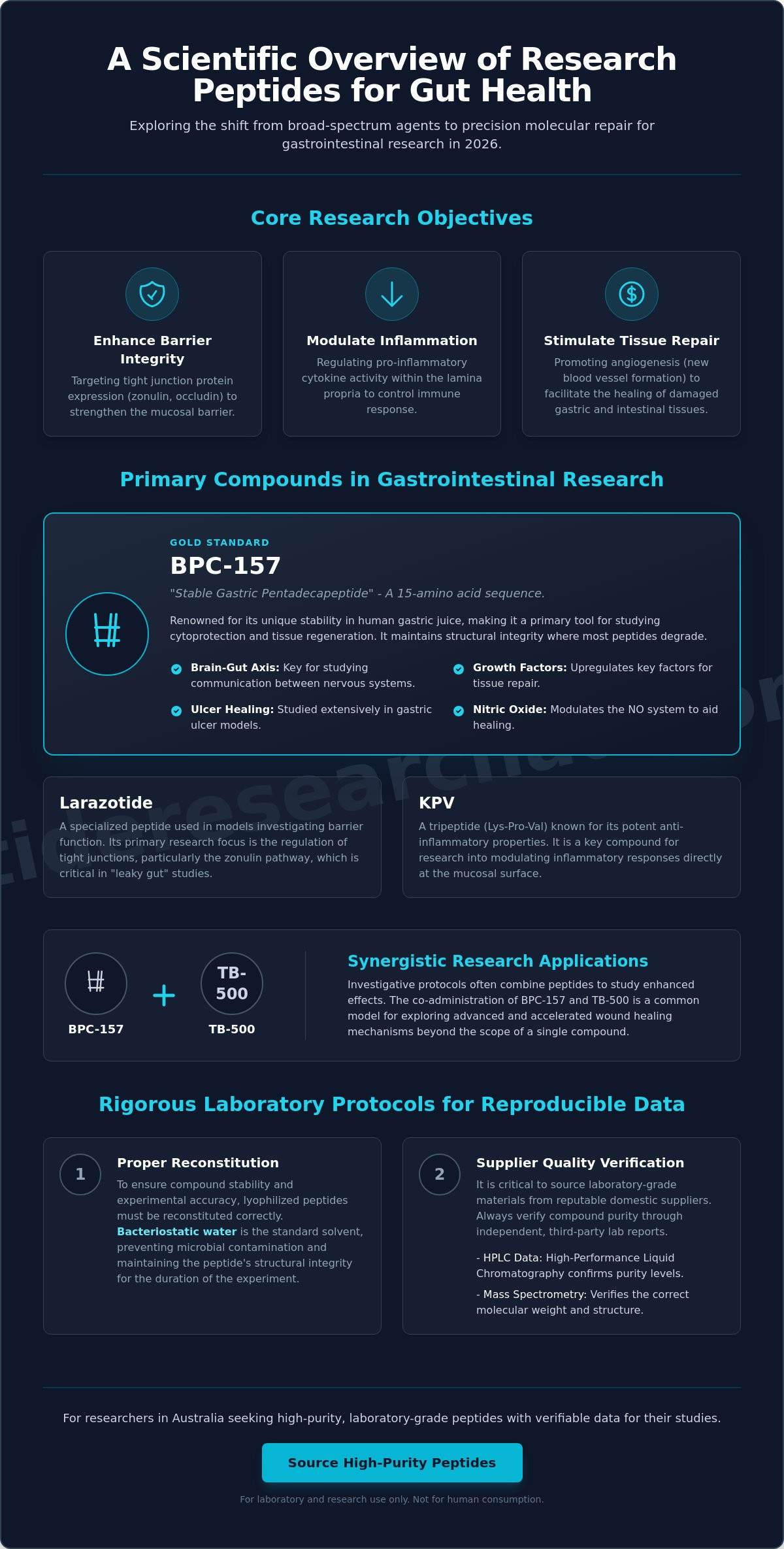
The core objectives of using research peptides for gut health studies include:
Enhancing epithelial barrier integrity through tight junction protein expression.
Modulating pro-inflammatory cytokine activity within the lamina propria.
Stimulating angiogenesis to facilitate the repair of damaged gastric and intestinal tissues.
Scientific literature, including a comprehensive BPC-157 overview, demonstrates how these sequences interact with the growth hormone receptor and nitric oxide pathways. This level of specificity is necessary for developing reproducible models of tissue recovery. It's essential for researchers to understand that these compounds are intended strictly for laboratory evaluation to determine their biochemical impact on mucosal surfaces.
The Role of the Gut-Brain Axis in Peptide Research
Peptides are instrumental in studying the bidirectional communication between the enteric nervous system (ENS) and the central nervous system (CNS). This gut-brain axis is a major focus in neuro-gastroenterology, where researchers investigate how peptide sequences influence neurotransmitter signaling and vagal nerve activity. While much of this work is localized to the GI environment, researchers also examine the broader implications of these signaling pathways. For instance, compounds like PT-141 are frequently analyzed in systemic research to observe the interactions between melanocortin agonists and the nervous system.
Key Research Targets: Intestinal Permeability and Leaky Gut
Laboratory models of intestinal permeability focus on the molecular regulation of tight junction proteins, particularly the zonulin and occludin pathways. Investigators utilize "leaky gut" models to identify how the breakdown of these proteins can serve as a trigger for autoimmune conditions and chronic systemic inflammation. By utilizing research peptides for gut health studies, scientists can observe the potential for specific sequences to stabilize these protein structures under stress. The mucosal barrier acts as the primary defense mechanism and remains the central focus of modern gastrointestinal research. Understanding the mechanical and chemical stability of this barrier is essential for advancing our knowledge of gut-related pathologies.
Primary Compounds in Gastrointestinal Research: BPC-157 and Beyond
Selecting the appropriate molecular tool is critical for the success of research peptides for gut health studies. Investigators prioritize specific compounds based on their biochemical stability, receptor affinity, and targeted signaling pathways. While several sequences are under evaluation in 2026, BPC-157 remains the gold standard for studying cytoprotection and tissue regeneration within the digestive tract. Other emerging candidates like Larazotide and KPV offer specialized avenues for investigating barrier function and inflammatory modulation in controlled settings.
BPC-157: The Cytoprotective Mechanism
BPC-157 is a 15-amino acid sequence known scientifically as the "Stable Gastric Pentadecapeptide." It's unique because it maintains structural integrity in human gastric juice for extended periods, whereas most peptides degrade rapidly in highly acidic environments. In laboratory settings, BPC-157 is used to study the "brain-gut axis" and the specific mechanisms behind the healing of gastric ulcers and intestinal anastomoses in animal models. Its research applications also focus on the upregulation of growth factors and the modulation of the nitric oxide system. For detailed technical data and experimental parameters, investigators can consult the comprehensive BPC-157 research guide.
Larazotide and Tight Junction Research
Larazotide, also designated as AT-1001, is an octapeptide primarily utilized for studying tight junction regulation. It functions as a zonulin antagonist, making it a vital tool for research into intestinal permeability. By preventing the breakdown of the tight junction complex, Larazotide allows scientists to observe how the stabilization of the mucosal barrier affects the progression of conditions like Celiac disease and Inflammatory Bowel Disease (IBD) in research models. Maintaining peptide stability in acidic GI environments is a priority for these studies, as the compound must reach the distal segments of the small intestine to interact with the target epithelial receptors effectively.
Beyond these primary candidates, KPV (Lysine-Proline-Valine) is increasingly studied for its ability to modulate intestinal inflammation. This tripeptide is often used in research to observe the inhibition of NF-κB signaling pathways and the subsequent reduction in pro-inflammatory cytokine production. Scientists also include Thymosin Beta-4 in systemic tissue repair models to investigate its impact on cell migration and the reduction of fibrosis in damaged intestinal walls. Researchers often buy research peptides from specialized Australian suppliers to ensure the chemical purity required for these complex experimental designs.
Comparative Analysis: Selecting the Right Peptide for Your Study
Precision in experimental design requires a rigorous selection process for molecular tools. When selecting research peptides for gut health studies, investigators must align the specific signaling pathway of a compound with their primary experimental endpoints. While BPC-157 is widely recognized for its regenerative potential, other sequences like KPV offer distinct advantages for studies focused solely on inflammatory modulation. Choosing the incorrect compound can lead to confounding variables that obscure the underlying biological mechanisms being observed.
BPC-157 is the preferred choice for research into the acceleration of tissue repair and the stimulation of angiogenic pathways. In contrast, KPV is typically utilized for its ability to attenuate inflammatory signaling, specifically targeting the NF-κB pathway without the same degree of growth-factor induction. For complex gastrointestinal pathology studies, researchers often utilize multi-peptide complexes to observe the interaction between different repair mechanisms. Utilizing laboratory-grade compounds is the only way to ensure data reproducibility and minimize the risk of contaminants influencing cellular responses.
Angiogenesis vs. Anti-inflammation
Differentiating between peptides that promote blood vessel growth and those that suppress cytokine storms is essential for targeted research. BPC-157 is frequently studied for its ability to upregulate vascular endothelial growth factor (VEGF), whereas tripeptides like KPV focus on the suppression of pro-inflammatory cytokines like TNF-alpha. Researchers often analyze TB-500 alongside BPC-157 to observe dual effects on actin sequestration and collagen reorganization. Regenerative speed varies significantly between compounds, with BPC-157 typically demonstrating more rapid angiogenic responses than smaller tripeptide sequences.
Stability and Bioavailability in Research Models
Peptide degradation presents a significant challenge in in-vitro gut models, where proteolytic enzymes can rapidly cleave amino acid chains. Investigators must account for the half-life of these compounds when determining administration protocols for animal models or cell cultures. To address these challenges, certain studies utilize specific molecular modifications or protective coatings to enhance the structural resilience of the peptide within a simulated GI environment. Understanding the biochemical stability of each compound allows for more accurate dosing and more reliable observations of long-term tissue changes. High-purity research compounds provide the chemical consistency necessary to overcome these inherent biological hurdles.
Reconstitution and Handling Protocols for Laboratory Research
The transition of lyophilized powder into a stable liquid solution is a critical phase in the use of research peptides for gut health studies. Any deviation from established laboratory protocols during this stage can result in the structural degradation of the peptide sequence, rendering the experimental data invalid. Precision handling requires a sterile environment and the use of specific laboratory diluents to ensure the chemical stability of the compound throughout the duration of the study.
Bacteriostatic water, containing 0.9% benzyl alcohol, serves as the standard diluent in these environments. It effectively inhibits the growth of most potentially contaminating bacteria, which is essential when a single vial is used for multiple applications over several days. When calculating dosages for animal models, researchers typically employ metric-based concentrations (mg/mL) to ensure accurate delivery. Maintaining aseptic technique by sterilizing vial stoppers with 70% isopropyl alcohol and using high-precision syringes is mandatory to prevent cross-contamination.
The Reconstitution Process
The physical introduction of the diluent must be performed with extreme care. Researchers should aim the needle toward the inner wall of the vial, allowing the bacteriostatic water to drain slowly down the side. This prevents the direct impact of the liquid on the lyophilized cake, which can cause mechanical stress to the fragile peptide chains. The no-shake rule is absolute; instead, the vial should be gently swirled until the solution is completely clear. Any visible particulate matter indicates that dissolution is incomplete, and the solution shouldn't be applied until it achieves total clarity.
Long-term Stability and Storage
Temperature control is the primary factor in preserving molecular integrity. While lyophilized peptides are relatively stable at room temperature for short periods, long-term storage requires refrigeration at 4°C or freezing at -20°C. Once reconstituted, the degradation rate increases significantly. Reconstituted peptides should be stored at 4°C and used within 14 to 28 days depending on the specific sequence. To avoid the destructive effects of repetitive freeze-thaw cycles, investigators should divide the solution into single-use aliquots. Utilizing high-purity laboratory diluents ensures that the chemical environment remains consistent for every experimental trial.
Sourcing High-Purity Research Peptides in Australia
Procuring research peptides for gut health studies within Australia requires a strategic approach to both regulatory compliance and chemical verification. The Australian regulatory landscape in 2026 involves strict oversight by the Therapeutic Goods Administration (TGA), which has increased enforcement against the unlawful importation of unapproved compounds. While many peptides are classified as prescription-only for therapeutic use, laboratory researchers must ensure their supply is strictly designated for in-vitro or animal modeling. Domestic procurement eliminates the risk of seizure by the Australian Border Force and ensures that the materials remain within a controlled supply chain.
Verification of "laboratory grade" claims is non-negotiable for scientific validity. It's not enough to rely on a supplier's marketing; researchers must analyze the specific analytical data provided for each batch. This involves reviewing High-Performance Liquid Chromatography (HPLC) and Mass Spectrometry (MS) reports to confirm both the identity and the purity of the compound. Peptide Research AU serves as a preferred partner for Australian scientific studies by providing the technical transparency required for high-stakes research environments.
Quality Assurance: HPLC and Mass Spectrometry
Researchers must demand 99%+ purity to ensure that experimental results aren't skewed by residual solvents or synthesis byproducts. Interpreting third-party testing certificates involves verifying the peak area on the HPLC chromatogram and ensuring the mass-to-charge ratio in the MS report matches the theoretical molecular weight of the peptide. Peptide Research AU’s commitment to quality is evidenced by providing these rigorous analytical benchmarks for every compound. This level of detail is essential for maintaining the reproducibility of data in complex gastrointestinal models.
Efficient Logistics for Australian Laboratories
International shipping often introduces variables that can compromise the stability of sensitive research compounds. Customs delays and inconsistent temperature management during transit can lead to the degradation of lyophilized powders before they even reach the bench. Sourcing from a domestic supplier ensures that products reach the laboratory quickly, often with expedited delivery options that bypass the complexities of international logistics. Temperature-controlled shipping remains a priority for maintaining the molecular integrity of research peptides for gut health studies. Browse our range of laboratory-grade research peptides today.
Advancing Gastrointestinal Research Standards
The transition toward precision molecular signaling represents a significant evolution in gastroenterology research. Success in this field depends on the rigorous selection of compounds like BPC-157 or Larazotide and the strict adherence to reconstitution protocols using bacteriostatic water. By prioritizing chemical nomenclature and analytical verification, investigators ensure that their observations of mucosal repair and tight-junction regulation remain reproducible. The integration of high-purity research peptides for gut health studies is essential for researchers aiming to bridge the gap between theoretical models and verifiable biochemical outcomes.
Securing a reliable domestic supply chain is the final step in maintaining experimental integrity. Peptide Research AU provides specialized laboratory-grade compounds with 99%+ purity verified through HPLC and Mass Spectrometry testing. Eliminating international logistics hurdles through fast domestic shipping across Australia ensures that your materials arrive in optimal condition. You can Order High-Purity Research Peptides for Your Next Study to maintain the highest standards of data accuracy. We look forward to supporting your next breakthrough in gastrointestinal science.
Frequently Asked Questions
What are the most commonly studied peptides for gut barrier repair?
BPC-157, Larazotide, and KPV are the most frequently utilized compounds in research peptides for gut health studies. BPC-157 is primarily analyzed for its angiogenic and cytoprotective properties in gastric tissue. Larazotide acts as a zonulin antagonist to study tight junction stability, while KPV is used to investigate the suppression of intestinal inflammation pathways. Researchers select these sequences based on their specific signaling targets within the mucosal environment to ensure experimental precision.
Is BPC-157 the same as a prescription medication in Australia?
BPC-157 is not a TGA-approved prescription medication and is not listed on the Australian Register of Therapeutic Goods (ARTG). It's strictly classified as a research compound intended for laboratory and scientific evaluation only. While some peptides are available via prescription through compounding pharmacies, BPC-157 remains an unapproved substance for human use in Australia. Researchers must ensure they source these materials from suppliers that define them exclusively for laboratory study to maintain compliance.
How should I store research peptides to prevent degradation?
Proper storage requires maintaining lyophilized peptides at -20°C for long-term stability or 4°C for short-term use. Once you've reconstituted the compound, it's essential to keep the solution refrigerated at 4°C and use it within 14 to 28 days. Exposure to room temperature or direct light will accelerate molecular degradation. Researchers should also use single-use aliquots to prevent the structural damage caused by repeated freeze-thaw cycles, which can negatively impact the reliability of the study results.
What is the difference between research-grade and pharmaceutical-grade peptides?
The primary difference lies in the intended application and the regulatory framework governing their production. Pharmaceutical-grade peptides are manufactured under Good Manufacturing Practice (GMP) standards for clinical use in humans. Research-grade peptides are synthesized for laboratory evaluation and aren't intended for human or animal consumption. While both may share high purity levels, research-grade compounds are explicitly labeled for in-vitro or animal modeling within a scientific setting, ensuring they meet the specific needs of professional investigators.
Can BPC-157 be studied for oral delivery in research models?
BPC-157 is specifically studied for its stability in gastric environments, making it a viable candidate for oral delivery research models. Unlike many peptides that degrade rapidly in the presence of stomach acid, BPC-157 remains structurally intact for extended periods in human gastric juice. This unique characteristic allows scientists to observe its localized effects on the stomach lining and intestinal mucosa without the immediate proteolysis typical of other amino acid sequences, providing valuable data on mucosal recovery.
Why is bacteriostatic water required for peptide reconstitution?
Bacteriostatic water is required because it contains 0.9% benzyl alcohol, which acts as a preservative to inhibit bacterial growth. This is critical for research peptides for gut health studies where a single vial might be accessed multiple times over several days. Using sterile water without a bacteriostatic agent increases the risk of contamination. Such contamination can compromise the integrity of the peptide and the accuracy of the experimental data, leading to inconsistent or invalid laboratory results.
How do I verify the purity of peptides sourced in Australia?
You can verify purity by demanding batch-specific High-Performance Liquid Chromatography (HPLC) and Mass Spectrometry (MS) reports from your Australian supplier. The HPLC report identifies the purity percentage by measuring peak areas, while the MS report confirms the identity of the peptide by its molecular weight. Reliable suppliers provide these documents to ensure the compound meets the 99%+ purity standards required for reproducible scientific research, allowing investigators to maintain high standards of quality control throughout their projects.


Comments