
Research Peptides for Fat Loss Studies: A 2026 Scientific Overview
- peptideresearchau
- Jul 2
- 11 min read
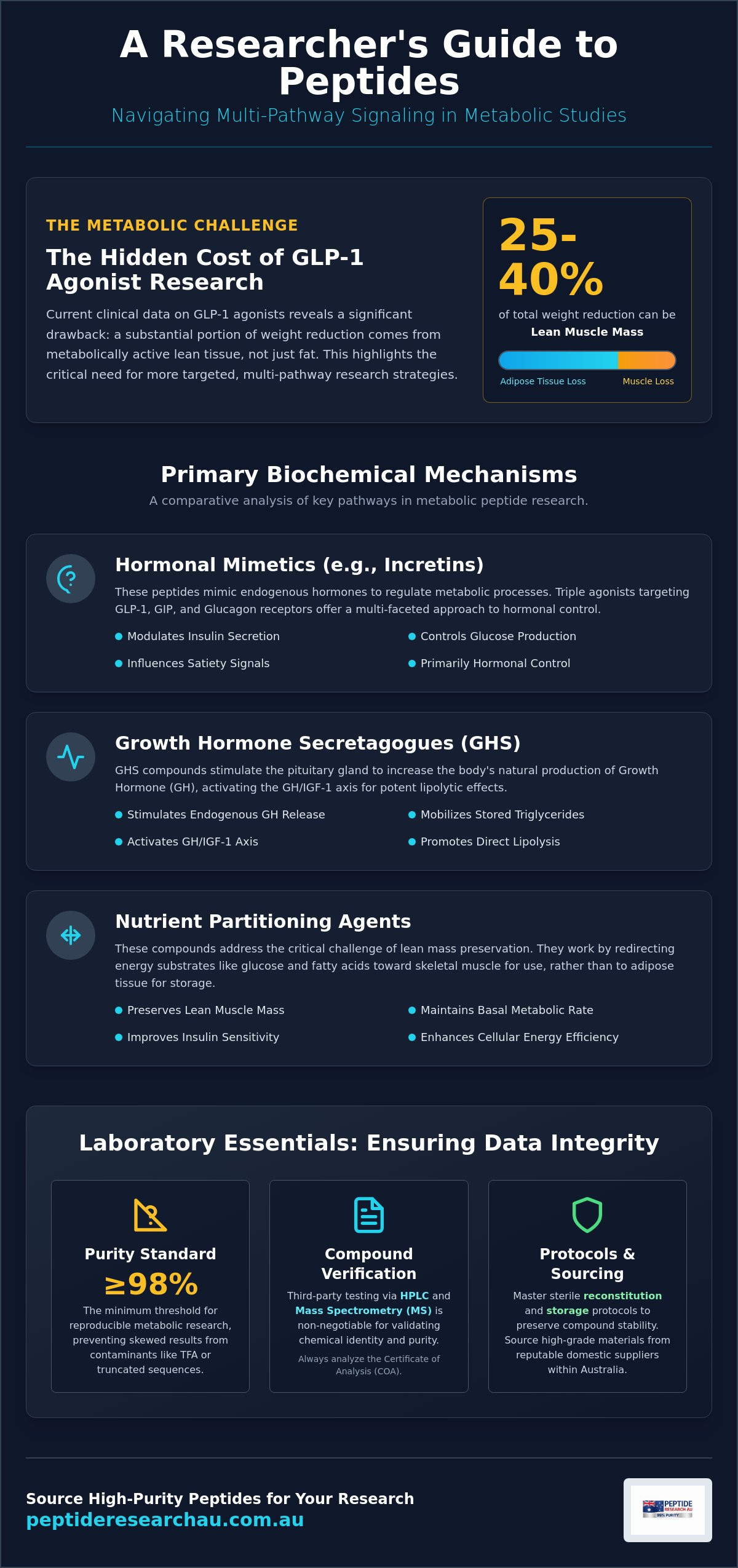
Current clinical data reveals that approximately 25% to 40% of total weight reduction in GLP-1 agonist-driven research involves the loss of lean muscle mass. This statistic highlights the critical need for a multi-pathway strategy in metabolic science. You recognize that navigating the complexities of hormonal mimetics versus mitochondrial signaling is essential for precise results, yet uncertainty regarding compound purity often persists.
This technical overview provides a comprehensive guide to the mechanisms and laboratory protocols for research peptides for fat loss studies. It delivers the data necessary to identify specific compounds for targeted research goals while ensuring rigorous methodology. We will analyze the biochemical pathways of lipolysis, provide standardized reconstitution protocols, and discuss the parameters for sourcing reliable lab-grade compounds in Australia. By the end of this overview, you'll have a clear framework for executing high-standard metabolic studies in a professional laboratory environment.
Table of Contents
Defining the Landscape of Research Peptides for Fat Loss Studies
Research peptides are short-chain amino acids engineered to mimic or modulate endogenous metabolic signaling pathways. These synthetic chains function as precise ligands, designed to bind with specific receptors to trigger biological responses. In 2026, the scientific community has moved beyond broad obesity research. The current focus centers on targeted adipose tissue studies. This shift allows for the isolation of specific cellular mechanisms, providing a more granular understanding of metabolic dysfunction. It's vital to categorize these materials correctly. These are research-grade compounds, not clinical prescription medications. While clinical drugs are approved for human therapeutic use, a Peptide hormone used in a laboratory setting is strictly for in vitro or animal-model investigation.
Precision is the primary requirement for any scientific inquiry. Utilizing high-purity research peptides for fat loss studies ensures that experimental outcomes remain untainted by external variables. Laboratory-grade materials provide the consistency needed for longitudinal data collection. Without this level of control, identifying the exact pathway of a metabolic change becomes impossible. Reliable data depends on the integrity of the compound's molecular structure.
The Role of Peptides in Adipose Tissue Research
Modern metabolic research distinguishes between different types of fat. White adipose tissue (WAT) acts as the primary energy reservoir, while brown adipose tissue (BAT) is metabolically active and facilitates thermogenesis. Current studies use peptides to investigate the "browning" of white fat. This transformation involves mitochondrial biogenesis, a process where the density of mitochondria within a cell increases to elevate the basal metabolic rate. Researchers also utilize these compounds as tools for investigating insulin sensitivity and glucose disposal. By modulating specific signaling cascades, these peptides allow scientists to observe how cells manage energy substrate partitioning under various conditions.
Grade and Purity: The Researcher's Priority
Laboratory-grade purity, defined as 98% or higher, is the standard for metabolic research. This threshold isn't arbitrary; it's a requirement for data reproducibility. Impurities, such as residual trifluoroacetic acid (TFA) or truncated peptide sequences, can significantly alter metabolic signaling accuracy. These contaminants often trigger unintended inflammatory responses in cellular models, which can be mistaken for the peptide's primary effect. High-performance liquid chromatography (HPLC) and mass spectrometry (MS) testing are essential for validating the chemical identity and purity of research compounds before any study commences.
Primary Biochemical Mechanisms in Metabolic Peptide Research
Effective metabolic analysis requires a detailed understanding of how different signaling molecules interact. While many general resources focus solely on appetite suppression, research peptides for fat loss studies engage multiple physiological pathways. These include hormonal control, direct lipolysis, and cellular energy efficiency. By isolating these pathways, researchers can observe specific metabolic shifts without the confounding variables found in multi-system clinical models. High-precision study depends on the ability to target these mechanisms independently or in combination.
Incretin mimetics targeting the GLP-1, GIP, and Glucagon receptors represent a primary mechanism for hormonal control. These triple agonists don't just influence satiety; they modulate insulin secretion and glucagon-mediated glucose production. Simultaneously, Growth Hormone Secretagogues (GHS) act on the pituitary gland to stimulate endogenous GH release. This activates the GH/IGF-1 axis, which is critical for mobilizing stored triglycerides from adipose tissue. To ensure these sensitive molecules remain viable for such precise measurements, following a Peptide Reconstitution & Storage Guide is essential for laboratory consistency.
Maintaining lean tissue during adipose reduction is a significant challenge in metabolic studies. Data from 2026 indicates that certain protocols can lead to a 25% to 40% loss in lean muscle mass. Nutrient partitioning mechanisms address this by redirecting energy substrates toward skeletal muscle rather than storage. This ensures that the metabolic rate remains stable throughout the study. Researchers often utilize specific research compounds to investigate how to mitigate this muscle wastage while maximizing lipid oxidation.
Lipolysis vs. Adipogenesis
Lipolysis involves the breakdown of lipids through the stimulation of Hormone-Sensitive Lipase (HSL). This enzyme facilitates fat oxidation, converting stored fat into usable energy. Conversely, researchers also study the inhibition of adipogenesis, which is the formation of new fat cells. By suppressing the differentiation of pre-adipocytes, these compounds prevent the expansion of adipose tissue. The GH/IGF-1 axis plays a dual role here, promoting the mobilization of fatty acids while supporting cellular repair.
Mitochondrial Peptides and Energy Expenditure
Mitochondrial signaling represents a frontier in metabolic research. Peptides like MOTS-c are studied as exercise-mimetics because they influence the AMPK pathway. This pathway acts as a metabolic master switch, sensing cellular energy levels and upregulating ATP production. Additionally, researchers investigate the 'browning' of white adipose tissue. This process increases the expression of Uncoupling Protein 1 (UCP1), allowing cells to dissipate energy as heat rather than storing it as chemical energy.
Comparative Analysis: Top Research Peptides for Metabolic Study
Selecting the appropriate compounds for metabolic investigation requires a comparative understanding of receptor affinity and signaling outcomes. While early research focused on single-pathway agonists, contemporary research peptides for fat loss studies utilize multi-receptor strategies to achieve more comprehensive data. These advancements allow researchers to observe the interplay between hormonal regulation and direct adipose tissue mobilization. A thorough Scientific review of peptides for obesity treatment confirms that multi-pathway activation often yields superior results in laboratory models compared to isolated receptor targeting.
The Rise of Triple Agonists in 2026
Retatrutide represents a significant evolution in metabolic science. As a triple agonist, it targets the GLP-1, GIP, and Glucagon receptors simultaneously. This combination is unique because it addresses both energy intake and energy expenditure. While GLP-1 and GIP primarily manage insulin secretion and satiety, the addition of Glucagon receptor activation directly influences hepatic glucose production and increases metabolic rate. Researchers don't just observe weight changes; they measure specific cellular shifts. This synergy provides a robust framework for studying how triple agonism affects adipose tissue reduction without the compensatory slowing of metabolism often seen in single-agonist models.
Growth Hormone Fragments for Targeted Lipolysis
Researchers investigating direct lipid oxidation frequently utilize AOD-9604, a stabilized fragment of the C-terminus of Human Growth Hormone (HGH). Unlike full-length HGH, this fragment avoids the complications of decreased insulin sensitivity and hyperglycemia. It specifically targets the lipolytic mechanisms of the parent hormone. When comparing AOD-9604 to HGH Fragment 176-191, data suggests similar efficacy in stimulating fat breakdown while maintaining a safer profile for long-term study. Sourcing these specific peptides in Australia from reliable suppliers ensures that the compounds meet the high purity standards required for reproducible results.
Tesamorelin is another critical tool, particularly for studies focusing on visceral adipose tissue (VAT). It functions as a Growth Hormone Releasing Hormone (GHRH) analogue, promoting endogenous GH secretion to target deep abdominal fat. Additionally, non-peptide small molecules like 5-Amino-1MQ are gaining traction in laboratory settings. These compounds inhibit the enzyme nicotinamide N-methyltransferase (NNMT), which plays a role in fat cell metabolism. Studying these molecules alongside peptides allows for a broader investigation into how enzymatic inhibition and hormonal signaling can work together to alter metabolic efficiency. It's clear that the combination of these tools provides a more complete picture of adipose tissue regulation.
Laboratory Protocols: Reconstitution, Storage, and Handling
Precise data in metabolic science depends entirely on the stability of the compounds used. When utilizing research peptides for fat loss studies, any deviation from established laboratory protocols can compromise the molecular integrity of the peptide. This leads to inaccurate metabolic signaling and non-reproducible results. Maintaining a sterile environment is the first step in preventing contamination from bacterial endotoxins. These contaminants can trigger inflammatory responses in cellular models, effectively skewing research outcomes and masking the peptide's true metabolic influence.
Temperature management is equally critical for maintaining structural integrity. Most metabolic peptides are highly sensitive to thermal fluctuations and require strict cold-chain management from the point of manufacture to the laboratory bench. Exposure to light and mechanical agitation also poses significant risks. High-energy photons can break delicate peptide bonds; meanwhile, vigorous shaking can lead to denaturation. Researchers must handle vials with care, using gentle inversion rather than swirling or shaking to ensure the compound remains viable for investigation.
Reconstitution with Bacteriostatic Water
Reconstitution is the process of returning a lyophilised peptide to its liquid state for study. Calculating the correct diluent-to-peptide ratio is fundamental for achieving precise concentrations. For instance, adding 2mL of diluent to a 5mg vial results in a concentration of 2.5mg/mL. Bacteriostatic water is the preferred choice for multi-use research vials because its 0.9% benzyl alcohol content inhibits bacterial growth over time. To ensure the compound remains intact, you should aim the diluent stream against the side of the glass vial to allow for a slow-drip entry that prevents peptide shearing. For those requiring high-grade supplies, sourcing your laboratory diluents from reliable providers is essential for protocol accuracy.
Long-term Storage and Stability
The shelf life of a peptide depends on its physical state and storage temperature. Lyophilised powders are most stable when stored at -20°C, which can preserve the compound for several years. If the material is intended for use within a few months, 4°C is often sufficient. However, once reconstituted, the stability window narrows significantly. Most reconstituted research peptides for fat loss studies should be used within a 30-day window to ensure maximum biological activity. Beyond this period, the risk of peptide hydrolysis increases. Signs of degradation include the presence of particulates, cloudiness in the solution, or a measurable decrease in the expected metabolic response during the study.
Sourcing High-Purity Research Peptides in Australia
Sourcing research peptides for fat loss studies within the Australian landscape requires a rigorous approach to quality control and regulatory compliance. Relying on international suppliers introduces significant variables that can compromise a study. These include extended customs delays and potential molecular degradation during uncontrolled transit. In 2026, the Australian regulatory environment has become increasingly complex. The Therapeutic Goods Administration (TGA) has issued specific alerts regarding the rise in unauthorized peptide use, making domestic sourcing from established providers essential for maintaining scientific standards. A domestic supplier ensures that the materials remain within a controlled supply chain, which is vital for preserving the integrity of sensitive metabolic compounds.
A Certificate of Analysis (COA) is the primary document for verifying compound integrity. Researchers must demand 99% purity or higher to ensure that metabolic data isn't skewed by contaminants. This document should include High-Performance Liquid Chromatography (HPLC) and Mass Spectrometry (MS) data. These tests confirm the chemical identity and the absence of residual solvents or bacterial endotoxins. Without these markers, the validity of any metabolic study remains questionable. Reliable data depends on the precision of the starting material. Domestic suppliers who provide these transparent data points help researchers maintain the high standards required for peer-reviewed outcomes.
Temperature-controlled shipping is a non-negotiable requirement for metabolic research materials. Most peptides used in adipose tissue research are highly susceptible to thermal damage. Domestic suppliers can offer overnight cold-chain logistics, ensuring that the peptides arrive in a lyophilised state without loss of biological activity. This speed is a significant advantage over international shipping, where packages can sit in unrefrigerated customs warehouses for days or weeks.
Peptide Research AU: Quality Assurance Standards
Peptide Research AU maintains a 99% purity benchmark for all laboratory compounds. We understand the specific needs of the Australian scientific community. Providing reliable research tools is our primary mission. Our domestic presence allows for direct technical support. If a researcher has queries regarding reconstitution or stability, we provide expert guidance based on current scientific standards. We support the local research community by ensuring that high-grade materials are accessible without the logistical risks of international procurement.
Next Steps for Your Research Project
Selecting the correct compound is the first step in any successful metabolic study. You must align the peptide's biochemical mechanism with your specific goals. Whether you're investigating mitochondrial signaling or direct lipolysis, the quality of your materials determines the success of your project. Ensure you have all necessary laboratory supplies, including high-grade diluents and appropriate cold storage, before beginning your protocols. Browse our range of laboratory-grade research peptides to find the precise tools required for your next metabolic study.
Advancing Metabolic Research with Precision
The 2026 landscape of metabolic science necessitates a transition toward multi-pathway signaling and rigorous laboratory standards. Success in this field isn't just about selecting the right molecule; it's about maintaining the structural integrity of that molecule through every stage of the study. By integrating advanced agonists with precise handling protocols, researchers can uncover granular insights into adipose tissue regulation and energy expenditure. Utilizing research peptides for fat loss studies requires materials that meet the highest benchmarks of chemical purity and stability.
Peptide Research AU facilitates this through independent 3rd-party HPLC/MS testing and laboratory-grade purity guarantees. Our express temperature-controlled shipping across Australia ensures your compounds remain viable upon arrival, providing the reliability necessary for high-stakes metabolic investigation. Secure high-purity research peptides for your next study at Peptide Research AU and proceed with your scientific objectives knowing your data is built on a foundation of quality. We look forward to supporting your next breakthrough in metabolic science.
Frequently Asked Questions
What are the most studied research peptides for fat loss in 2026?
In 2026, the primary focus of metabolic science remains on triple agonists like Retatrutide and dual agonists such as Tirzepatide. Researchers also frequently utilize growth hormone fragments like AOD-9604 for investigating targeted lipid oxidation without affecting insulin sensitivity. These compounds are essential for research peptides for fat loss studies because they allow for the isolation of specific signaling pathways in controlled laboratory environments.
How do I calculate the correct concentration for my peptide research?
You calculate the final concentration by dividing the total mass of the lyophilised peptide by the volume of diluent added to the vial. For example, adding 2mL of bacteriostatic water to a 5mg vial results in a concentration of 2.5mg/mL. Precise calculation is fundamental for ensuring that experimental data remains consistent across different study groups. Always use high-precision laboratory equipment to maintain the accuracy of these measurements.
What is the difference between GLP-1 and GIP receptor agonists in lab studies?
GLP-1 receptor agonists primarily target satiety and glucose-dependent insulin secretion within metabolic models. In contrast, GIP receptor agonists influence lipid metabolism and can improve insulin sensitivity directly within adipose tissue. While GLP-1 is often studied for its role in reducing energy intake, GIP is investigated for its impact on energy substrate partitioning. Combining these agonists allows researchers to observe synergistic effects on total metabolic efficiency.
Can I use plain sterile water for peptide reconstitution?
You shouldn't use plain sterile water for multi-use research vials because it doesn't contain an antimicrobial preservative. Bacteriostatic water, which contains 0.9% benzyl alcohol, is the industry standard because it inhibits bacterial growth and preserves the compound's integrity. Using plain sterile water increases the risk of contamination, which can compromise the accuracy of research peptides for fat loss studies. Sterile water is typically reserved for single-use applications only.
How should I store my research peptides to ensure stability?
Store lyophilised peptide powders at -20°C for long-term stability, although 4°C is acceptable for materials intended for immediate use. Once you have reconstituted the compound, it must be kept refrigerated at 4°C and used within a 30-day window to ensure biological activity. Protect all vials from light and avoid mechanical agitation to prevent molecular denaturation. Maintaining a strict cold chain is vital for preserving the structural integrity of the peptides.
Are research peptides legal for laboratory study in Australia?
Research peptides are legal in Australia when utilized strictly for laboratory investigation and non-human study. The Therapeutic Goods Administration (TGA) classifies many of these molecules as prescription-only medicines when they're intended for human therapeutic use. However, researchers can source these compounds for in vitro and animal models. It's your responsibility to ensure that all laboratory activities comply with current Australian state and federal regulations regarding research materials.
What does 98% purity actually mean for my research data?
A 98% purity rating means that 2% of the vial's content consists of impurities, such as residual salts, water, or trifluoroacetic acid (TFA). While 98% is a common benchmark, 99% or higher is preferred for metabolic research to minimize unintended cellular responses. Even trace amounts of contaminants can trigger inflammatory markers in laboratory models. This can lead to skewed data and inaccurate conclusions regarding the peptide's actual metabolic influence.
Why is Retatrutide considered a 'triple agonist'?
Retatrutide is defined as a triple agonist because it targets three distinct receptors simultaneously: GLP-1, GIP, and the glucagon receptor. This multi-receptor affinity allows it to modulate insulin secretion, appetite, and hepatic glucose production within a single study model. By activating the glucagon receptor specifically, it can increase energy expenditure in a way that single or dual agonists don't. This makes it a highly valuable tool for studying complex metabolic interactions.


Comments