
Peptide Complexes for Skin Research Australia: A Comprehensive 2026 Guide
- peptideresearchau
- Jun 16
- 11 min read
Why do many dermatological studies fail to replicate results despite using the same chemical nomenclature as peer-reviewed literature? You understand that the success of any clinical trial or laboratory experiment depends entirely on the chemical integrity and concentration of your compounds. Distinguishing between consumer-grade topicals and high-purity peptide complexes for skin research australia is often the most significant hurdle for professionals operating under the TGA's 2026-27 compliance priorities.
This guide provides the technical clarity you need to source laboratory-grade research compounds and multi-peptide complexes that meet rigorous purity standards of 98% or higher. We will examine the biochemical mechanisms of skin-active peptides, established laboratory reconstitution protocols, and the specific regulatory requirements for sourcing research-grade materials. By the end of this article, you'll have a clear framework for identifying reliable Australian suppliers and maintaining the integrity of your dermatological research through precise handling and storage methodologies.
Key Takeaways
Understand the biochemical role of short-chain amino acids in signaling cellular processes and stimulating extracellular matrix proteins.
Evaluate the specific research applications of GHK-Cu and BPC-157 within advanced dermatological and tissue healing models.
Identify the critical purity requirements for peptide complexes for skin research australia by distinguishing 98%+ laboratory compounds from cosmetic-grade alternatives.
Establish precise handling and reconstitution protocols using sterile diluents to ensure the stability and longevity of your research materials.
Optimise procurement by sourcing research compounds domestically to mitigate risks related to international customs and temperature-sensitive transport.
Table of Contents
Understanding Peptide Complexes in Dermatological Research
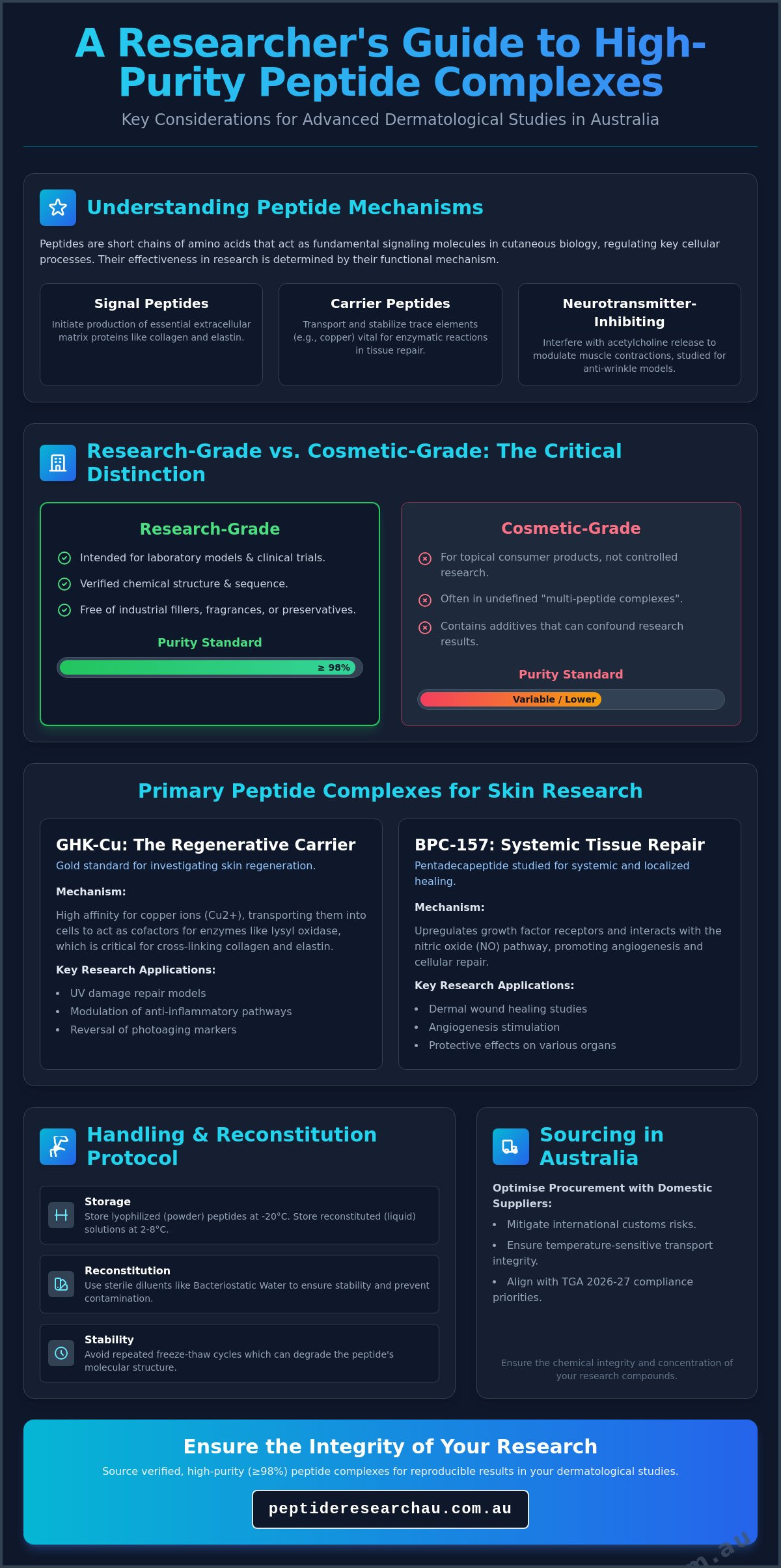
Peptides serve as the fundamental messengers of cutaneous biology. These bioactive compounds consist of short chains of amino acids that function as signaling molecules within the cellular environment. To understand What are Peptides at a molecular level, researchers must recognise their role as primary regulators of physiological functions. In the specific field of peptide complexes for skin research australia, these compounds provide the necessary stimuli for advanced dermatological study. Modern research has transitioned from the basic isolation of amino acid sequences in the late 20th century to the sophisticated, high-purity multi-peptide complexes available in 2026. This evolution allows for the precise targeting of intracellular pathways to achieve specific research goals: collagen synthesis, elastin production, and wound healing acceleration.
The Biochemistry of Skin-Active Peptides
Effective laboratory models categorise peptides based on their specific functional mechanisms. Signal peptides are engineered to initiate the production of essential proteins by mimicking the body's natural degradation products. Carrier peptides facilitate the transport of trace elements, such as copper, which are vital for enzymatic reactions. Neurotransmitter-inhibiting peptides provide a different pathway, focusing on the inhibition of muscle contractions by interfering with the release of acetylcholine. These complexes mimic natural biological sequences to trigger targeted cellular responses. Stability and molecular weight remain critical variables; lower molecular weight sequences are typically preferred in research for their predictable behavior and structural integrity in various laboratory diluents.
Protein Synthesis and the Extracellular Matrix
The extracellular matrix (ECM) provides the structural framework for skin tissue, and its maintenance is a primary focus for dermatological researchers. Peptides act as ligands that bind to specific receptors on fibroblasts, the cells responsible for synthesising ECM components. This interaction primarily targets the induction of collagen type I and type III, which are essential for tissue tensile strength and elasticity. Research-grade peptide complexes interface with basement membrane proteins to regulate the structural integrity of the dermal-epidermal junction. By stimulating these proteins, researchers can observe the regenerative capacity of skin models in response to external stressors. High-purity peptide complexes for skin research australia ensure that these biological responses are not confounded by the presence of industrial fillers or contaminants found in lower-grade alternatives.
Primary Peptide Complexes for Skin Research Australia
Dermatological study requires specific, high-purity sequences to yield reproducible data. While consumer products often use generic multi-peptide complexes, laboratory study demands defined chemical structures with verified purity levels. The selection of peptide complexes for skin research australia focuses on compounds that demonstrate high affinity for dermal receptors and predictable metabolic pathways. In 2026, the research landscape is dominated by carrier peptides and signal sequences that facilitate targeted cellular interactions, particularly in the context of tissue repair and protein synthesis.
GHK-Cu: The Regenerative Carrier Peptide
GHK-Cu remains the gold standard for investigating skin regeneration and copper modulation. This tripeptide has a high affinity for copper ions, facilitating their transport into cells where they act as essential cofactors for enzymes like lysyl oxidase. This enzymatic activity is critical for cross-linking collagen and elastin fibers within the extracellular matrix. Current studies utilise this ghk-cu peptide to observe UV damage repair and the modulation of anti-inflammatory pathways. Researchers often focus on its ability to downregulate pro-inflammatory cytokines, providing a stable model for studying chronic skin conditions and the reversal of photoaging markers.
BPC-157 and TB-500 in Tissue Repair
The synergy between BPC-157 and TB-500 is a significant area of interest in Australian dermal research. BPC-157, a pentadecapeptide, is studied for its systemic and localised healing properties, specifically its role in upregulating growth factor receptors. Detailed bpc 157 protocols often examine its interaction with the nitric oxide pathway to promote angiogenesis. When paired with TB-500, a synthetic version of Thymosin Beta-4, researchers can observe enhanced cellular migration.
TB-500 is unique because of its ability to sequester G-actin, which facilitates cell motility and tissue remodeling. Accessing specific tb500 cellular migration data allows laboratories to model wound closure rates and the formation of new blood vessels in damaged skin tissue. This combination provides a robust framework for investigating soft tissue repair mechanisms that exceed the capabilities of single-peptide applications.
As research enters late 2026, newer compounds like Retatrutide are being examined for their metabolic influence on skin health. While primarily studied for weight management, its triple-agonist profile offers new avenues for investigating the link between metabolic efficiency and cutaneous integrity. Researchers looking to maintain these rigorous standards can review the technical specifications of high-purity Research Peptides to support their laboratory protocols. These advanced sequences ensure that experimental outcomes are based on molecular precision rather than industrial-grade inconsistencies.
Research-Grade vs. Cosmetic-Grade: The Critical Distinction
Distinguishing between laboratory-grade compounds and consumer-market formulations is essential for maintaining experimental integrity. While mass-market "multi-peptide" serums are designed for daily topical application, peptide complexes for skin research australia are manufactured to a significantly higher standard of purity. Research-grade peptides typically require a minimum purity of 98%, verified by rigorous analytical testing. In contrast, cosmetic-grade peptides often contain as little as 0.01% to 1% of the active ingredient, with the remainder of the formulation comprised of fillers, thickeners, and fragrances. These additives, while safe for consumer use, introduce uncontrolled variables that can compromise biochemical data and cellular response observations.
Stability is another primary differentiator. Cosmetic products are pre-dissolved in aqueous or oil-based solutions, which exposes the peptide sequences to hydrolysis and enzymatic degradation over time. Laboratory-grade complexes are supplied as lyophilized (freeze-dried) powders. This state ensures the molecular structure remains stable during transport and long-term storage. Researchers then reconstitute the powder immediately before use, ensuring the compound's bioactivity is at its peak during the experimental phase. Choosing "cheap" cosmetic alternatives for controlled study is unsuitable; the lack of concentration and the presence of preservatives like phenoxyethanol can lead to cytotoxic effects in sensitive in-vitro models.
Analytical Testing and Purity Verification
Reliable research depends on the absolute verification of the compound's identity. High-Performance Liquid Chromatography (HPLC) is the industry standard for determining the purity of a peptide batch. This process separates the peptide from any residual solvents or truncated sequences. Mass Spectrometry (MS) is then utilised to confirm the molecular weight, ensuring the amino acid sequence matches the theoretical model precisely. For peptide complexes for skin research australia, third-party testing provides an unbiased validation of these metrics. Without a Certificate of Analysis (COA) detailing these results, a researcher cannot guarantee the reproducibility of their findings.
Concentration and Bioavailability in Lab Models
Quantifying results requires precise molar concentrations, which is impossible with consumer-grade topicals. Researchers calculate exact concentrations based on the mass of the lyophilized powder and the volume of the diluent. This precision allows for the determination of dose-response curves. While cosmetic products struggle with transdermal delivery constraints, research models often bypass these barriers through direct application to cell cultures or specific tissue scaffolds. It's also vital to monitor the stability of peptide complexes once reconstituted; most sequences begin to degrade within days if not stored at 2-8°C or -20°C, a factor often ignored in consumer product shelf-life claims.
Handling and Protocol for Skin Research Projects
Success in dermatological study relies as much on handling as it does on sourcing. When working with peptide complexes for skin research australia, maintaining a sterile environment is the first priority to prevent cross-contamination. Researchers must establish a clean field, typically within a laminar flow hood or a sanitised laboratory bench, to ensure the chemical integrity of the compounds remains uncompromised during the transition from powder to solution. High-purity peptides are sensitive to environmental shifts; therefore, the protocol for preparation must be as rigorous as the study itself.
The choice of diluent is a critical factor for experimental longevity. Bacteriostatic water is the standard requirement because it contains 0.9% benzyl alcohol, which inhibits the growth of potential bacterial contaminants. While sterile water is appropriate for immediate, single-use applications, it lacks the preservative qualities necessary for studies spanning several days. Accurate dosage calculation is achieved by dividing the total milligram amount of the lyophilized peptide by the volume of the diluent added. This allows for precise titration in in-vitro models, ensuring that each trial is based on consistent molar concentrations.
The Reconstitution Protocol
Reconstituting these complexes requires a meticulous approach to prevent molecular degradation. Begin by swabbing the vial’s rubber stopper with 70% isopropyl alcohol. Introduce the diluent slowly, allowing the liquid to run down the side of the glass vial rather than spraying it directly onto the lyophilized cake. This "drip" method minimises the impact on the delicate peptide bonds. Once the liquid is added, swirl the vial gently until the powder is fully dissolved. You must never shake the vial vigorously, as the resulting shearing forces can physically break the peptide chains and render the compound inactive. Reconstituted peptide complexes should be stored within a temperature range of 2°C to 8°C to maintain stability for the duration of the study.
Laboratory Safety and Best Practices
Handling high-purity research compounds necessitates strict adherence to safety standards. Personal protective equipment, including nitrile gloves, safety goggles, and lab coats, is mandatory to prevent accidental exposure. In Australia, all laboratory supplies, particularly sharps and used vials, must be disposed of according to state-regulated biohazard protocols. Maintaining a meticulous research log is equally vital; record the batch number, reconstitution date, and the specific volume of Laboratory Diluents used. This documentation ensures traceability and consistency across sequential trials. Consistent record-keeping allows for the identification of any variables that might affect the reproducibility of your skin research data.
Sourcing High-Purity Complexes in Australia for 2026
Procuring peptide complexes for skin research australia requires a rigorous evaluation of supplier standards and logistical reliability. Domestic sourcing has become the preferred methodology for Australian laboratories in 2026. This preference is driven by the need to avoid the unpredictability of international customs, where sensitive compounds may be held for extended periods without climate control. Because lyophilized peptides are susceptible to thermal degradation, reducing transit time is a fundamental requirement for maintaining the structural integrity of the amino acid sequences. Local suppliers provide the assurance that materials haven't been subjected to the extreme temperature fluctuations common in transcontinental shipping.
The Australian regulatory landscape for research peptides in 2026 is defined by increased oversight. The Therapeutic Goods Administration (TGA) has prioritised compliance regarding unapproved therapeutic goods, making it essential for researchers to source from providers who clearly define their products for laboratory use only. Evaluating a supplier must go beyond price points; it requires a deep dive into their analytical verification processes. Reliable providers must offer batch-specific data, including HPLC and Mass Spectrometry reports, to confirm that the purity exceeds the 98% threshold required for peer-reviewed dermatological study. This level of transparency is what separates professional research compounds from grey-market alternatives.
Domestic Logistics and Quality Control
Maintaining cold-chain integrity during transit is vital for the stability of research compounds. Peptide Research AU addresses this by utilising expedited domestic shipping protocols that minimise environmental exposure. Local customer support provides an additional layer of reliability, offering technical insights into reconstitution ratios and storage requirements that international vendors often lack. By focusing on the specific needs of the Australian scientific community, the brand ensures that researchers receive high-purity multi-peptide complexes and laboratory diluents that meet precise technical specifications. This domestic focus reduces the variables that can lead to experimental failure, such as compromised bioactivity due to prolonged shipping durations.
The Future of Peptide Research in Australia
The trajectory of dermatological science in 2026 is moving toward increasingly complex multi-peptide formulations. Independent research continues to drive innovation, exploring how synergistic combinations of signal and carrier peptides can influence cellular pathways more effectively than isolated sequences. As new compounds emerge, the role of high-purity sourcing remains the foundation of credible discovery. Researchers must remain vigilant in their procurement processes, ensuring that their data is built upon a foundation of chemical excellence. To support your next dermatological project, Explore the full range of research peptides at Peptide Research AU and access the high-grade compounds necessary for advanced scientific study.
Advancing Dermatological Science in 2026
Successful skin research in Australia depends on the molecular precision of your compounds. You've seen how high-purity peptide complexes for skin research australia outperform cosmetic-grade alternatives by providing verified concentrations and biochemical stability. Adhering to sterile reconstitution protocols and prioritising domestic sourcing ensures that your data remains accurate and reproducible throughout the experimental lifecycle. Professional study requires materials that meet the highest manufacturing standards without the interference of industrial fillers or fragrances.
Reliability is established through rigorous analytical testing. All compounds undergo third-party HPLC and Mass Spectrometry (MS) validation to guarantee a minimum purity of 98%. Domestic shipping across Australia further protects these sensitive sequences from the degradation risks associated with international transit. Browse our laboratory-grade peptide complexes for research to secure the high-purity materials required for your study. Precise methodology and superior sourcing form the foundation of breakthroughs in cutaneous biology.
Frequently Asked Questions
Are peptide complexes for skin research legal in Australia?
Peptide complexes for skin research australia are legal when utilised exclusively for laboratory study and in-vitro experiments. These compounds aren't approved for human consumption or therapeutic applications. Researchers must ensure that their procurement and use comply with the TGA’s 2026-27 compliance priorities, which distinguish between research-grade materials and unapproved therapeutic goods. Possession for legitimate scientific inquiry remains a standard practice within the Australian dermatological community.
What is the difference between GHK-Cu and other skin research peptides?
GHK-Cu is distinguished by its role as a carrier peptide that specifically modulates copper uptake in dermal cells. While signal peptides like Palmitoyl Pentapeptide-4 focus on mimicking protein fragments to trigger collagen synthesis, GHK-Cu facilitates enzymatic reactions through copper delivery. This makes it a unique tool for studying the structural integrity of the extracellular matrix and the modulation of inflammatory pathways in skin models.
Can I use bacteriostatic water for all peptide complexes?
Bacteriostatic water is the standard diluent for most peptide complexes because the benzyl alcohol content inhibits bacterial proliferation. This is essential for multi-use vials that require storage over several days or weeks. While some highly sensitive assays might necessitate the use of sterile water to avoid alcohol interference, bacteriostatic water remains the primary choice for maintaining the stability of reconstituted research compounds in a laboratory setting.
How should I store lyophilized peptide powders for long-term research?
Lyophilized powders should be stored at -20°C for long-term research to maintain molecular integrity for up to 24 months. For immediate projects lasting less than 90 days, refrigeration at 2-8°C is acceptable. It's vital to keep the vials in a dark environment and avoid frequent temperature fluctuations, as these can lead to the degradation of the amino acid chains before reconstitution occurs.
What purity level is required for published dermatological research?
Peer-reviewed dermatological research requires a minimum purity level of 98% for all peptide compounds. This standard ensures that the biological responses observed are attributable to the peptide itself rather than residual solvents or impurities. Using lower-grade materials can introduce uncontrolled variables that compromise the validity of the data and may lead to the rejection of research findings by the scientific community.
How do I calculate the concentration of my reconstituted peptide?
Concentration is calculated by dividing the total mass of the peptide by the volume of the diluent utilised. If you add 5mL of diluent to a vial containing 10mg of peptide complexes for skin research australia, the resulting concentration is 2mg/mL. Precision in this calculation is fundamental for determining dose-response curves and ensuring consistency across multiple experimental trials within your research project.
Why is third-party testing important for Australian peptide suppliers?
Third-party testing provides an independent validation of the compound's chemical identity and purity through HPLC and Mass Spectrometry. This process ensures that the supplier's internal data is accurate and that the researcher isn't using sub-standard or mislabelled materials. In the Australian market, this transparency is critical for maintaining high standards of scientific evidence and avoiding the risks associated with unverified grey-market suppliers.
Can I buy peptide complexes for research purposes online in Australia?
You can purchase research-grade peptide complexes online in Australia from specialised vendors that cater to the scientific community. It's essential to choose a supplier that offers domestic shipping to ensure the cold-chain integrity of the products. Researchers should verify that the provider includes batch-specific Certificates of Analysis and specialises in laboratory-grade research compounds rather than finished consumer products or therapeutic medications.


Comments