
How to Verify Peptide Supplier Authenticity: A 2026 Researcher’s Guide
- peptideresearchau
- Jun 20
- 11 min read
Updated: Jun 30
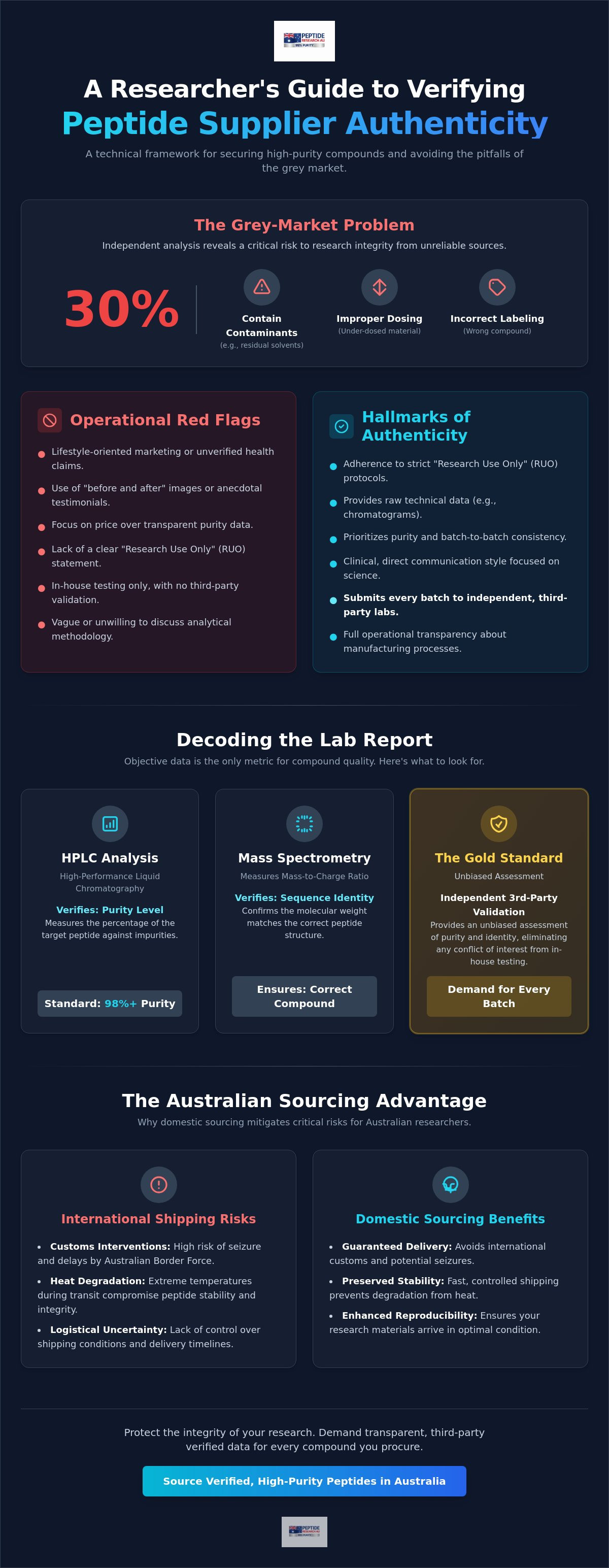
Independent analysis conducted in 2026 reveals that approximately 30% of peptide samples from grey-market sources contain contaminants, improper dosing, or incorrect labeling. For researchers operating in precise environments, these figures represent a critical risk to the integrity of experimental data and laboratory safety. You likely understand the frustration of deciphering technical lab reports or the logistical uncertainty of international shipments being intercepted by the Australian Border Force. Maintaining high standards requires more than trust; it demands a rigorous, evidence-based approach to procurement.
Learning how to verify peptide supplier authenticity is essential for any professional seeking to secure high-purity research compounds and laboratory diluents. This guide establishes a technical framework for validating the identity and reliability of vendors. You'll master a specific checklist for vetting suppliers and understand the distinct advantages of sourcing materials within the Australian regulatory environment. We'll examine the analytical data and operational transparency required to ensure your research reagents meet the highest manufacturing standards.
Table of Contents
The Critical Role of Peptide Authenticity in Scientific Research
Authenticity in peptide research is a multi-dimensional technical profile. It encompasses verified sequence identity, precise purity levels, and rigorous batch-to-batch consistency. Substandard reagents don't just delay timelines; they fundamentally compromise the validity of experimental datasets. When a compound lacks the required chemical integrity, the resulting biological data becomes irreproducible. This failure in reproducibility leads to wasted resources and incorrect conclusions. Understanding how to verify peptide supplier authenticity is now a core competency for modern researchers. In 2026, the market has seen an increase in sophisticated counterfeits that mimic legitimate packaging while containing under-dosed or contaminated material.
Operational integrity is another pillar of authenticity. Legitimate providers of research peptides and research compounds adhere strictly to "Research Use Only" (RUO) protocols. This classification isn't a mere legal disclaimer. It's a prerequisite for any supplier committed to laboratory standards. If a vendor utilizes lifestyle-oriented marketing or makes health-related claims, they've exited the scientific framework. Authenticity requires a supplier to prioritize technical documentation over promotional rhetoric. Researchers must look for providers that provide clear, data-driven communication regarding their manufacturing and verification processes.
The Relationship Between Purity and Research Outcomes
Purity levels dictate the precision of biological assays. Industry standards for laboratory-grade compounds typically require 98% purity or higher. Impurities, such as deletion sequences or residual solvents, can skew results by interacting with target receptors in unpredictable ways. These contaminants often stem from shortcuts taken during Peptide synthesis methods, where improper purification stages allow side products to remain in the final lyophilized powder. While lifestyle-branded peptides might prioritize cost, clinical-grade research materials focus on removing these artifacts to ensure that observed biological effects are solely attributable to the target peptide.
Establishing a Baseline for Supplier Credibility
Initial screening of a vendor should focus on their communication style and operational transparency. Authentic suppliers use a clinical, direct tone. They don't rely on "before and after" imagery or anecdotal testimonials. Instead, they provide technical specifications and clear categorization of their research compounds and laboratory diluents. A credible baseline is established when a supplier provides a clear RUO statement and demonstrates a willingness to discuss their analytical methodology. If a vendor's primary focus is on price points rather than purity data, it's a significant indicator of substandard synthesis. High-quality research reagents require investment in multi-stage verification, which is rarely reflected in "too good to be true" pricing models.
Decoding Lab Reports: HPLC, Mass Spectrometry, and COAs
Scientific data provides the only objective metric for evaluating compound quality. Understanding how to verify peptide supplier authenticity requires a technical grasp of analytical chemistry reports rather than a reliance on marketing claims. A legitimate supplier doesn't just claim high purity; they provide the raw chromatograms to prove it. These documents serve as the chemical fingerprint of the batch, detailing exactly what's in the vial. In 2026, the standard for verification has moved beyond simple PDF attachments to interactive or verifiable digital records.
Independent third-party validation remains the gold standard for research integrity. While in-house testing is a necessary part of the manufacturing process, it carries an inherent conflict of interest. Independent labs provide an unbiased assessment of purity and identity. Researchers should prioritize vendors that submit every batch to external facilities, as this extra layer of scrutiny ensures that the results haven't been filtered or manipulated by the production team.
How to Read an HPLC Chromatogram
High-Performance Liquid Chromatography (HPLC) serves as the primary method for determining chemical purity. When reviewing a chromatogram, the central focus is the Area Under the Curve (AUC) of the main peak. This value represents the percentage of the target peptide relative to detected impurities. Secondary peaks indicate deletion sequences or residual reagents. Researchers should be wary of reports with excessive baseline noise or suspiciously perfect, flat lines; these often suggest data manipulation. Precision is visible in the details.
Verifying the Certificate of Analysis (COA)
Mass Spectrometry (MS) confirms the molecular weight of the compound, ensuring the sequence identity matches the intended product. A Certificate of Analysis (COA) must synthesize these findings into a single, cohesive document. In 2026, authentic reports include batch numbers that correspond exactly to the vial's label. Many laboratories now utilize QR codes or digital portals to prevent document tampering. Verifying a report often involves a direct inquiry to the third-party lab to confirm the results exist in their database. Following Regulatory guidelines for peptide analysis ensures that these quality control measures remain consistent across the industry.
Purity vs. Net Peptide Content
A common misconception in research procurement is equating purity with net peptide content. A sample can be 99% pure while only containing 80% actual peptide by weight. The remaining mass consists of counter-ions like Trifluoroacetic acid (TFA) or acetate, alongside residual moisture. Authentic suppliers are transparent about these values; this allows for precise molar calculations in laboratory settings. Accurate dosing depends on this distinction. Choosing verified Research Peptides ensures these analytical benchmarks are consistently met and documented.
Operational Red Flags: How to Spot Unreliable Peptide Vendors
Identifying unreliable vendors involves analyzing operational behavior alongside chemical data. If a supplier lacks professional infrastructure, they likely research quality control. Learning how to verify peptide supplier authenticity requires a critical look at how a vendor presents their materials. High-standard suppliers maintain a clinical distance from their products, focusing on technical utility rather than promotional hype. To understand the operational model of a dedicated research supplier, you can learn more about Direct Product Sales. Operational transparency is a hallmark of a legitimate research reagent provider.
Marketing tactics provide immediate clarity. Authentic vendors never use "before and after" imagery or anecdotal testimonials. These are hallmarks of the grey market. The FDA guidance on 'Research Use Only' products defines the strict boundaries for RUO materials. Any supplier that conflates research reagents with finished consumer products is a liability. Their disregard for regulatory nomenclature often extends to their manufacturing standards. Professionalism is not optional in scientific supply.
Pricing anomalies serve as another primary indicator. Synthesis of high-purity peptides is a resource-intensive process. It requires specialized equipment and expensive reagents. If a supplier offers prices significantly below the industry average, they are likely skipping purification stages or providing under-dosed vials. Authenticity has a base cost. Suspiciously low pricing is a signal that the compound may contain high levels of TFA or deletion sequences that compromise experimental data.
Evaluating the Digital Presence
Digital presence reflects operational longevity. Amateur website designs often belong to transient vendors who lack a permanent laboratory footprint. Look for technical resources instead of aggressive sales copy. Reliable suppliers provide assets such as reconstitution guides to support laboratory protocols. This focus on utility indicates a commitment to the scientific community. A vendor that invests in technical support is more likely to invest in batch-to-batch consistency.
Customer Support and Technical Expertise
Technical dialogue is the final test. Engage with customer support to gauge their scientific literacy. Ask specific questions regarding peptide storage or the specific counter-ions used in their synthesis. Authentic suppliers can provide Material Safety Data Sheets (MSDS) and batch-specific data upon request. A lack of responsiveness or technical knowledge is a definitive operational red flag. Professional researchers require partners who understand the chemical nature of the compounds they sell.
The Australian Context: Navigating Domestic Sourcing and Logistics
International sourcing introduces variables that frequently compromise research integrity. Australian Border Force (ABF) seizures represent a primary hurdle, often leading to the total loss of reagents or significant project delays. When considering how to verify peptide supplier authenticity, a researcher must evaluate the logistical path the compound takes. Long-haul international transit exposes sensitive lyophilized powders to extreme temperature fluctuations. In the Australian climate, these fluctuations can exceed the stability thresholds of many research reagents. This thermal stress can trigger peptide aggregation or hydrolysis, rendering the compound useless for quantitative analysis before it even reaches the laboratory.
Domestic sourcing aligns with the regulatory framework provided by the Therapeutic Goods Administration (TGA) for peptides in Australia intended for research purposes. By utilizing a domestic supply chain, researchers eliminate the uncertainty of customs intervention. Local transit times of 1 to 2 days ensure that the chemical structure of the compound remains intact. This speed is critical for maintaining the potency required for high-precision biological assays. ABF enforcement in 2026 has become increasingly automated, with a higher percentage of unverified research materials flagged for inspection and destruction. Sourcing locally bypasses these systemic risks.
The Security of Domestic Supply Chains
Domestic providers mitigate the risk of lost or intercepted international packages. Professional packaging and discreet delivery protocols are standard for reputable local laboratories. Sourcing compounds like BPC-157 or TB-500 from Australian based facilities ensures continuity of supply. This reliability allows for long term study planning without the threat of sudden logistical failure. A local presence also facilitates direct communication regarding batch specific data and manufacturing standards, which is a key component of operational transparency.
Cold Chain and Storage Standards in Australia
Climate controlled storage is a necessity for maintaining the stability of sensitive compounds, particularly GHK-Cu. Evaluating a supplier's shipping protocols is a vital step in learning how to verify peptide supplier authenticity and operational excellence. Authentic suppliers use insulated packaging and expedited shipping to bypass the "last mile" heat exposure common in Australian summers. Potency is preserved through rigorous temperature management from the laboratory to the researcher's facility. Access high-grade Research Compounds through our verified domestic supply chain to ensure your experimental data remains accurate and reproducible.
Peptide Research AU: Our Commitment to Laboratory Standards
Experimental integrity depends on the absolute reliability of chemical reagents. Peptide Research AU integrates the technical and operational criteria required to maintain this integrity within the Australian scientific community. Our protocols provide a definitive answer for those determining how to verify peptide supplier authenticity in a fragmented market. We maintain a multi-stage verification process that subjects every batch of research peptides to rigorous analytical scrutiny. This methodology ensures that each compound meets or exceeds the specified requirements for identity and purity before it enters our inventory.
We prioritize third-party analytical testing to ensure a purity benchmark of 99% or higher. By utilizing independent laboratories for HPLC and Mass Spectrometry, we eliminate the conflict of interest inherent in in-house only testing. This commitment to external validation provides researchers with the confidence that their reagents are free from deletion sequences and residual solvents. Our infrastructure is designed specifically for professional-grade handling, ensuring that lyophilized powders are stored and dispatched under optimal conditions to preserve their biochemical structure.
The Peptide Research AU advantage is rooted in domestic Australian logistics. We understand that international shipping introduces unacceptable risks, including thermal degradation and customs intervention. Our domestic supply chain ensures 1 to 2 day transit times across Australia, bypassing the vulnerabilities of long-haul transit. We provide the essential tools required for precise laboratory work, ranging from high-purity research compounds to specialized laboratory diluents such as bacteriostatic water. This comprehensive approach supports the continuity of your research projects.
Transparency as Our Core Philosophy
Transparency is a prerequisite for scientific partnership. We make batch-specific Certificates of Analysis (COAs) accessible to our research partners to ensure full visibility into the chemical profile of our materials. Our focus remains on providing clinical-grade reagents for Australian scientific study rather than participating in lifestyle-oriented marketing. We offer expert support to help researchers navigate the technical nuances of their compounds, providing data-driven answers to inquiries regarding synthesis methods and reconstitution protocols. This professional dialogue reinforces our role as a dependable provider.
Building Trust Through Consistency
Batch-to-batch reproducibility is the foundation of reliable data. We maintain a strictly professional, research-focused environment that prioritizes consistency above all else. This focus ensures that your experimental results are attributable to your variables rather than fluctuations in reagent quality. Our operational standards are designed to meet the demands of 2026's rigorous scientific landscape. Explore our range of verified research peptides and experience the standard of Australian excellence in laboratory supply.
Advancing Laboratory Standards through Verified Procurement
Securing high-purity reagents is a technical necessity that requires a comprehensive understanding of analytical reports and operational transparency. By prioritizing independent third-party HPLC and Mass Spectrometry data, you can effectively mitigate the risks associated with contaminated or under-dosed materials. Mastering how to verify peptide supplier authenticity allows you to navigate the complexities of the 2026 market with precision. It's no longer enough to rely on marketing claims; the integrity of your experimental data depends on verifiable chemical fingerprints and batch-specific documentation.
Choosing a domestic provider protects your research from the logistical variables of international transit and Australian Border Force intervention. Peptide Research AU maintains these rigorous standards by offering laboratory-grade purity (99%+) and secure domestic shipping for every order. This localized approach ensures that your compounds arrive without the thermal degradation often caused by long-haul transit. You're invited to browse our range of laboratory-grade research peptides to secure the high-standard reagents your study requires. Establish a baseline of excellence for your laboratory today.
Frequently Asked Questions
Can I trust a peptide supplier that doesn't provide third-party lab reports?
You shouldn't trust any supplier that fails to provide independent third-party lab reports. These documents provide the only objective evidence of a compound's chemical integrity. Without independent validation, a researcher has no way to confirm if a product is under-dosed or contains hazardous contaminants. Legitimate vendors prioritize transparency by making these reports readily available for every batch they distribute to ensure data integrity.
What is the difference between HPLC and Mass Spectrometry in peptide testing?
HPLC and Mass Spectrometry serve two distinct analytical purposes. High-Performance Liquid Chromatography (HPLC) determines the purity level by separating the target peptide from impurities. Mass Spectrometry confirms the molecular identity by measuring the compound's mass-to-charge ratio. A complete analysis requires both methods to prove that the substance is both the correct sequence and free from significant degradation products or manufacturing byproducts.
Why do some peptides have different "net peptide content" despite high purity?
Net peptide content represents the actual weight of the peptide within the total mass of the lyophilized powder. Even a peptide with 99% purity contains non-peptide components like counter-ions, such as TFA or acetate, and residual water. This distinction is vital for laboratory calculations. If a researcher assumes the entire mass is peptide without checking the net content, their molar concentrations will be inaccurate during reconstitution.
Is it legal to buy research peptides in Australia for laboratory use in 2026?
It's legal to procure research peptides in Australia provided they are used strictly for laboratory research and labeled as Research Use Only. These materials are not intended for human or animal consumption. Knowing how to verify peptide supplier authenticity helps researchers navigate this regulatory environment by ensuring they source from professional entities that respect these legal boundaries and maintain high manufacturing standards for scientific study.
How can I tell if a Certificate of Analysis (COA) has been falsified?
Falsified reports often lack specific batch numbers or contain edited dates and inconsistent fonts. One of the most effective ways regarding how to verify peptide supplier authenticity is to use the digital verification portals provided by third-party labs. If a portal isn't available, you should contact the testing facility directly to confirm that the data in the report matches their internal records for that specific batch and compound.
What are the main red flags to look for on a peptide supplier's website?
Primary red flags include the use of before and after photos, health claims, or lifestyle-oriented branding. Authentic research suppliers maintain a clinical, technical tone and focus on providing data sheets rather than anecdotal testimonials. Suspiciously low pricing is another major indicator of substandard quality. It often suggests that the vendor has bypassed essential purification or third-party verification stages to reduce operational costs.
Does the color or texture of the lyophilized powder indicate peptide quality?
The physical appearance of the lyophilized cake doesn't provide a reliable metric for chemical quality. Variations in appearance are usually the result of different lyophilization parameters or the specific buffer used during the freezing process. A compound can appear as a perfect white cake or a loose powder and still maintain identical purity. Only analytical data can provide a definitive assessment of the compound's actual integrity and potency.
Why is domestic Australian shipping better for peptide stability than international airmail?
Domestic shipping is superior because it significantly reduces the duration of transit and exposure to environmental stressors. International shipments can spend weeks in transit, often sitting in high-heat environments that compromise the stability of sensitive peptides. Australian domestic logistics allow for 1 to 2 day delivery windows. This speed ensures that the lyophilized powder arrives at the laboratory with its biochemical potency fully intact and ready for use.


Comments