


GLP-1 Research in Australia: A Scientific Overview for 2026
- peptideresearchau
- Feb 23
- 11 min read
Navigating the research landscape for Glucagon-like peptide-1 (GLP-1) receptor agonists presents significant challenges for Australian scientists. The distinction between therapeutic-grade pharmaceuticals and research-grade compounds is often unclear, compounded by a complex regulatory environment and valid concerns over the purity of available peptides. This uncertainty can impede critical laboratory studies and scientific progress, making it difficult to source materials with confidence.
For researchers focused on glp1 australia, establishing a compliant and reliable pathway for acquiring and utilising these compounds is paramount. This scientific overview for 2026 is designed to provide that clarity. Within this guide, we will dissect the fundamental mechanism of action behind GLP-1 agonists, examine the current legal framework governing their use in Australian research, and establish definitive criteria for sourcing high-purity analogues. We will also detail the correct protocols for handling and storage to ensure the integrity of your experimental data, empowering your research with precision and confidence.
Key Takeaways
Understand the precise physiological mechanisms of GLP-1 receptor agonists, from their role as incretin hormones to their impact on glucose homeostasis and appetite regulation.
Navigate the regulatory landscape for glp1 australia by clearly distinguishing between TGA-approved medicines and compounds intended strictly for laboratory research.
Learn the essential criteria for vetting suppliers to source high-purity GLP-1 analogues, ensuring the integrity and reproducibility of your scientific data.
Implement correct laboratory protocols for the safe handling, storage, and reconstitution of GLP-1 compounds to maintain peptide stability and ensure personnel safety.
Table of Contents Understanding GLP-1 Receptor Agonists: The Science Behind the Interest The Regulatory Landscape: TGA-Approved Medicines vs. Research Compounds in Australia A Profile of Key GLP-1 Analogues in Scientific Studies Sourcing High-Purity GLP-1 Analogues for Research in Australia Essential Protocols for Handling GLP-1 Compounds in a Laboratory Setting
Understanding GLP-1 Receptor Agonists: The Science Behind the Interest
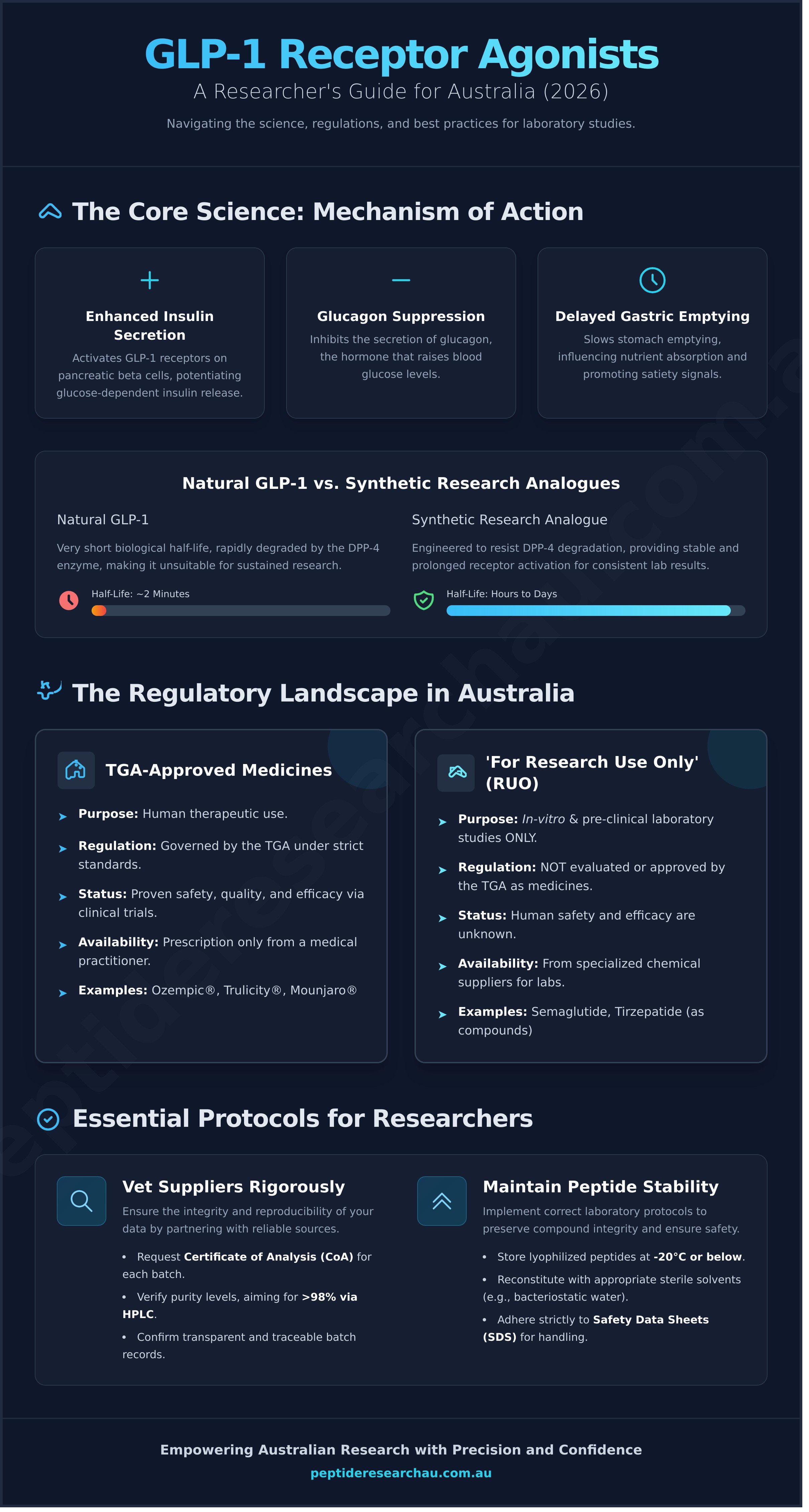
Glucagon-Like Peptide-1 (GLP-1) is a naturally occurring incretin hormone produced in the intestine. Its primary physiological roles are central to metabolic regulation, including stimulating insulin secretion in response to glucose, suppressing glucagon release, and promoting satiety by slowing gastric emptying. The significant potential of these pathways has led to the development of synthetic analogues known as GLP-1 receptor agonists (RAs). These laboratory-grade compounds are designed to mimic the action of endogenous GLP-1, and their study in metabolic conditions has driven a surge of scientific inquiry into GLP-1 in Australia and worldwide.
The Mechanism of Action in a Laboratory Context
In a research setting, GLP-1 RAs function by selectively binding to and activating GLP-1 receptors on target cells, such as pancreatic beta cells. This interaction initiates a cascade of intracellular signalling pathways. Pre-clinical studies consistently observe several key downstream effects, which form the basis of their therapeutic potential. These effects include:
Enhanced Insulin Secretion: The activation of GLP-1 receptors potentiates glucose-dependent insulin release.
Glucagon Suppression: The compounds inhibit the secretion of glucagon, a hormone that raises blood glucose levels.
Delayed Gastric Emptying: They slow the rate at which stomach contents are released into the small intestine, influencing nutrient absorption and satiety signals.
Key Differences: Natural GLP-1 vs. Synthetic Analogues
The native GLP-1 hormone has a very short biological half-life, typically lasting only a few minutes before it is rapidly degraded by the enzyme dipeptidyl peptidase-4 (DPP-4). This inherent instability makes it unsuitable for sustained research applications. Synthetic analogues are specifically engineered to resist this degradation, often through molecular modifications. This extended duration of action provides a stable and prolonged activation of GLP-1 receptors, which is crucial for achieving consistent and reproducible outcomes in laboratory studies.
Why GLP-1 RAs Are a Major Focus of Scientific Research
The scientific interest in GLP-1 RAs extends far beyond their initial applications in glucose metabolism. Researchers are actively investigating their pleiotropic effects on various physiological systems. Current areas of focus include their potential cardiovascular benefits, such as effects on blood pressure and endothelial function, and their neuroprotective properties in neurological models. This expanding scope of inquiry highlights the potential for GLP-1 RAs to uncover novel cellular pathways and therapeutic mechanisms, making them a cornerstone of modern peptide research.
The Regulatory Landscape: TGA-Approved Medicines vs. Research Compounds in Australia
When sourcing any GLP-1 in Australia, it is imperative to understand the stark regulatory difference between therapeutic medicines and research-grade compounds. These two categories exist in separate legal and scientific frameworks, governed by distinct standards and intended uses. The primary authority overseeing this distinction is the Therapeutic Goods Administration (TGA), Australia's regulatory body for medical drugs and devices.
TGA Regulation of Prescription GLP-1 Medicines
The TGA is responsible for ensuring that all medicines supplied in Australia meet stringent standards of safety, quality, and efficacy. Products intended for human therapeutic use undergo a rigorous evaluation process, including extensive clinical trials, before they can be legally marketed. Examples of TGA-approved GLP-1 medicines include brand names such as Ozempic®, Trulicity®, and Mounjaro®. These are classified as scheduled medicines and are only available legally to consumers with a valid prescription from a registered medical practitioner.
Defining 'For Research Use Only' Peptides
In contrast, 'For Research Use Only' (RUO) peptides are chemical compounds intended exclusively for scientific investigation in a controlled laboratory setting. Their purpose is for in-vitro (in glassware) or pre-clinical studies, not for human or veterinary administration. Consequently, these compounds are not evaluated or approved by the TGA as medicines. They have not been assessed for safety, quality, or effectiveness in treating any medical condition and are not manufactured to pharmaceutical standards for therapeutic use.
Legal Considerations for Australian Researchers
The purchase and possession of RUO compounds are legal in Australia for individuals and institutions engaged in legitimate scientific research. However, the responsibility falls squarely on the researcher to ensure their work complies with all applicable state and federal regulations. It is strictly prohibited to administer these compounds to humans or to market them for any therapeutic purpose. Misrepresenting or misusing these peptides constitutes a serious breach of Australian law.
Disclaimer: All compounds discussed are strictly for laboratory and research purposes only and are not approved for human consumption. Understand our commitment to providing laboratory-grade compounds for legitimate research.
A Profile of Key GLP-1 Analogues in Scientific Studies
While consumer brand names are widely recognised, scientific inquiry focuses on the distinct molecular structures of GLP-1 receptor agonists. These structural modifications are not trivial; they fundamentally alter the peptide's pharmacokinetic and pharmacodynamic properties, including receptor affinity, potency, and biological half-life. For researchers investigating glp1 australia, a clear understanding of these differences is essential for designing precise and effective studies.
Semaglutide: The Benchmark for Potency and Duration
Semaglutide represents a significant advancement in peptide engineering, designed for high potency and an extended duration of action. Its molecular structure includes two key modifications from native GLP-1: an amino acid substitution at position 8 to resist degradation by the DPP-4 enzyme, and the attachment of a C18 fatty diacid chain via a linker. This acylation allows semaglutide to bind strongly to serum albumin, creating a circulating reservoir that extends its half-life to approximately one week. In pre-clinical research, it serves as a reference compound for studying sustained GLP-1 receptor activation. Its profound metabolic effects are the subject of significant ongoing investigation, including a prominent Australian GLP-1 Clinical Trial by the Garvan Institute exploring its potential in type 1 diabetes.
Liraglutide: A Widely Studied First-Generation Analogue
As an earlier GLP-1 analogue, liraglutide played a foundational role in elucidating the therapeutic potential of this peptide class. Its structure is modified with a single C16 fatty acid chain, which also facilitates albumin binding but results in a considerably shorter half-life of about 13 hours. This necessitates more frequent administration in research protocols compared to semaglutide. Liraglutide has been instrumental in countless studies that have mapped the downstream signalling pathways of GLP-1 activation, providing the groundwork upon which newer compounds were developed. It remains a valuable tool in comparative studies assessing the impact of half-life on biological outcomes.
Tirzepatide: A Dual GIP and GLP-1 Receptor Agonist
Tirzepatide stands apart as a novel compound, engineered as a dual agonist for both the GLP-1 and the glucose-dependent insulinotropic polypeptide (GIP) receptors. This single-molecule, multi-target approach is at the forefront of metabolic science. By activating two distinct incretin pathways, tirzepatide is hypothesised to produce synergistic effects on insulin secretion, glucagon suppression, and energy homeostasis that may exceed those of a selective GLP-1 agonist. For researchers, this compound opens new avenues to investigate the complex interplay between incretin systems and offers a powerful tool for exploring the next frontier of metabolic regulation.
Sourcing High-Purity GLP-1 Analogues for Research in Australia
The integrity of any scientific study depends entirely on the quality of the materials used. When sourcing GLP-1 analogues for research, ensuring the purity, stability, and authenticity of the compound is paramount. Inaccurate or contaminated peptides can lead to unreliable data, jeopardise experimental outcomes, and waste valuable resources. Navigating the online market presents significant challenges, making a structured evaluation process essential for any serious researcher.
The Critical Role of Third-Party Laboratory Testing
Verifiable data is the cornerstone of a trustworthy supplier. Always demand a current Certificate of Analysis (COA) for the specific batch you are purchasing. This document should include High-Performance Liquid Chromatography (HPLC) results, which quantitatively measure the purity of the peptide. A supplier who is unable or unwilling to provide recent, verifiable testing data for their glp1 australia compounds should be avoided, as this indicates a lack of quality control.
Purity, Stability, and Lyophilization
Peptides are complex molecules susceptible to degradation. To ensure stability during shipping and storage, they are supplied in a lyophilized (freeze-dried) state. This process removes water without damaging the peptide's structure, preserving its integrity until it is ready for reconstitution. A purity level of >98%, as confirmed by HPLC, is the minimum standard for research-grade compounds, ensuring that experimental results are attributable to the GLP-1 analogue itself and not to unknown contaminants.
Why Choose a Domestic Australian Supplier?
Sourcing peptides from within Australia offers distinct logistical and quality assurance advantages over international vendors. Choosing a reputable domestic supplier provides researchers with greater confidence and efficiency.
Faster Shipping Times: Local dispatch significantly reduces transit time, minimising the risk of degradation during transport.
Reduced Risk of Customs Seizure: Importing research chemicals can lead to delays or confiscation by the Australian Border Force. Domestic suppliers eliminate this critical variable.
Easier Communication and Accountability: Dealing with a local entity ensures clear communication and adherence to Australian consumer and business standards.
To ensure the validity of your research, partnering with a supplier committed to transparency is non-negotiable. View our quality and purity standards for all research compounds.
Essential Protocols for Handling GLP-1 Compounds in a Laboratory Setting
To ensure the integrity and efficacy of GLP-1 receptor agonists in research applications, adherence to strict handling protocols is paramount. For any study involving glp1 australia compounds, proper technique from reconstitution to storage is critical for obtaining valid and reproducible results. These guidelines are designed for qualified researchers handling these compounds within a controlled laboratory environment.
Step 1: Proper Reconstitution Technique
GLP-1 compounds are typically supplied in a lyophilized (freeze-dried) state for maximum stability. Reconstitution must be performed carefully to avoid denaturing the peptide structure. The standard diluent is sterile bacteriostatic water, which helps maintain sterility for multi-use vials.
Disinfect the rubber stoppers of both the peptide vial and the diluent vial with an alcohol swab.
Using a sterile syringe, draw the required volume of bacteriostatic water.
Slowly inject the diluent into the GLP-1 vial, aiming the stream against the side of the glass wall to minimize agitation.
Gently swirl or roll the vial between your fingers until the powder is fully dissolved. Do not shake or vigorously agitate the vial, as this can damage the peptide chains and compromise the compound's integrity.
Step 2: Correct Storage for Maximum Stability
Storage conditions are crucial for preserving the potency of GLP-1 compounds. Requirements differ significantly between the lyophilized and reconstituted states.
Lyophilized Peptides: Prior to reconstitution, vials should be stored in a freezer at approximately -20°C for long-term stability. For short-term storage, a refrigerator (2-8°C) is acceptable.
Reconstituted Peptides: Once dissolved, the solution must be stored in a refrigerator at 2-8°C. It should not be frozen. Repeated freeze-thaw cycles will degrade the peptide and must be avoided at all costs.
Step 3: General Laboratory Safety and Handling
All procedures involving GLP-1 compounds must be conducted within a designated research setting by trained personnel. Standard laboratory safety practices are mandatory to ensure both personnel safety and experimental accuracy. When sourcing any glp1 australia research chemical, it is vital to follow these handling procedures.
Always wear appropriate personal protective equipment (PPE), including laboratory gloves and safety glasses. Ensure all measurements are performed with calibrated instruments to guarantee precision in your experimental design. These compounds are strictly for in-vitro research purposes and are not intended for human or animal consumption.
For access to laboratory-grade compounds for your research, visit Peptide Research AU, your trusted source for peptides.
Navigating the Future of GLP-1 Research in Australia
As we look towards 2026, the scientific landscape for GLP-1 receptor agonists is poised for significant advancement. This overview has highlighted the critical importance of navigating Australia's regulatory framework, distinguishing clearly between TGA-approved medicines and research-grade compounds. Furthermore, the integrity of any scientific outcome is directly dependent on the purity of the sourced analogues and adherence to meticulous laboratory protocols.
For research teams conducting studies on glp1 australia, securing a reliable supply of verifiable compounds is fundamental to producing valid and reproducible data. Your work demands materials of the highest standard to ensure the credibility of your findings. At Peptide Research AU, we are dedicated to supporting these critical scientific endeavours by providing laboratory-grade peptides that meet stringent quality controls.
Our compounds are third-party tested for purity and quality and supplied in a stable, lyophilized form to ensure optimal performance. As your trusted Australian source for laboratory-grade compounds, we are committed to advancing your scientific objectives. Explore our range of high-purity peptides for your research needs and equip your laboratory for the discoveries of tomorrow.
Frequently Asked Questions
Is it legal to buy GLP-1 peptides in Australia for research purposes?
In Australia, the purchase of GLP-1 compounds is legal when intended strictly for genuine scientific and laboratory research purposes, not for human consumption or therapeutic use. These research-grade peptides are not regulated as medicines by the Therapeutic Goods Administration (TGA) because they are supplied for in vitro studies. Researchers must ensure their acquisition and use of these compounds align with all applicable institutional and state guidelines for handling research chemicals.
What is the difference between pharmaceutical-grade Ozempic and research-grade semaglutide?
Pharmaceutical-grade Ozempic is a TGA-approved brand name drug manufactured under strict Good Manufacturing Practice (GMP) standards for human therapeutic use and requires a prescription. Research-grade semaglutide contains the same active molecule but is produced for laboratory and in vitro research only. It is not intended for human administration and does not undergo the same TGA approval process, with its primary focus being on purity for research applications rather than pharmaceutical formulation.
How can I verify the purity of a GLP-1 research compound I purchase online?
To verify the purity of a GLP-1 research compound, you must request a current Certificate of Analysis (CoA) from the supplier. This document should be from a third-party laboratory and detail results from High-Performance Liquid Chromatography (HPLC) and Mass Spectrometry (MS) tests. Reputable vendors of glp1 australia compounds will readily provide this batch-specific documentation to validate the quality and integrity of their products for your research.
Why are research peptides sold in a lyophilized powder form?
Research peptides are supplied in a lyophilized (freeze-dried) state to ensure maximum stability and a long shelf-life. This process removes water, which can cause the delicate peptide chains to degrade, especially during shipping and storage. By providing the compound as a powder, its chemical integrity is preserved until the researcher is ready to reconstitute it with a sterile diluent for immediate use in a controlled laboratory setting, ensuring accurate experimental results.
What is bacteriostatic water and why is it used with research peptides?
Bacteriostatic water is sterile water for injection that contains 0.9% benzyl alcohol. This alcohol acts as a preservative, preventing the growth of bacteria within the solution after a peptide vial has been reconstituted. For research purposes, using bacteriostatic water is critical for maintaining the sterility and integrity of the peptide solution over multiple uses. This ensures that experimental outcomes are not compromised by microbial contamination, which is vital for valid scientific study.
What are the correct storage conditions for reconstituted GLP-1 analogues?
Once reconstituted, GLP-1 analogues must be stored in a refrigerator at temperatures between 2°C and 8°C. The solution should be kept away from direct light to prevent degradation of the peptide structure. It is critical not to freeze the reconstituted solution, as the freeze-thaw cycle can damage the molecule and reduce its efficacy. Proper refrigerated storage is essential to maintain the compound's stability and potency for the duration of the research protocol.


Comments