
GLP-1 Agonists for Research Australia: A 2026 Scientific Overview
- peptideresearchau
- Jul 4
- 11 min read
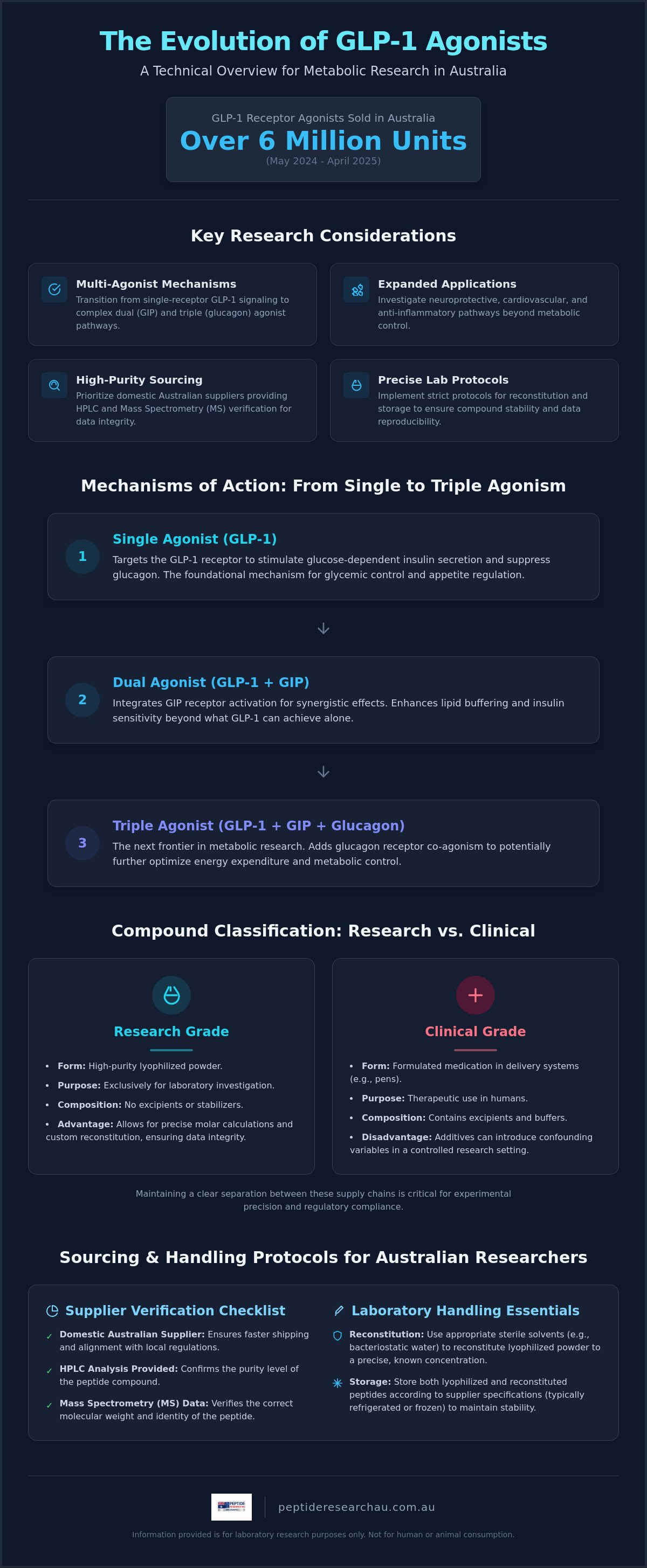
With over 6 million units of GLP-1 receptor agonists sold in Australia between May 2024 and April 2025, the scale of metabolic study has reached an unprecedented magnitude. As of 2026, the landscape for glp-1 agonists for research australia has evolved beyond simple glucose management into a sophisticated field of multi-receptor agonism. You likely recognize that while clinical demand for these compounds is at an all-time high, the requirements for laboratory-grade materials are fundamentally different from pharmaceutical applications. Maintaining experimental precision requires a clear distinction between therapeutic products and high-purity research compounds.
This scientific overview provides a technical analysis of GLP-1 and emerging multi-agonist mechanisms within the current Australian regulatory framework. You'll gain a comprehensive understanding of how these peptides function at the molecular level and how to navigate the domestic supply chain effectively. We'll examine the specific properties of dual and triple agonists, analyze the impact of recent TGA policy shifts on procurement, and establish the criteria for selecting high-integrity laboratory supplies for professional study.
Table of Contents
Understanding GLP-1 Agonists in a Research Context
Glucagon-like peptide-1 (GLP-1) functions as a primary incretin hormone, naturally secreted by the intestinal L-cells in response to nutrient ingestion. It stimulates glucose-dependent insulin secretion while simultaneously suppressing glucagon release from the pancreas. While early studies focused almost exclusively on glycemic control in type 2 diabetes models, the scope of modern metabolic research has expanded significantly. Today, investigators utilize GLP-1 receptor agonists to explore complex pathways involving appetite regulation, neuroprotection, and cardiovascular health.
The distinction between endogenous GLP-1 and synthetic analogues is critical for experimental design. Native GLP-1 is rapidly degraded by the enzyme dipeptidyl peptidase-4 (DPP-4), resulting in a half-life of less than two minutes. Synthetic analogues are engineered to bypass this limitation, allowing for sustained activation of the GLP-1 receptor (GLP-1R). These receptors are widely distributed throughout the body, including the central nervous system, myocardium, and gastrointestinal tract. This broad expression profile explains why sourcing high-purity glp-1 agonists for research australia has become a priority for laboratories investigating multi-system disorders.
The Biochemical Structure of GLP-1 Analogues
Achieving metabolic stability requires precise amino acid sequence modifications. Designers typically employ two primary strategies: acylation and amino acid substitution. Acylation involves the addition of a fatty acid chain to the peptide backbone, which promotes binding to serum albumin and slows renal clearance. Alternatively, substituting the alanine at position 8 with a different amino acid, such as glycine or aminoisobutyric acid, prevents DPP-4 from recognizing and cleaving the peptide. GLP-1 analogues are synthetic peptides designed to resist enzymatic degradation. These structural refinements ensure that the compound remains active long enough to produce measurable biological responses in vivo.
Research vs. Clinical Grade Classifications
Maintaining data integrity requires the use of laboratory-grade compounds specifically synthesized for experimental use. Clinical-grade medications, while highly regulated, are formulated with excipients and delivery systems intended for human therapeutic use; these can introduce confounding variables into a controlled study. In contrast, research-grade compounds are provided as high-purity lyophilized powders. This format allows for precise molar calculations and custom reconstitution without the interference of stabilizers found in commercial pens.
The regulatory environment for glp-1 agonists for research australia dictates that these materials must be used strictly for laboratory investigations. They are not intended for human or animal consumption. Researchers must avoid sourcing from clinical supply chains to ensure their materials meet the rigorous purity standards required for peer-reviewed results. This separation ensures that laboratory work remains independent of pharmaceutical shortages and clinical prescribing restrictions.
Mechanisms of Action: From Single to Triple Agonism
The biological activity of GLP-1 receptor agonists begins with the targeted activation of the GLP-1 receptor (GLP-1R), a member of the class B G-protein-coupled receptor family. Binding triggers a conformational change that activates adenylyl cyclase, leading to a rapid increase in intracellular cyclic adenosine monophosphate (cAMP). In pancreatic beta cells, this signaling cascade facilitates insulin exocytosis. In the central nervous system, particularly within the hypothalamus and hindbrain, cAMP signaling modulates neurotransmitters responsible for satiety and energy balance. Understanding these fundamental pathways is essential when evaluating glp-1 agonists for research australia, as it establishes the baseline for more complex multi-receptor interactions.
Recent laboratory advancements have shifted focus toward dual agonism, specifically the integration of Glucose-dependent Insulinotropic Polypeptide (GIP) receptor activation. While GLP-1 primarily targets gastric emptying and insulin secretion, GIP receptors expressed in adipose tissue and the brain appear to enhance lipid buffering and insulin sensitivity. This synergistic effect often results in metabolic outcomes that exceed the capabilities of single-receptor agonists. Researchers can consult the TGA overview of approved GLP-1 agonists to see how these mechanisms are categorized in a clinical context, though laboratory research continues to explore applications far beyond current medical approvals.
Triple agonism represents the current frontier of metabolic study. These compounds add glucagon (GCG) receptor activation to the GLP-1/GIP framework. While glucagon is traditionally associated with increasing blood glucose, its activation in a triple-agonist context promotes hepatic lipid oxidation and increases energy expenditure through thermogenesis. This three-pronged approach aims to maximize fat mass reduction while maintaining glucose homeostasis. Systematic study of these pathways requires high-purity research compounds to ensure that observed metabolic shifts are attributable to the peptide's specific receptor affinities.
GLP-1 and GIP Synergism in Laboratory Models
Dual agonism addresses insulin resistance by leveraging the complementary roles of GLP-1 and GIP. In rodent models, GIP receptor activation appears to mitigate the gastrointestinal side effects sometimes associated with high-dose GLP-1, allowing for a broader therapeutic window in experimental settings. GIP also plays a documented role in adipocyte metabolism, potentially improving the rate of lipid clearance from the bloodstream. This makes retatrutide a primary benchmark for investigators studying the transition from dual to triple receptor signaling.
Emerging GLP-1 Research Compounds for 2026
The next generation of research focuses on small molecule GLP-1R agonists. Unlike traditional peptide chains, these non-peptide compounds offer a different structural approach to receptor binding. A major trend in 2026 is the investigation of oral bioavailability in peptide design. Researchers are testing various permeation enhancers and structural modifications to overcome the proteolytic environment of the digestive tract. These developments are critical for laboratories investigating the long-term feasibility of non-injectable metabolic interventions. Sourcing these specialized glp-1 agonists for research australia requires strict adherence to analytical standards to confirm that the small molecule or modified peptide maintains its intended receptor potency.
Current Research Applications Beyond Metabolic Study
While primary metabolic benefits are well-documented, current investigations into glp-1 agonists for research australia are increasingly focusing on extra-pancreatic effects. These include the modulation of neuroinflammatory pathways and the preservation of cardiovascular integrity. Researchers are moving beyond simple weight-loss metrics to analyze how these compounds influence cellular health in the brain, heart, and liver. This shift reflects a broader understanding of GLP-1R distribution across diverse organ systems, allowing for the study of chronic conditions that lack effective pharmacological models.
Non-alcoholic steatohepatitis (NASH) research utilizes GLP-1 analogues to target hepatic inflammation and fibrosis. By reducing lipotoxicity and downregulating inflammatory signaling in hepatocytes, these compounds show promise in preclinical liver models. Additionally, emerging studies explore substance use disorder (SUD) modulation. GLP-1 signaling appears to interact with dopaminergic reward circuits in the ventral tegmental area, potentially reducing the reinforcing effects of addictive substances. This diverse range of applications underscores why sourcing high-purity glp-1 agonists for research australia remains vital for multi-disciplinary laboratories.
Neuroinflammation and Cognitive Research
GLP-1 receptors are expressed throughout the central nervous system, including the hypothalamus and hippocampus. Studies in Alzheimer’s and Parkinson’s models suggest that receptor activation reduces amyloid-beta accumulation and mitigates dopaminergic neuron loss. This neuroprotective effect is largely attributed to the suppression of pro-inflammatory cytokines such as TNF-alpha and IL-1 beta. There's also significant interest in the potential synergy with BPC-157. Combining these peptides allows investigators to observe broader anti-inflammatory responses across both neurological and systemic models, particularly regarding blood-brain barrier integrity.
Cardiovascular and Renal Study Outcomes
The impact on vascular smooth muscle cell proliferation is a major area of cardiovascular study. In vitro data indicates that GLP-1 signaling promotes nitric oxide production, which enhances endothelial function and maintains vascular tone. Myocardial protection during ischemia is another priority. Research suggests that GLP-1 receptor activation can reduce infarct size in animal models by modulating mitochondrial function and reducing oxidative stress. On the renal front, these agonists influence sodium excretion and renal hemodynamics. This provides a rigorous basis for studying chronic kidney disease progression and the mechanisms of pressure natriuresis in controlled laboratory settings.
Sourcing GLP-1 Agonists for Research in Australia
Procuring glp-1 agonists for research australia requires a rigorous vetting process that separates clinical pharmaceuticals from laboratory-grade reagents. While clinical products are subject to Pharmaceutical Benefits Scheme (PBS) availability and TGA prescribing restrictions, research compounds are synthesized specifically for in vitro and in vivo studies. These materials aren't intended for human consumption and must be handled within a controlled laboratory environment. It's vital to identify a domestic supplier that understands these distinctions to maintain compliance with Australian chemical handling regulations in 2026.
Adherence to "For Research Purposes Only" labeling is a legal necessity. This classification ensures that the compounds are treated as chemical reagents rather than therapeutic goods. For institutional researchers, this distinction simplifies procurement by bypassing the clinical supply chain, which often faces shortages due to high patient demand. By utilizing dedicated research compounds, laboratories ensure their studies don't suffer interruptions caused by fluctuations in the medical market.
Quality Assurance and Purity Standards
Reliable data depends on the chemical integrity of the peptide. High-Performance Liquid Chromatography (HPLC) is the primary tool for determining purity levels. An HPLC chromatogram should show a single, sharp peak; this indicates the absence of truncated sequences or residual solvents. Industry standards for metabolic research dictate a minimum purity of 99%. While HPLC measures purity, Mass Spectrometry (MS) is required to verify the peptide's identity. MS confirms that the amino acid sequence and molecular weight match the theoretical profile of the GLP-1 analogue. Without both tests, the risk of experimental error increases significantly.
Navigating Domestic vs. International Sourcing
Sourcing peptides within Australia offers distinct advantages regarding compound stability. Peptides are inherently sensitive to temperature fluctuations and mechanical stress during transit. International shipping often involves prolonged exposure to uncontrolled environments. This can lead to peptide degradation or deamidation. Domestic suppliers provide shorter lead times and more reliable cold-chain logistics. For a detailed breakdown of procurement standards, consult the Peptides Australia guide. Selecting a domestic partner ensures that the material arrives in its optimal lyophilized state, ready for immediate laboratory use.
Laboratory Handling and Reconstitution Protocols
Handling glp-1 agonists for research australia requires strict adherence to biochemical stabilization protocols to prevent premature degradation. Peptides are structurally fragile; their amide bonds remain susceptible to hydrolysis and deamidation if environmental conditions aren't strictly controlled. Long-term storage of these compounds should always occur in their lyophilized state. For extended periods exceeding three months, a temperature of -20°C is standard to maintain molecular integrity. For shorter durations, 4°C is sufficient provided the vial remains sealed and protected from UV light exposure, which can catalyze peptide cleavage.
Physical degradation is a significant risk during the transition from lyophilized powder to solution. High-energy agitation, such as vortexing or vigorous shaking, can cause the peptide to denature or form aggregate chains. This renders the compound biologically inactive and compromises the validity of research data. Researchers must also ensure the use of sterile laboratory diluents to prevent microbial contamination. Even minor bacterial growth can rapidly secrete proteases that degrade the peptide sequence, leading to inconsistent experimental outcomes.
Reconstitution with Bacteriostatic Water
Bacteriostatic water containing 0.9% benzyl alcohol is the preferred diluent for multi-use research vials. The alcohol acts as a preservative, extending the stability of the solution after the vial's septum has been punctured. To reconstitute, slowly introduce the diluent by allowing it to run down the interior glass wall of the vial. Don't spray the liquid directly onto the lyophilized cake. Once the liquid is added, gently swirl the vial until the powder is fully dissolved. Reconstituted GLP-1 agonists typically maintain their bioactivity for 21 to 28 days when stored consistently at 4°C. Solutions that appear cloudy or show visible particulates should be discarded immediately.
Dosage Calculation for Research Models
Precise concentration is fundamental to achieving reproducible results in metabolic studies. Most investigators use molarity calculations to determine the exact amount of peptide delivered in microliter volumes. A common pitfall includes failing to account for the "dead volume" in syringes or neglecting the displacement volume of the lyophilized powder itself. Using high-precision pipettes and calibrated scales ensures that the glp-1 agonists for research australia used in your study meet the required dosage parameters. Maintaining these handling standards is the final step in ensuring that laboratory results accurately reflect the compound's metabolic or neuroprotective potential without interference from handling-induced artifacts.
Advancing Metabolic Research Standards
The evolution of metabolic study in 2026 demands a rigorous approach to compound selection and laboratory protocols. Transitioning from basic glycemic models to complex triple-agonist frameworks provides investigators with new avenues for discovery in neuroprotection and cardiovascular health. Success in these high-stakes studies depends on using verified materials that meet the 99% purity industry standard. Maintaining these benchmarks ensures that your data remains reproducible and credible within the scientific community.
When sourcing glp-1 agonists for research australia, choosing a domestic partner ensures that your compounds maintain stability through secure, localized shipping. We're a specialized Australian supplier committed to providing third-party HPLC and MS verified materials for precise laboratory applications. Explore our range of laboratory-grade research peptides to secure high-integrity compounds for your next project. We look forward to supporting your ongoing contributions to metabolic science and technical advancement.
Frequently Asked Questions
What is the primary difference between clinical GLP-1 and research-grade GLP-1?
Clinical GLP-1 products are finished pharmaceuticals formulated with specific excipients and delivery systems for human therapeutic use. Research-grade GLP-1 consists of high-purity chemical reagents provided in a lyophilized powder format. These compounds are designed for precise molar dosing in laboratory settings and don't contain the stabilizers or preservatives found in commercial prescription pens.
Are GLP-1 agonists legal for laboratory research in Australia in 2026?
Yes, these compounds remain legal for legitimate laboratory research applications within Australia. They're classified as research chemicals and must be used strictly for in vitro or in vivo studies. It's essential that these materials are never used for human or animal consumption, as they're not intended for therapeutic purposes and don't carry TGA approval for clinical use.
How should GLP-1 research peptides be stored to ensure longevity?
Lyophilized peptides should be stored at -20°C to maintain long-term molecular stability. This temperature prevents the amide bonds from undergoing hydrolysis or deamidation. For compounds currently in use, refrigeration at 4°C is sufficient for up to four weeks, provided the vials are kept in a dark environment and protected from moisture to prevent degradation of the peptide sequence.
Why is HPLC testing important when sourcing GLP-1 for research?
HPLC testing is the industry standard for verifying that glp-1 agonists for research australia meet a minimum purity threshold of 99%. High-Performance Liquid Chromatography identifies and quantifies any impurities, such as residual solvents or truncated peptide sequences. Using verified high-purity materials is the only way to ensure that experimental data isn't compromised by chemical contaminants or inactive peptide fragments.
Can GLP-1 agonists be combined with other peptides in a single research study?
Researchers often combine these agonists with other compounds to investigate synergistic biological effects. For example, studies into systemic inflammation may utilize both GLP-1 and BPC-157 to observe multi-pathway responses. Such experiments require careful molarity calculations and separate reconstitution protocols to ensure each peptide remains stable and active within the final research model.
What recent TGA safety updates affect the study of GLP-1 agonists?
Recent safety updates from the TGA focus on the class-wide effect of delayed gastric emptying. This is a critical variable for glp-1 agonists for research australia, particularly in studies involving anesthesia or deep sedation. Researchers must account for altered gastrointestinal motility in their experimental designs to ensure that results accurately reflect the compound's metabolic influence without being skewed by secondary physiological changes.
What is the role of GIP in dual-agonist research compounds?
GIP receptor activation complements GLP-1 by improving insulin sensitivity and lipid buffering in adipose tissue. In dual-agonist models, the inclusion of GIP appears to enhance the overall metabolic rate while potentially reducing the severity of gastrointestinal side effects. This synergy allows investigators to study more aggressive metabolic interventions than are possible with single-receptor agonists alone.
How do I reconstitute a lyophilized GLP-1 agonist vial for lab use?
Reconstitution requires the slow introduction of a sterile diluent, such as bacteriostatic water, along the interior wall of the vial. It's vital to avoid direct contact between the liquid stream and the lyophilized cake to prevent peptide shearing. Once the diluent is added, gently swirl the vial until the solution is completely clear. Never shake the vial, as mechanical stress can denature the fragile peptide structure.


Comments