
Epithalon Peptide Australia: A Technical Guide for Telomere Research
- peptideresearchau
- Jul 9
- 11 min read
In June 2026, the Therapeutic Goods Administration designated unapproved peptides as a high-level compliance priority, fundamentally shifting the landscape for laboratory procurement. You may already be aware that a June 2026 newsGP poll indicated that 65% of Australian General Practitioners have seen a rise in interest regarding these compounds; however, the path to securing high-purity epithalon peptide australia remains complex. The heightened regulatory scrutiny and the risk of product seizure make domestic, HPLC-verified compounds essential for maintaining laboratory continuity and data reliability.
This technical guide provides a rigorous analysis of the AEDG sequence, detailing its mechanism of telomerase induction and the precise standards required to maintain bioactive integrity. You'll examine the specific pathways of pineal regulation and establish a validated reconstitution protocol for your studies. By addressing the nuances of telomere research and Australian sourcing standards, this analysis ensures your laboratory handling meets the highest benchmarks of scientific precision and regulatory compliance.
Table of Contents
What is the Epithalon Peptide? Understanding the AEDG Sequence
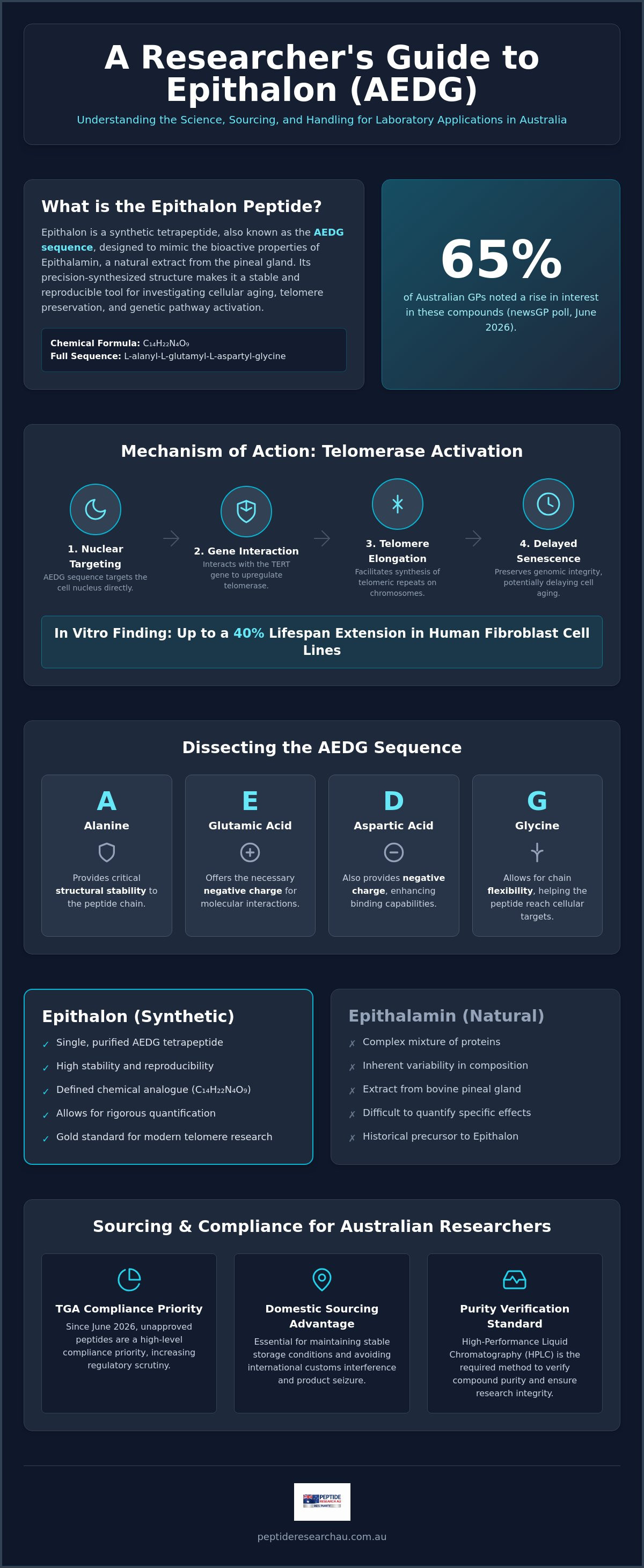
Epithalon is a synthetic tetrapeptide designed to mimic the bioactive properties of the naturally occurring pineal gland extract, Epithalamin. For researchers sourcing epithalon peptide australia, understanding the molecular precision of this compound is fundamental to experimental accuracy. It consists of four specific amino acids: L-alanyl-L-glutamyl-L-aspartyl-glycine. This specific arrangement, often abbreviated as the AEDG sequence, represents a significant advancement in peptide synthesis and bioregulator research. Its design targets the activation of specific genetic pathways associated with cellular maintenance and telomere preservation.
Historical Context and Development
The development of this compound spans over three decades of study at the St. Petersburg Institute of Bioregulation and Gerontology. Professor Vladimir Khavinson pioneered this research, focusing on extracts from the bovine pineal gland. These natural extracts, known as Epithalamin, showed effects on cellular longevity and endocrine function in early preclinical models. The transition to the precision-synthesised Epitalon peptide allowed researchers to isolate the specific bioactive sequence responsible for these observed outcomes. This move from biological extracts to a defined chemical analogue provided a stable, reproducible tool for investigating cellular aging. It eliminated the variability inherent in natural glandular extracts, allowing for rigorous quantification in laboratory settings.
Chemical Properties and Nomenclature
The AEDG sequence defines the primary structure of Epithalon. Its chemical formula is C₁₄H₂₂N₄O₉. Unlike its precursor, Epithalamin, which is a complex mixture of proteins, Epithalon is a single, purified tetrapeptide. This small molecular weight is a critical attribute for laboratory application. It ensures high stability during storage and facilitates rapid solubility in various laboratory diluents. The structural integrity of the AEDG sequence is maintained through peptide bonds that provide resistance against rapid enzymatic degradation in vitro.
Researchers must distinguish between the natural bioregulator and the synthetic analogue to ensure consistency in experimental data. When evaluating epithalon peptide australia, verifying the HPLC profile of the AEDG sequence is the standard method for confirming the identity of the research compound. The specific sequence of Alanine, Glutamic acid, Aspartic acid, and Glycine is not arbitrary. Each amino acid contributes to the peptide's ability to interact with chromatin and the TERT gene. Alanine provides structural stability; Glutamic and Aspartic acids offer the necessary charge for molecular interactions. Glycine, the smallest amino acid, allows for the flexibility required for the peptide to reach its intended cellular targets. This molecular efficiency is why Epithalon remains a focal point of telomere research globally.
Mechanism of Action: Telomerase Activation and Cellular Biology
Epithalon research focuses on its unique ability to modulate intracellular pathways. Unlike peptides that primarily interact with surface receptors, the AEDG sequence appears to target the cell nucleus directly. It induces telomerase activity, the enzymatic process required for the elongation of telomeres. This specific mechanism is the primary reason researchers prioritise epithalon peptide australia for longevity studies. By interacting with the telomerase reverse transcriptase (TERT) gene, the peptide facilitates the synthesis of telomeric repeats, potentially delaying the onset of cellular senescence.
Telomerase and Telomere Maintenance
Telomeres serve as protective buffers at the ends of chromosomes. During each cycle of replication, these buffers naturally shorten. This process continues until the cell reaches the Hayflick limit. At this threshold, the cell ceases division and enters a permanent state of senescence or programmed death. Epithalon is hypothesised to bypass this limit by upregulating telomerase expression. In vitro models have shown that AEDG can extend the lifespan of human fibroblast cell lines by up to 40%. This elongation isn't merely a structural change; it preserves the functional integrity of the genome during repeated replicative cycles.
Epigenetic Regulation and Gene Expression
The peptide's influence also extends to the epigenetic landscape. It appears to alter the methylation status of specific DNA regions. Aging is frequently characterised by the silencing of vital genes through hypermethylation. Research into epithalon peptide australia has specifically highlighted its role in chromatin remodelling. By promoting a more "open" chromatin structure, the peptide makes the TERT gene more accessible for transcription. This reversal of gene silencing is a cornerstone of current bioregulator research.
Studies also investigate how AEDG modulates the expression of genes involved in antioxidant defense. It's observed to increase the activity of superoxide dismutase (SOD) and glutathione peroxidase in preclinical models. This dual action, protecting the genome while simultaneously enhancing cellular defense, makes it a unique subject for biochemical analysis. For laboratories conducting these complex assays, sourcing verified research peptides is essential to ensure that observed gene expression changes are attributable to the peptide itself rather than impurities or degradation products.
Research Applications: Pineal Gland and Circadian Regulation
Research into the neuroendocrine effects of Epithalon reveals a profound influence on the pineal-hypothalamic axis. While its cellular mechanisms involve telomerase induction, its systemic impact is largely mediated through the pineal gland. For scientists investigating epithalon peptide australia, this relationship is a primary area of focus. The peptide acts as a bioregulator, modulating the secretory activity of the pineal gland to restore baseline hormonal functions that typically decline with biological age. This regulation is central to understanding how the AEDG sequence influences the broader aging phenotype beyond individual cell lines.
Melatonin Synthesis and Circadian Rhythms
The biochemical pathway through which AEDG influences melatonin production involves the up-regulation of genes responsible for serotonin-to-melatonin conversion. Preclinical models indicate that Epithalon stimulates the synthesis of nocturnal melatonin, effectively synchronising the sleep-wake cycle. A comprehensive review of Epitalon published in 2025 highlights how this restoration is particularly evident in aged biological models. These subjects often show a blunted melatonin peak, which the tetrapeptide helps recalibrate. By enhancing the pineal gland's sensitivity to light-dark signals, researchers can study the broader implications of circadian rhythm stability on metabolic and cognitive health. The restoration of these rhythms is often used as a biomarker for the compound's systemic efficacy in laboratory studies.
Oxidative Stress and Antioxidant Signalling
Epithalon exhibits significant antioxidant properties within the pineal-hypothalamic axis. It doesn't just act as a direct scavenger; it enhances endogenous defense systems. Laboratory studies show a marked increase in superoxide dismutase (SOD) activity following administration. This enzyme is crucial for the neutralisation of superoxide radicals, which otherwise contribute to lipid peroxidation and mitochondrial damage. By lowering the concentration of these reactive oxygen species, the peptide preserves the structural integrity of the pineal gland itself.
The reduction of lipid peroxidation markers in these studies suggests that Epithalon protects neural tissues from age-related degradation. Maintaining pineal health is critical for systemic antioxidant capacity, as melatonin itself is a potent free-radical scavenger. This synergy between direct peptide action and secondary hormonal effects provides a robust framework for longevity research. When sourcing epithalon peptide australia, laboratories must prioritise high-purity compounds to ensure these specific biochemical interactions aren't masked by contaminants. The precision of the AEDG sequence ensures that the observed antioxidant signalling is a result of specific genetic up-regulation rather than non-specific cellular stress responses.
Sourcing Epithalon in Australia: Purity and Quality Standards
Securing high-purity epithalon peptide australia requires a rigorous evaluation of supplier protocols and analytical verification. For researchers, the integrity of the AEDG sequence is the primary variable in experimental success. Substandard compounds or those degraded during transit introduce confounding variables that can invalidate longitudinal telomere data. Technical procurement must therefore focus on two critical pillars: analytical transparency and logistical stability. It's not enough to rely on a supplier's reputation; data-driven verification is the only way to ensure the peptide's bioactive integrity remains intact for laboratory use.
The Importance of HPLC and MS Testing
HPLC is the industry standard for quantifying chemical purity. It utilizes a stationary phase and a liquid mobile phase to isolate the AEDG sequence from any residual synthesis byproducts. This process ensures the final product meets a minimum threshold of 99.0% purity. The resulting chromatogram should show a single, sharp peak with minimal baseline noise. While HPLC confirms purity, Mass Spectrometry (MS) verifies the identity of the molecule by measuring its molecular mass. For Epithalon, the molecular weight is typically confirmed at approximately 390.35 g/mol. Researchers must demand batch-specific Certificates of Analysis (COA) rather than generic templates. A recent COA provides empirical evidence that the specific vial in the laboratory matches the intended chemical structure and hasn't been compromised by synthesis errors.
Advantages of Domestic Australian Suppliers
Sourcing from domestic providers offers significant technical advantages over international procurement. The primary risk with global shipping is the cold chain interruption. Even lyophilised peptides can undergo subtle degradation if exposed to the extreme ambient temperatures typical of Australian transit hubs for extended periods. Domestic shipping reduces this exposure from weeks to days, preserving the compound's stability. The Australian climate is particularly unforgiving for sensitive research compounds, making local warehousing a necessity for quality control. Domestic suppliers can maintain controlled storage environments that international couriers often neglect during long-haul flights.
Additionally, the TGA's June 2026 designation of peptides as a compliance priority has increased the frequency of international package seizures. Domestic sourcing bypasses these customs-related delays and potential legal complications, ensuring that laboratory projects remain on schedule. By working with a local provider, you also ensure the product has been handled according to Australian laboratory standards. You can access verified HPLC-tested research compounds through domestic channels to maintain these rigorous standards and protect the validity of your experimental findings. This proximity allows for greater accountability and faster resolution of technical queries regarding batch specifications.
Laboratory Protocol: Reconstitution and Handling of AEDG
Precision in the laboratory is mandatory when handling the AEDG sequence to ensure reproducible data. Once you've secured high-quality epithalon peptide australia, the transition from a lyophilised state to a bioactive solution requires strict adherence to sterile techniques. Any deviation in temperature or mechanical handling can lead to peptide denaturation, rendering the research compound ineffective for telomerase activation studies. Maintaining the structural integrity of the tetrapeptide is the primary responsibility of the researcher during the initial handling phase.
Reconstitution Methodology
The standard diluent for peptide research is bacteriostatic water, which contains 0.9% benzyl alcohol to inhibit bacterial growth. When adding the diluent to the vial, avoid direct contact between the liquid stream and the lyophilised powder. Aim the needle at the inner glass wall, allowing the water to slide down slowly. Don't shake the vial. Use a gentle swirling motion to dissolve the powder. Shaking introduces mechanical stress that can break the delicate peptide bonds of the AEDG sequence. Calculating the concentration is a function of the total milligram weight and the volume of diluent added. For example, a 10mg vial reconstituted with 2ml of diluent yields a concentration of 5mg/ml. Accuracy in these calculations is vital for determining exact dosages in preclinical research models.
Storage and Stability Guidelines
Lyophilised vials should be stored at -20°C for long-term stability. At this temperature, the AEDG sequence remains stable for up to 24 months. Once reconstituted, the solution's shelf-life is significantly reduced. Store the vial in a dark environment at 2-8°C to prevent photodegradation. It's best to use the solution within 14 to 21 days to ensure maximum potency. Exposure to UV light or rapid temperature spikes common in the Australian climate will accelerate hydrolysis. If the solution appears cloudy or contains visible particulates after reconstitution, it's a sign of contamination or significant degradation, and the batch should be discarded to protect research integrity.
Research Use and Legal Compliance
All epithalon peptide australia is provided strictly for laboratory research purposes. It's not intended for human consumption or therapeutic use. Researchers must operate within the legal frameworks established by the TGA and local ethical committees. For a deeper understanding of these regulations, consult the Peptides Australia Guide. This ensures your laboratory remains compliant with the evolving 2026 standards for research compounds. Maintaining these ethical boundaries is essential for the continued advancement of telomere science and ensures that data generated remains credible within the scientific community.
Advancing Cellular Research Standards
The investigation into cellular longevity through telomerase activation requires absolute molecular precision. By mastering the AEDG sequence and its neuroendocrine interactions, researchers can explore the frontiers of chromosomal stability and circadian regulation. Success in these complex studies depends on the systematic application of sterile reconstitution techniques and the preservation of bioactive integrity against environmental stressors. Maintaining these rigorous laboratory standards is the only way to ensure that experimental outcomes are both reproducible and scientifically significant.
Securing high-purity epithalon peptide australia is a technical necessity for maintaining the validity of longitudinal research. It's essential to eliminate the risks of international cold-chain interruptions and unverified synthesis byproducts that can compromise cellular assays. You can Source Laboratory-Grade Epithalon 10mg for Your Research to ensure your projects utilize HPLC and MS verified purity. With express domestic shipping across Australia and rigorous quality control standards, you can focus on data acquisition with complete confidence in your compound's stability. Precision in procurement is the first step toward breakthrough discoveries in cellular biology.
Frequently Asked Questions
Is Epithalon legal for research purposes in Australia?
Epithalon is legal for purchase and use in Australia strictly for laboratory and research applications. It is not approved by the TGA for human therapeutic use or consumption. Researchers must ensure compliance with 2026 regulatory updates, which have increased scrutiny on the importation and supply of unapproved peptides. Maintaining "research use only" documentation is essential for laboratory compliance and professional accountability.
What is the difference between Epithalon and Epitalon?
There's no chemical difference between Epithalon and Epitalon; both terms refer to the same synthetic tetrapeptide sequence (AEDG). "Epitalon" is the common nomenclature found in many international peer-reviewed journals, while "Epithalon" is frequently used by domestic suppliers. Both names describe the synthetic analogue of the natural bovine pineal extract known as Epithalamin, which was the original subject of Professor Khavinson's research.
How should Epithalon be stored to maintain its purity?
Lyophilised vials must be stored at -20°C to maintain maximum purity and prevent the hydrolysis of the peptide bonds. Once you've reconstituted epithalon peptide australia, the solution should be kept in a refrigerated environment between 2°C and 8°C. It's also critical to protect the compound from direct light exposure and avoid repeated freeze-thaw cycles, which can degrade the molecular structure and compromise experimental data.
What is the standard purity level required for Epithalon research?
The standard purity requirement for credible laboratory research is a minimum of 99.0% as verified by High-Performance Liquid Chromatography (HPLC). This level of refinement ensures that the observed biological effects are attributable to the AEDG sequence rather than synthesis byproducts. Researchers should always verify the batch-specific Certificate of Analysis (COA) to confirm both the purity and the correct molecular mass via Mass Spectrometry before beginning an assay.
Can Epithalon be reconstituted with sterile water instead of bacteriostatic water?
Epithalon can be reconstituted with sterile water, but this diluent lacks the preservative agents found in bacteriostatic water. Solutions made with sterile water are prone to rapid bacterial growth and should be used immediately or discarded. Bacteriostatic water, containing 0.9% benzyl alcohol, is the preferred choice for maintaining sterility in multi-use research vials over a 14 to 21-day period, ensuring the solution remains uncontaminated during longitudinal studies.
What are the common concentrations used in Epithalon laboratory studies?
Laboratory studies commonly utilize concentrations ranging from 5mg/ml to 10mg/ml for in-vitro and preclinical models. These concentrations are typically achieved by adding 1ml or 2ml of diluent to a 10mg vial of lyophilised powder. The specific concentration chosen depends on the required dosage per microlitre and the sensitivity of the biological system being studied. Precise titration is necessary to ensure the reproducibility of the research findings.
How does Epithalon interact with the pineal gland in research models?
Epithalon acts as a bioregulator that stimulates the pineal gland's secretory function in research models. It facilitates the up-regulation of genes involved in the synthesis of nocturnal melatonin, which helps restore circadian rhythm patterns. This interaction is particularly significant in aged biological models where natural pineal activity has declined. This allows researchers to study systemic endocrine recalibration and the subsequent impact on cellular antioxidant capacity.
What is the typical shipping time for Epithalon within Australia?
Domestic shipping for epithalon peptide australia typically ranges from one to three business days via express courier services. Sourcing from within Australia eliminates the lengthy delays associated with international customs processing and potential regulatory holds. Rapid transit is essential for maintaining the stability of the compound. It minimizes exposure to the fluctuating ambient temperatures found in logistics hubs, ensuring the peptide arrives in its optimal lyophilised state.


Comments