
DSIP for Sleep Research: A Comprehensive Scientific Overview (2026)
- peptideresearchau
- Jul 10
- 10 min read

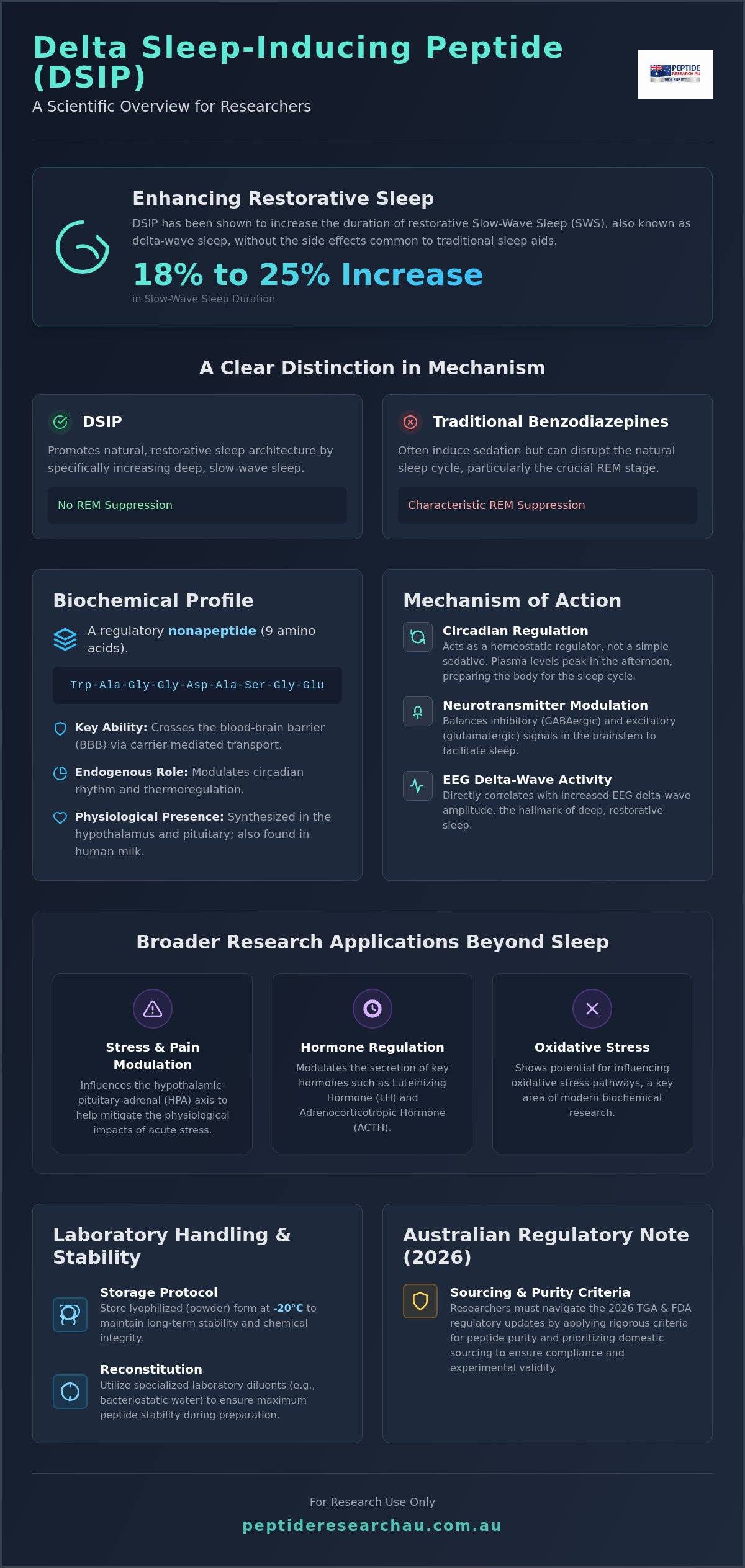
Research indicates that Delta Sleep-Inducing Peptide can increase slow-wave sleep duration by 18 to 25 percent without the REM suppression characteristic of traditional benzodiazepines. For investigators exploring dsip for sleep research, this nonapeptide offers a unique mechanism for modulating the body's stress response and promoting restorative delta-wave activity. You likely recognize the difficulty of reconciling conflicting data between animal models and human trials, especially when navigating the complexities of Australian research regulations and the lack of standardized protocols.
This article provides an authoritative analysis of DSIP biochemistry, synthesis, and its specific mechanisms of action within the hypothalamic-pituitary-adrenal axis. We'll outline precise laboratory protocols for handling, including the necessity of storing lyophilized powder at -20°C to maintain long-term stability. You'll gain a clear understanding of the current 2026 regulatory updates from the TGA and FDA, master standardized reconstitution techniques using laboratory diluents, and identify potential applications for DSIP in stress and pain modulation research.
Table of Contents
The Biochemistry of Delta Sleep-Inducing Peptide (DSIP)
Delta-sleep-inducing peptide (DSIP) is a specialized regulatory nonapeptide defined by its specific sequence of nine amino acids: Trp-Ala-Gly-Gly-Asp-Ala-Ser-Gly-Glu. Its discovery in 1977 by Swiss researchers Monnier and Schoenenberger represented a breakthrough in neurochemistry. They successfully isolated the compound from the cerebral venous blood of rabbits during states of induced delta-wave sleep. This origin confirmed its status as an endogenous substance, primarily synthesized within the mammalian hypothalamus and the anterior pituitary gland. Its presence in these regions suggests a fundamental role in regulating high-level neurological functions.
A primary factor in the utility of dsip for sleep research is the peptide's ability to cross the blood-brain barrier (BBB). Unlike many large protein structures that require invasive delivery methods, DSIP utilizes carrier-mediated transport systems to reach the central nervous system. This mechanism allows the peptide to bypass the restrictive barrier and interact directly with neural circuits responsible for sleep-wake transitions. Investigators prioritize this characteristic because it ensures that the compound can influence delta-wave activity without losing its biochemical integrity during transit.
Molecular Structure and Synthesis
The nine-amino acid chain of DSIP is predominantly hydrophilic. These properties dictate its solubility in aqueous environments and its interactions with cellular receptors. While endogenous DSIP is produced naturally in the brain, laboratory-grade synthetic analogues are manufactured to provide the high purity levels required for experimental reproducibility. These synthetic versions must mirror the exact nonapeptide sequence to ensure the biological activity remains consistent across different study models. The molecular weight of DSIP is approximately 848.81 Da, and it maintains high chemical stability when stored in a vacuum-sealed, lyophilized state.
Endogenous Role in Mammalian Physiology
DSIP functions as a critical modulator of the circadian rhythm and thermoregulation. It helps the body synchronize its internal biological clock with environmental light and temperature cues. Beyond its role in adult sleep architecture, researchers have identified DSIP in human milk. This presence suggests its involvement in early developmental biology, potentially aiding in the establishment of healthy sleep patterns during infancy. Within the hypothalamic region, DSIP works in coordination with other research peptides to regulate complex neuroendocrine pathways. This interaction extends to the modulation of the hypothalamic-pituitary-adrenal (HPA) axis, where it helps mitigate the physiological impacts of acute stress. By influencing these systems, DSIP serves as a homeostatic regulator rather than a simple sedative.
Mechanism of Action: Delta Waves and Circadian Regulation
DSIP facilitates the transition into Slow-Wave Sleep (SWS) by directly influencing the electrical activity of the brain. Research involving dsip for sleep research demonstrates a clear correlation between exogenous peptide concentrations and increased EEG delta-wave amplitude. This process is not merely sedative. Instead, it involves the complex modulation of GABAergic and glutamatergic neurotransmission within the brainstem. By balancing these inhibitory and excitatory signals, DSIP creates the neurological environment necessary for deep, restorative sleep. This regulatory action distinguishes it from traditional hypnotics that often force sedation through crude receptor agonism.
Endogenous plasma levels of the peptide exhibit distinct diurnal variation patterns. Clinical observations show that DSIP concentrations typically peak during the afternoon hours. This rhythmic fluctuation suggests the peptide acts as a preparatory signal for the circadian cycle rather than an immediate sleep trigger. Understanding these metabolic peaks is essential for investigators designing administration protocols for high-purity research compounds. By aligning experimental timing with these natural peaks, researchers can better observe the peptide's role in homeostatic regulation.
Neurological Pathways and Receptors
Current theories suggest the presence of DSIP-specific binding sites within the thalamus, a critical hub for sensory regulation and sleep gating. This interaction extends to the metabolic rates of primary neurotransmitters. A scientific review of DSIP indicates that the peptide influences the turnover of serotonin and dopamine, which are vital for maintaining the sleep-wake cycle. In specific laboratory models, DSIP administration has also been observed to suppress Rapid Eye Movement (REM) sleep. This prioritization of delta-wave stages over REM phases allows for a targeted study of deep sleep recovery mechanisms.
Impact on Sleep Architecture
The primary value of DSIP in a laboratory setting is its ability to improve sleep efficiency rather than simply extending total sleep duration. It exhibits a unique "normalization" effect. This means the peptide has a more pronounced impact on disturbed sleep patterns than on healthy, baseline architecture. While short-term administration facilitates immediate SWS induction, long-term laboratory observations suggest that DSIP may help stabilize the underlying circadian rhythm. This corrective capacity makes it a significant subject for studies focused on chronic sleep fragmentation and metabolic recovery. Unlike conventional pharmacological interventions, DSIP appears to support the natural architecture of sleep without causing the rebound insomnia often seen with GABA-A receptor modulators.
Broadening the Scope: Non-Sleep Research Applications
While the primary utility of dsip for sleep research involves delta-wave induction, the peptide's regulatory capacity extends significantly into non-sleep physiological systems. It functions as a potent stress-limiting agent by reducing oxidative stress within various cellular models. Beyond neurochemistry, DSIP influences endocrine regulation by modulating the secretion of Luteinizing Hormone (LH) and Adrenocorticotropic Hormone (ACTH). These interactions suggest a foundational role in maintaining systemic balance under environmental or biological pressure. Research also highlights its potential in cardiovascular homeostasis, specifically regarding blood pressure regulation and the stabilization of heart rate during acute stress events.
In the context of analgesia, DSIP appears to modulate opioid receptor sensitivity. It doesn't act as a direct painkiller; rather, it alters how the central nervous system processes nociceptive signals. This distinction is critical for investigators studying long-term pain management and receptor downregulation. By influencing the sensitivity of these pathways, the peptide provides a unique mechanism for exploring how the body manages chronic discomfort without the immediate dependency risks associated with traditional agonists.
HPA Axis and Cortisol Modulation
DSIP exerts a specific inhibitory effect on corticotropin-releasing factor (CRF). By suppressing CRF, the peptide acts as a biological buffer against the deleterious effects of acute physical and psychological stress. This makes it a valuable tool for researching metabolic disorders and models of adrenal fatigue. When the HPA axis is overstimulated, DSIP helps restore baseline cortisol levels. It prevents the systemic exhaustion often associated with chronic stress exposure, allowing researchers to observe how homeostatic balance can be maintained in compromised biological models.
Antioxidant and Protective Properties
The peptide demonstrates significant protective properties at a cellular level. Evidence suggests it supports mitochondrial protection during hypoxic conditions, ensuring cellular respiration continues despite low oxygen availability. In neuronal tissues, DSIP acts as a scavenger for free radicals, mitigating the damage caused by lipid peroxidation. These antioxidant effects are particularly useful in recovery models. There is also evidence of synergistic effects when DSIP is studied alongside TB-500 for tissue recovery. While TB-500 promotes cellular migration and repair, DSIP manages the underlying oxidative and endocrine stress. This combination creates a more favorable environment for physiological restoration in laboratory settings.
Laboratory Handling, Reconstitution, and Stability
The validity of dsip for sleep research depends entirely on meticulous laboratory handling and standardized preparation protocols. Peptides are inherently fragile biochemical structures. Improper reconstitution or storage can lead to deamidation, oxidation, or peptide cleavage, which renders experimental data invalid. Researchers must utilize high-quality laboratory diluents to ensure the nonapeptide remains stable once transitioned from its lyophilized state. Maintaining these standards prevents the degradation that often plagues longitudinal studies.
Temperature sensitivity is a primary concern for peptide integrity. DSIP is typically supplied as a lyophilized (freeze-dried) powder to ensure maximum stability during transit. Once it arrives at the facility, it's essential to minimize light exposure and avoid mechanical stress. High-energy agitation, such as vortexing, can shear the delicate peptide bonds. Instead, investigators should use gentle swirling techniques to ensure complete dissolution. If you don't follow these specific handling requirements, the risk of obtaining inconsistent results increases significantly.
Reconstitution Protocol
A standardized dissolution process is required to achieve precise concentrations for micro-dosage research. First, allow the vacuum-sealed vial to reach room temperature to prevent condensation. Use a sterile syringe to introduce bacteriostatic water or a specialized diluent slowly along the side of the glass vial. This prevents the formation of bubbles and ensures a steady transition into the liquid phase. For a 5mg vial, adding 2ml of diluent yields a concentration of 2.5mg per ml, allowing for accurate volumetric measurements. Reconstituted DSIP maintains its biochemical potency for approximately 30 to 45 days when stored consistently at 2-8°C.
Storage and Quality Control
Long-term preservation requires storing lyophilized DSIP at -20°C. Under these conditions, the powder can remain stable for several years without significant loss of activity. Quality control involves regular visual inspections of the solution. Any signs of cloudiness, precipitation, or color change indicate potential contamination or peptide degradation. Sourcing high-purity research peptides is fundamental to achieving reproducible results across multiple laboratory trials. Ensure your experimental accuracy by using professional-grade laboratory diluents for all peptide preparations.
Sourcing DSIP for Research in Australia (2026)
Navigating the Australian regulatory landscape for research compounds requires strict adherence to established legal frameworks. As of 2026, the Therapeutic Goods Administration (TGA) has not approved Delta Sleep-Inducing Peptide for therapeutic use. Consequently, the procurement of dsip for sleep research is restricted to "research use only" applications. Investigators must ensure all acquisitions comply with their specific institutional biosafety and ethics committee requirements. Sourcing from domestic laboratories is often preferred over international importation to avoid customs delays and the potential for temperature excursions during transit. This approach ensures that the peptide's biochemical integrity remains intact from the point of synthesis to the laboratory bench.
Selecting a reliable supplier involves more than just verifying availability. Purity, testing transparency, and logistics are the three pillars of professional sourcing. Scientists must demand batch-specific Certificates of Analysis (CoA) for every order. These documents provide the empirical evidence required for experimental reproducibility and peer-reviewed publication. Without this data, the risk of using sub-par or contaminated material is too high for serious scientific inquiry. It's the researcher's responsibility to verify that the compound matches the exact nonapeptide sequence identified in early Swiss studies.
Evaluating Supplier Standards
Analytical precision is essential for modern peptide science. High-Performance Liquid Chromatography (HPLC) and Mass Spectrometry (MS) testing are non-negotiable for research-grade materials. These tests confirm the peptide's identity and quantify its purity, ensuring that no residual trifluoroacetic acid (TFA) or other synthesis byproducts interfere with the study. Peptide Research AU maintains rigorous quality control for all research compounds, utilizing these advanced analytical methods to guarantee consistency. Sourcing from Australian-based laboratories also provides significant benefits for cold-chain security. Local shipping reduces the duration of environmental exposure, which is critical for maintaining the stability of lyophilized powders during the final stages of delivery.
Future Directions in DSIP Study
The trajectory of neuropeptide research for 2026 and beyond points toward the study of multi-peptide complexes. Scientists are moving away from isolated peptide observations to explore synergistic effects between different regulatory chains. For example, investigating DSIP in conjunction with PT-141 allows researchers to observe the interplay between sleep-wake cycles and the melanocortin system. Such studies could redefine our understanding of how the central nervous system coordinates homeostatic recovery across various physiological axes. DSIP stands as a critical tool for homeostatic science, providing a unique window into the body's ability to regulate its own internal environment through complex nonapeptide signaling.
Advancing Neuropeptide Research
DSIP remains a fundamental tool for homeostatic science due to its unique ability to cross the blood-brain barrier and influence slow-wave sleep architecture. Investigators now recognize its broader utility in modulating the HPA axis and managing oxidative stress within cellular models. Success in these complex studies requires strict adherence to standardized reconstitution protocols and precise temperature control to prevent peptide degradation. Maintaining high experimental standards is essential for producing reproducible, peer-reviewed data in 2026.
Securing high-purity research compounds is the first step toward experimental validity. When investigating dsip for sleep research, utilizing third-party HPLC and MS tested materials ensures the chemical integrity of your samples. We provide laboratory-grade research peptides and compounds with secure Australian domestic shipping to support cold-chain requirements and institutional compliance. View our laboratory-grade DSIP for your next research project to ensure your methodology aligns with the highest industry standards. Reliable data depends on the precision of your laboratory materials.
Frequently Asked Questions
What is the primary mechanism of DSIP for sleep research?
DSIP facilitates the transition into slow-wave sleep by modulating GABAergic and glutamatergic neurotransmission in the brainstem. This activity directly correlates with increased EEG delta-wave amplitude. Unlike sedative hypnotics, it acts as a homeostatic regulator that influences the hypothalamic-pituitary-adrenal (HPA) axis to prepare the central nervous system for restorative sleep stages.
Is DSIP legal for research purposes in Australia in 2026?
DSIP is legal for purchase and possession in Australia strictly for laboratory research purposes. The Therapeutic Goods Administration (TGA) hasn't approved the peptide for human therapeutic use as of 2026. Researchers must ensure compliance with institutional ethics committees. It's necessary to verify that all compounds are labeled for research use only to meet domestic regulatory standards.
How should DSIP be stored to prevent degradation?
Optimal storage for lyophilized DSIP powder requires a temperature of -20°C to ensure multi-year stability. Once you've reconstituted the peptide, it's essential to store the solution at 2-8°C. Reconstituted peptides are highly sensitive to thermal degradation. Researchers should use the solution within 30 to 45 days to maintain biochemical potency and ensure experimental accuracy.
Can DSIP be studied for conditions other than sleep disorders?
Investigators frequently use dsip for sleep research to explore its stress-limiting and analgesic properties. Studies indicate the peptide can reduce oxidative stress in cellular models and modulate the body's response to acute physical pressure by inhibiting corticotropin-releasing factor. It's also utilized in research regarding endocrine regulation and cardiovascular homeostasis to observe systemic balance under biological pressure.
What is the difference between endogenous DSIP and synthetic DSIP?
Endogenous DSIP is a nonapeptide naturally synthesized in the hypothalamus, while synthetic DSIP is an identical laboratory-grade analogue. Synthetic versions are manufactured to achieve higher purity levels, often exceeding 98 percent, which is necessary for experimental reproducibility. Both forms share the same nine-amino acid sequence. This sequence consists of Trp-Ala-Gly-Gly-Asp-Ala-Ser-Gly-Glu and dictates the peptide's biological activity.
What diluent is recommended for DSIP reconstitution?
Bacteriostatic water is the standard diluent for reconstituting DSIP in a laboratory setting. This medium contains 0.9 percent benzyl alcohol, which inhibits bacterial growth and extends the solution's shelf life. Specialized laboratory diluents may also be used to maintain the peptide's structural integrity. These diluents help prevent deamidation during longitudinal research projects and ensure the nonapeptide remains stable.
Does DSIP cross the blood-brain barrier effectively in humans?
DSIP effectively crosses the blood-brain barrier through carrier-mediated transport mechanisms. This allows the peptide to move from the peripheral circulation into the central nervous system without losing its biological activity. Its ability to bypass this barrier is a primary reason it's a favored subject in dsip for sleep research and neurochemistry. This transport mechanism is more efficient than the passive diffusion seen in other compounds.
What are the common concentrations used in DSIP laboratory studies?
Common concentrations for DSIP laboratory studies typically range from 2.5mg/ml to 5mg/ml. Researchers calculate these values by dissolving 5mg of lyophilized powder into 1ml or 2ml of diluent. Precise volumetric measurements are critical for micro-dosage protocols. Experimental outcomes depend on achieving consistent peptide concentrations across all test subjects to ensure the data remains valid for peer-reviewed publication.


Comments