

What are Peptides? A Comprehensive Guide to Research and Science in 2026
- peptideresearchau
- Mar 19
- 14 min read
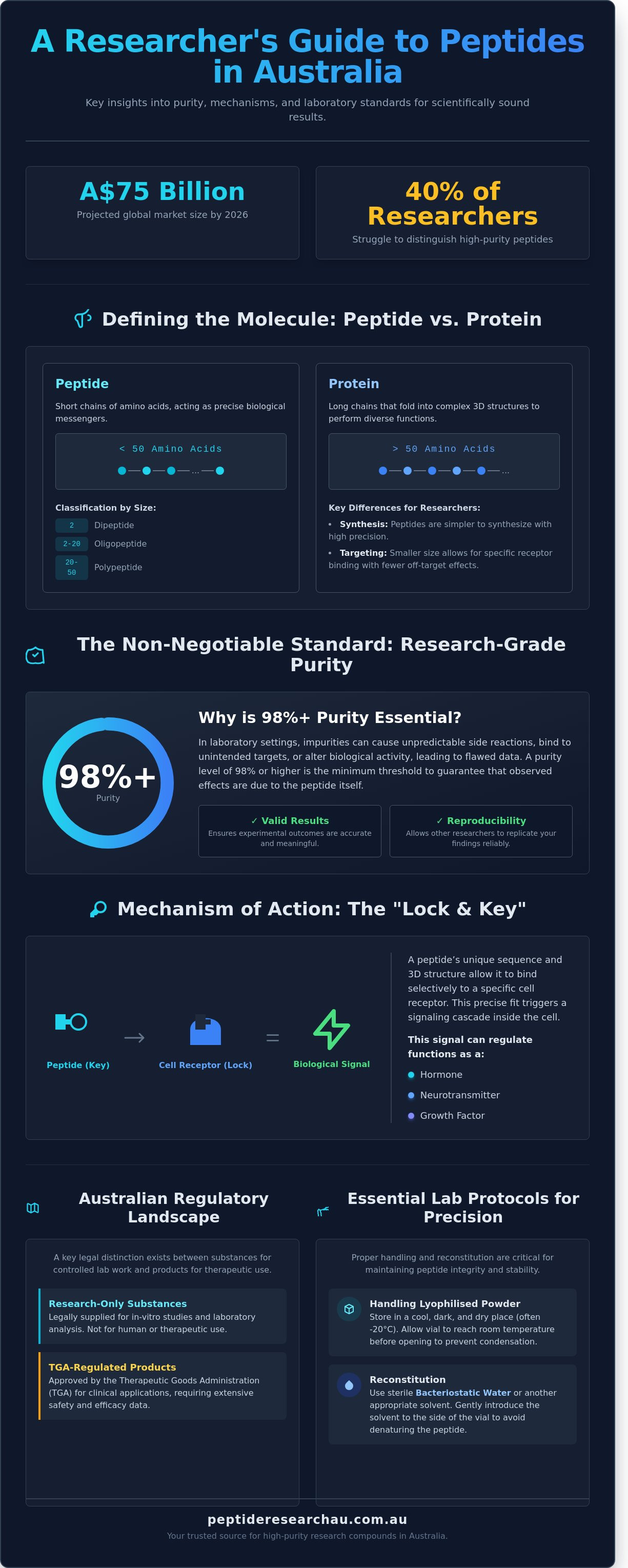
By 2026, the global market for these compounds is projected to exceed A$75 billion, yet approximately 40% of researchers still find it difficult to distinguish a high-purity laboratory-grade peptide from a standard protein sequence. You've likely experienced the frustration of sifting through conflicting data regarding Australian regulations or felt anxious about whether a batch truly meets the 98% purity threshold listed on a Certificate of Analysis. It's a reasonable concern; your research outcomes depend entirely on molecular precision and chemical stability.
This guide clarifies the biological mechanisms of these compounds and establishes a rigorous framework for evaluating quality standards within the modern Australian laboratory landscape. We'll examine the specific chemical structures that define research-grade compounds, explain how to interpret third-party testing data, and provide a clear path to identifying verified Australian sources. By the end of this analysis, you'll have the technical knowledge required to ensure your laboratory work remains both compliant and scientifically sound.
Key Takeaways
Understand the fundamental molecular architecture that distinguishes short-chain amino acids from proteins based on the 50-unit threshold.
Discover the "lock and key" mechanism that allows a peptide to facilitate biological signaling as a hormone, neurotransmitter, or growth factor.
Identify the rigorous standards of laboratory-grade compounds and why 98%+ purity is non-negotiable for valid, reproducible research results.
Navigate the 2026 Australian regulatory landscape by clarifying the legal distinctions between research-only substances and TGA-regulated products.
Master essential protocols for precision, including the stable handling of lyophilised powders and the correct use of bacteriostatic water for reconstitution.
Table of Contents Defining the Peptide: The Molecular Architecture of Life Mechanisms of Action: How Peptides Facilitate Biological Signaling Research Grade vs. Consumer Grade: Understanding Purity Standards Navigating the Australian Peptide Research Landscape in 2026 Protocols for Precision: Handling and Reconstituting Research Compounds
Defining the Peptide: The Molecular Architecture of Life
Peptides serve as the fundamental messengers within biological systems. They're short chains of amino acids linked together by covalent bonds, specifically amide bonds. These molecular structures form when the carboxyl group of one amino acid reacts with the amino group of another, releasing a water molecule in a process known as dehydration synthesis. This sequence creates a stable backbone that allows for a diverse range of chemical expressions. For researchers, understanding this comprehensive definition of peptides is essential for maintaining laboratory standards and ensuring experimental accuracy.
The scientific community generally applies a 50 amino acid threshold to distinguish peptides from proteins. If a chain contains fewer than 50 amino acids, it's classified as a peptide. Once the chain exceeds this limit and begins to adopt a complex, three-dimensional fold, it's categorized as a protein. This distinction isn't just semantic; it dictates how the molecule behaves in a laboratory setting and how it interacts with cellular receptors. In Australia, research grade compounds must meet stringent purity levels, often exceeding 98 percent, to ensure that these short chains perform reliably in controlled environments.
The history of peptide synthesis has evolved rapidly since the 1921 discovery of insulin by Frederick Banting and Charles Best. While early isolation methods relied on extracting compounds from biological tissues, the 1963 introduction of solid-phase peptide synthesis by Robert Bruce Merrifield revolutionised the field. This breakthrough allowed for the automation of the synthesis process, reducing production time from months to days. Today, modern laboratories use high-throughput automated synthesisers to produce sequences with extreme precision, facilitating advanced research into metabolic and neurological pathways.
Signal peptides represent a specific functional class that directs the transport of proteins within a cell. They act as a molecular zip code, ensuring that the synthesized chain reaches its intended destination, such as the endoplasmic reticulum or the cell membrane. Without these signals, cellular communication would collapse. In a research context, scientists manipulate these signals to study how cells respond to external stimuli, providing insights into various physiological conditions and potential therapeutic interventions.
The Building Blocks: Amino Acids and Bonds
The architecture of a peptide relies on the specific arrangement of its constituent amino acids. A dipeptide consists of two units, while an oligopeptide contains between two and twenty units. Anything beyond twenty units but under the fifty-unit limit is typically called a polypeptide. The specific sequence of these units determines the molecule's biological function. Even a single change in the sequence can entirely alter how the compound binds to a target receptor, which is why laboratory grade precision is vital for reproducible data.
Peptides vs. Proteins: Why Size Matters in Research
Size influences structural complexity and synthesis feasibility. Proteins often require complex folding patterns, such as alpha-helices and beta-sheets, to become biologically active. Peptides are generally smaller and less prone to these intricate folding requirements, making them easier to synthesise with high precision. This smaller size also allows for more targeted receptor binding. Researchers often prefer peptides because they can be designed to interact with specific cell surface receptors without the off-target effects sometimes associated with larger, more complex proteins. In the Australian research sector, the cost of custom synthesis can range from A$300 to over A$2,000 depending on the sequence length and required purity levels.
Mechanisms of Action: How Peptides Facilitate Biological Signaling
Peptides function as precise biological messengers that dictate how cells communicate and respond to their environment. According to this Peptide Definition, these short chains of amino acids serve as the primary signaling molecules in almost every physiological system. They operate through a "lock and key" mechanism, where a specific peptide sequence binds to a complementary receptor on a cell's surface. This interaction is highly selective; the peptide's unique 3D structure must perfectly match the receptor's binding site to trigger a response. Once the bond occurs, the receptor undergoes a conformational change that transmits a signal into the cell without the peptide itself needing to cross the cell membrane.
Receptor Interaction and Intracellular Signaling
G-protein coupled receptors (GPCRs) represent the most frequent targets for research grade peptides. These receptors span the cell membrane and act as gatekeepers for extracellular signals. When a peptide docks with a GPCR, it initiates an intracellular cascade, often involving secondary messengers like cyclic AMP (cAMP). This process amplifies the initial signal, leading to rapid changes in gene expression or enzyme activity within the target tissue. In the context of peptide research, bioavailability is defined as the fraction of an administered dose of an unchanged compound that reaches the systemic circulation to interact with these receptors.
Stability remains a primary concern for researchers because most natural peptides possess a very short half-life. Enzymes like dipeptidyl peptidase-4 (DPP-4) can break down unprotected amino acid chains within 2 to 5 minutes of exposure to plasma. To counter this, laboratory grade compounds are often modified through acetylation or the addition of fatty acid chains. For example, CJC-1295 is frequently synthesised with a Drug Affinity Complex (DAC) to extend its half-life from minutes to several days. This increased stability allows for more consistent data collection during long-term physiological studies, ensuring the peptide remains active long enough to achieve the desired signaling effect.
Diverse Roles: From Metabolism to Cognitive Function
The roles of these compounds are diverse, ranging from metabolic regulation to neuroprotection. Metabolic regulators like MOTS-c, which is encoded within the mitochondrial 12S rRNA gene, influence how the body manages insulin sensitivity and energy expenditure. Researchers study these molecules to understand how they might reverse age-related metabolic decline. In other studies, nootropic peptides like Semax or Selank are used to investigate neuro-signaling. These compounds modulate neurotransmitter levels and promote the expression of Brain-Derived Neurotrophic Factor (BDNF), providing insights into how the brain maintains homeostasis under stress.
Specific pathways provide a clear look at these mechanisms in action, particularly the GHRP-GHRH axis. Growth Hormone Releasing Peptides (GHRPs) like Ipamorelin mimic the hormone ghrelin to stimulate the pituitary gland directly. This works in coordination with Growth Hormone Releasing Hormones (GHRHs) to create a synergistic effect on growth hormone secretion. Another example is the GHK-Cu pathway, where the peptide signals for increased collagen synthesis. In laboratory tests, GHK-Cu has been shown to increase collagen production in fibroblasts by over 300% by modulating specific gene expressions. Scientists who require high-purity materials for these studies can find laboratory grade research peptides designed for rigorous experimental standards. Through these specific pathways, researchers can observe how minute molecular changes lead to significant physiological shifts.
Research Grade vs. Consumer Grade: Understanding Purity Standards
The term "Laboratory Grade" identifies a compound synthesised specifically for rigorous scientific inquiry. It's distinct from consumer-grade products often found on the grey market, which frequently lack verified data or consistent batch records. Valid research requires a purity threshold of at least 98%. When purity drops below this level, the remaining 2% or more consists of unknown contaminants. These are often truncated sequences, which are "mismade" versions of the target molecule. According to the National Cancer Institute definition of peptide, these molecules are essential building blocks; any structural deviation renders them useless for controlled studies. A 2023 analysis of third-party lab results showed that substandard suppliers often fail to reach even 90% purity, introducing variables that ruin experimental data.
Contaminants like heavy metals or residual solvents pose significant risks to laboratory environments. During the synthesis process, reagents such as lead or arsenic can remain if the purification stages are rushed. Residual solvents, specifically acetonitrile, must be kept below 410 ppm to meet international safety standards. Another critical factor is the removal of Trifluoroacetic acid (TFA). TFA is a standard reagent used in Solid Phase Peptide Synthesis (SPPS) to cleave the peptide from its resin. However, it's highly acidic. If a lab doesn't perform an ion-exchange process to swap TFA for acetate or chloride, the resulting compound can alter the pH of cell cultures or cause inflammatory responses in vivo. High-end synthesis protocols ensure TFA levels stay below 1% to maintain chemical stability.
Decoding the Certificate of Analysis (COA)
A reputable COA provides two essential data points: High-Performance Liquid Chromatography (HPLC) and Mass Spectrometry (MS). HPLC measures purity by passing the compound through a column under high pressure. A 98% pure sample shows one dominant, sharp peak on the chromatogram. Mass Spectrometry confirms the identity of the molecule by measuring its molecular weight. If the theoretical mass of a compound is 1234.5 Da, the MS report must show a matching peak within a tight tolerance of 0.1%. When you read a lab report, ensure the batch number on the vial matches the COA date, typically from the last 6 to 12 months, to guarantee freshness.
The Risks of Substandard Compounds
Poor lyophilisation, or freeze-drying, is a common failure point in cheaper production facilities. If the process leaves more than 3% residual moisture, the peptide will undergo rapid hydrolysis. This degradation renders the compound inactive before it even reaches the lab bench. Impurities don't just reduce potency; they create "off-target" effects. This means your observations might be caused by a contaminant rather than the peptide itself, leading to false positives or toxic reactions. To prevent environmental degradation after receiving a high-purity batch, researchers should refer to our guide on Proper Storage of Research Peptides and Compounds. Using 98% pure compounds ensures that every observed reaction is scientifically valid and reproducible.
HPLC Purity: Must exceed 98% for research applications.
Identity Confirmation: Mass Spectrometry must match the theoretical molecular weight.
TFA Content: Should be less than 1% for sensitive biological assays.
Visual Inspection: A proper lyophilised cake should be white and uniform, not "melted" or discoloured.
Navigating the Australian Peptide Research Landscape in 2026
The regulatory environment for laboratory chemicals in Australia has reached a point of high sophistication. As of 2026, the Therapeutic Goods Administration (TGA) maintains a rigorous boundary between substances intended for clinical therapy and those destined for "Research Use Only." This distinction isn't merely a labeling convention; it's a fundamental legal requirement that dictates how a peptide is handled, sold, and stored within the country. Researchers must recognize that therapeutic goods require inclusion on the Australian Register of Therapeutic Goods (ARTG), whereas research compounds are exempt only when they're strictly used in controlled laboratory settings.
Professional standards in the lab demand a commitment to these definitions. The TGA's 2025 updated guidelines emphasize that any substance not on the ARTG cannot be marketed for human administration. For an independent researcher, this means maintaining meticulous documentation that proves the intent of the study is analytical or in-vitro. Ethical research isn't just about the science; it's about respecting the legal structures that ensure public safety and chemical integrity across the Australian scientific community.
Legal Framework for Research Compounds
Current 2026 regulations under the Poisons Standard require all research-grade chemicals to carry "Not for Human Consumption" or "For Research Purposes Only" warnings. These labels aren't suggestions. They're mandatory declarations under Australian Consumer Law to prevent the misuse of potent biochemicals. If you're a competitive athlete or working within the sports science sector, you've got to be even more vigilant. Sport Integrity Australia and WADA updated their prohibited list in January 2026; many research compounds are strictly banned in and out of competition. Using these substances outside of a verified, non-human research protocol can lead to lifetime bans and legal scrutiny.
The Advantage of Domestic Sourcing
Sourcing your compounds from an Australian supplier provides a level of security that international vendors can't match. Border Force data from 2025 indicates that approximately 18% of international research chemical shipments were seized or delayed for testing, often leading to total loss of product. Beyond seizure risks, the physical integrity of the peptide is at stake during long-haul flights. Temperature fluctuations in cargo holds often exceed 40°C during summer months, which can cause irreversible denaturation of sensitive molecular chains.
Local suppliers like Peptide Research AU mitigate these risks by utilizing domestic cold-chain logistics. By shipping from within Australia, we ensure that compounds remain at a stable 2°C to 8°C throughout the delivery process. This maintains the high-purity standards required for repeatable scientific results. Every batch we provide undergoes Australian-based testing to verify that the molecular mass and purity levels meet the 99% threshold expected by professional laboratories. This domestic oversight eliminates the "lottery" of international shipping and provides researchers with a verifiable chain of custody for their materials.
Ensuring your laboratory has access to stable, high-purity compounds is the first step in any successful study. You can browse our full range of research grade peptides to find the specific sequences required for your 2026 research projects.
Protocols for Precision: Handling and Reconstituting Research Compounds
Lyophilisation remains the industry benchmark for maintaining the structural integrity of a research peptide. This freeze-drying process removes moisture through sublimation, which prevents the hydrolytic degradation that typically occurs in aqueous environments. A lyophilised compound is significantly more stable than its liquid counterpart; it can withstand temperature fluctuations during transit across Australia without losing its biochemical potency. For researchers, this dry state represents a blank slate. It allows for precise control over concentration levels during the final preparation phase, ensuring that every microlitre of solution meets the specific requirements of the study.
Bacteriostatic water is the only acceptable diluent for multi-use research vials. It contains 0.9% benzyl alcohol, which acts as a preservative to suppress microbial proliferation. Using plain sterile water or saline is a common error that leads to rapid contamination, rendering the compound useless within 24 hours of the first puncture. In a controlled laboratory setting, maintaining a sterile environment during the transition from powder to solution is non-negotiable for accurate data collection. The presence of benzyl alcohol ensures that the solution remains viable for repeated sampling over several weeks.
The Reconstitution Protocol
The physical act of mixing requires a delicate touch for any peptide sequence. You'll need to follow a specific How to Reconstitute Peptides: A Step-by-Step Protocol to ensure the molecular structure remains intact. First, let the vial sit at room temperature for 15 to 20 minutes. Adding cold liquid to a frozen powder can cause immediate precipitation. Next, use a sterile syringe to aim the bacteriostatic water at the inner glass wall of the vial. Don't spray the liquid directly onto the powder; let it trickle down slowly. Finally, gently swirl the vial between your palms until the powder is fully dissolved. Never shake it. Shaking creates kinetic energy that can snap the delicate amide bonds, effectively denaturing the compound and ruining the experiment.
Storage and Longevity Standards
Once the compound is in solution, its shelf life drops significantly. Reconstituted vials must stay in a refrigerated environment between 2°C and 8°C. At these temperatures, most research solutions remain viable for 28 to 30 days before degradation begins to skew results. Exposure to UV light or oxygen will accelerate this process, so keep vials in their original boxes or a dark, airtight container. For dry powders intended for long-term use, a freezer set to -20°C is required to maintain stability for 12 to 24 months. Precision in storage is just as vital as precision in the initial synthesis. Even minor deviations in temperature can lead to a 15% loss in purity over a single month.
Ensuring your laboratory operates with high-purity compounds is the first step toward successful research results. Explore our full range of Laboratory Grade Research Peptides to secure quality materials for your next study.
Advancing Scientific Discovery through Precision Research
The landscape of molecular signaling in 2026 requires a rigorous commitment to laboratory standards. Research success depends on understanding specific mechanisms of action and maintaining strict protocols for reconstitution. Choosing the right peptide for your study isn't just a matter of availability; it's a matter of data integrity. Vague purity claims don't suffice in a professional setting. Every compound must meet exacting benchmarks to ensure reproducible results in an Australian research environment. Our facility addresses these needs by providing 98%+ purity guaranteed via HPLC and Mass Spec analysis on every individual batch.
Reliability extends beyond the molecular level to the logistics of your laboratory. We prioritize domestic Australian shipping that incorporates cold-chain considerations to protect the structural integrity of your compounds during transit. Every product is backed by independent 3rd-party laboratory testing, so you don't have to guess about the quality of your materials. These high-specification tools are designed to empower your scientific objectives and support innovative breakthroughs in mental and physical wellbeing. It's time to elevate your research standards with compounds that match your professional dedication.
Frequently Asked Questions
What is the difference between a peptide and a protein?
Peptides are shorter chains of amino acids, typically containing 50 or fewer units, while proteins are larger, more complex structures. Once a chain exceeds the 50 amino acid threshold, it's scientifically classified as a protein. This distinction is vital in a laboratory setting because the smaller molecular size of a peptide allows for different synthesis methods and specific biological interactions during research.
Are peptides legal to buy in Australia for research purposes?
Peptides are legal to purchase in Australia strictly for laboratory research and scientific evaluation. According to the Therapeutic Goods Administration (TGA) regulations updated in 2023, these substances aren't for human consumption or clinical use without specific medical authorisation. Researchers must ensure they source every research grade peptide from reputable suppliers that comply with Australian chemical handling standards and state laws.
What does "98% purity" mean in a peptide lab report?
A 98% purity rating means that 98% of the content in the vial consists of the specific target peptide sequence. The remaining 2% typically includes residual moisture, salts, or amino acid fragments from the synthesis process. High-quality laboratory grade compounds should always meet or exceed this 98% threshold to ensure experimental data remains accurate and reproducible throughout the study.
Why do research peptides come in a powder form (lyophilised)?
Research peptides are provided in lyophilised, or freeze-dried, powder form to ensure long-term chemical stability and prevent rapid degradation. Liquid compounds are highly susceptible to heat and light, often losing potency within 48 hours at room temperature. Lyophilisation removes moisture, allowing the vial to remain stable for 24 months when stored at -20 degrees Celsius in a controlled environment.
Can I use tap water or distilled water to mix my peptides?
You shouldn't use tap or distilled water to reconstitute peptides because they lack the necessary antimicrobial agents to prevent bacterial growth. Instead, researchers use bacteriostatic water, which contains 0.9% benzyl alcohol. This specific concentration inhibits bacterial replication for up to 28 days. Using incorrect water sources can lead to immediate contamination and the total loss of your research material.
How long do reconstituted peptides stay stable in the fridge?
Most reconstituted peptides remain stable in a standard laboratory refrigerator at 2 to 8 degrees Celsius for approximately 14 to 21 days. After this 3-week window, the molecular bonds begin to break down, which leads to a loss of efficacy. Proper handling is critical during this stage. You should never shake the vial, as mechanical stress can damage the delicate 3D structure of the molecules.
What is the role of a Certificate of Analysis (COA) in peptide sourcing?
A Certificate of Analysis serves as a verified laboratory report confirming the identity, purity, and mass of a specific batch. It includes High-Performance Liquid Chromatography (HPLC) and Mass Spectrometry (MS) data to prove the product matches its label. Without a COA dated within the last 6 to 12 months, researchers can't guarantee the chemical composition or the safety of their materials.
Why is it better to source peptides from an Australian supplier?
Sourcing from an Australian supplier eliminates the risk of international customs seizures and reduces shipping times from 14 days to 48 hours. Local suppliers must also adhere to Australian consumer law and strict quality control standards. Paying in A$ avoids fluctuating exchange rates and international transaction fees, which can add 3% to 5% to the total cost of your laboratory supplies.


Comments