

How to Properly Dispose of Used Peptides: A 2026 Laboratory Protocol
- peptideresearchau
- 3 days ago
- 12 min read
The Australian Therapeutic Goods Administration (TGA) seized 847 peptide shipments in the first quarter of 2026 alone, signaling an unprecedented era of regulatory oversight. This shift places a heavy burden of responsibility on researchers to understand how to properly dispose of used peptides while maintaining meticulous laboratory standards. You likely recognize the complexity of navigating biohazard classifications and the strict requirements for clinical waste management under the Waste Reduction and Recycling Regulation 2023. It's difficult to stay certain about your legal standing when environmental regulations for bioactive compounds evolve so rapidly.
This article clarifies the professional protocol for waste management, ensuring you can mitigate environmental impact and eliminate liability. We will outline a three tiered approach for deactivating compounds, categorizing laboratory chemical waste, and coordinating with licensed disposal contractors. By following these 2026 laboratory standards, you can secure your research environment and ensure every vial and syringe is managed with scientific precision. Our guide provides the necessary clarity to transition from uncertainty to a state of total regulatory compliance.
Key Takeaways
Identify the specific environmental risks associated with bioactive compounds and why they cannot be treated as standard laboratory waste.
Learn the technical methods for chemical denaturation to effectively break peptide bonds and render research residues inert.
Master the clinical "Three-Stream" approach to understand how to properly dispose of used peptides, vials, and contaminated sharps.
Implement a standardized step-by-step protocol for immediate deactivation and secure containment within approved biohazard vessels.
Align your laboratory’s disposal practices with current Australian regulatory frameworks to eliminate legal liability and environmental impact.
Table of Contents
The Critical Need for Professional Peptide Waste Management
Peptides are frequently mischaracterized as inert biological material or "protein water." This reductive view ignores the fundamental nature of these compounds as potent signaling molecules. In a laboratory setting, understanding how to properly dispose of used peptides is a matter of environmental safety and legal compliance. These amino acid chains are engineered for specific biological interactions. When they're released into the environment, they don't simply vanish; they remain active and capable of influencing non-target biological systems.
Improper disposal leads to the accumulation of bioactive compounds in aquatic ecosystems. These molecules can disrupt the endocrine systems of aquatic life and alter the composition of microbial flora. The ethical responsibility of the independent researcher in 2026 involves recognizing that research compounds are not standard refuse. They require a rigorous deactivation protocol to prevent unintended ecological consequences and long-term damage to local biodiversity.
Bioactivity and Environmental Persistence
Synthetic peptides are often modified to enhance their half-life and resistance to enzymatic degradation. While this is beneficial for research, it creates a significant challenge for wastewater treatment systems. These facilities aren't generally equipped to neutralize complex synthetic sequences. Unfiltered peptides can trigger biological signaling in organisms far removed from the laboratory, potentially leading to developmental or reproductive anomalies. Bioactive persistence is defined as the continued capacity of synthetic amino acid chains to engage biological receptors after their intended laboratory utility has concluded.
Australian Regulatory Framework for Research Waste
The Australian Environmental Protection Authority (EPA) maintains strict guidelines for the management of laboratory residues. Researchers must distinguish between general refuse and the specialized Biomedical waste categories that govern clinical and related waste. Under the Waste Reduction and Recycling Regulation 2023, failing to segregate hazardous chemical waste can result in significant legal penalties and criminal liability.
Adhering to peptides australia standards ensures that your laboratory practices align with the highest quality sourcing and disposal requirements. Proper management involves several critical steps:
Identifying the specific biohazard classification of every research compound used in the facility.
Utilizing secondary containment for all used vials, rubber stoppers, and contaminated laboratory diluents.
Engaging licensed disposal contractors for high-risk chemical incineration rather than using domestic waste streams.
Learning how to properly dispose of used peptides protects the integrity of the scientific community. It prevents the criminal liability associated with environmental contamination and ensures that your research remains focused on precision and professional standards. Treating these substances with the same rigor as other hazardous chemicals is the only way to maintain a safe and compliant laboratory environment.
Methods for Deactivating Bioactive Peptide Compounds
Deactivation is the fundamental process of rendering a bioactive molecule biologically inert. For researchers, understanding how to properly dispose of used peptides begins with breaking the peptide bonds that maintain the compound's structure. If these bonds remain intact, the molecule may still exhibit biological signaling. Effective protocols target the primary and secondary structures through chemical, thermal, or enzymatic means. This ensures the substance no longer poses a risk to the environment or laboratory personnel.
Standard Laboratory chemical waste guidelines emphasize that deactivation should occur at the point of generation. This prevents the accidental release of active compounds into the waste stream. It's a critical step for maintaining a safe laboratory environment and meeting 2026 compliance standards. High-quality research peptides deserve a meticulous end-of-life protocol to ensure laboratory safety remains uncompromised.
Chemical Denaturation Protocol
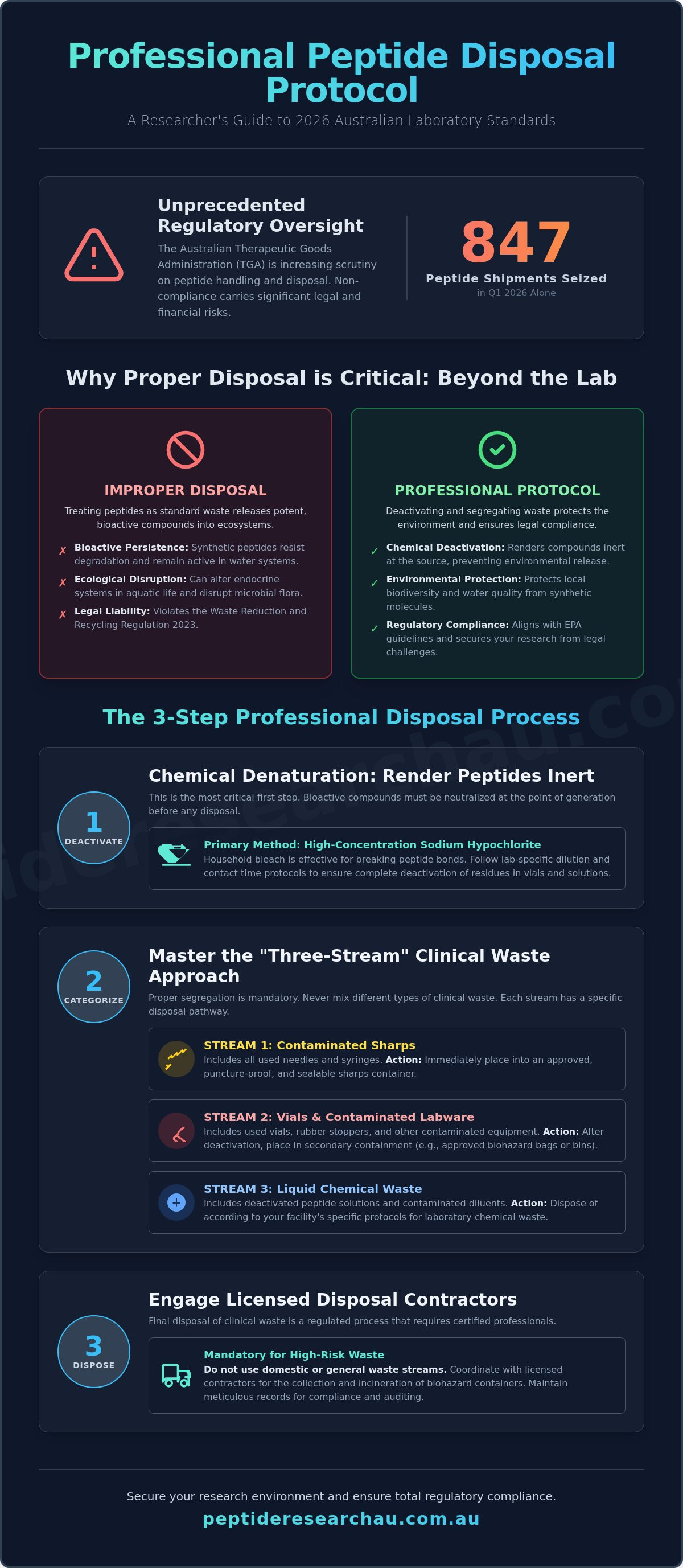
Chemical denaturation typically involves using high-concentration sodium hypochlorite, commonly known as household bleach. A 10% final concentration is the standard for most laboratory solutions. You should mix the peptide residue with the bleach in a 1:10 ratio. A minimum contact time of 30 minutes is required to ensure complete molecular breakdown. Safety is paramount when handling concentrated denaturants. Always work within a certified fume hood and wear appropriate personal protective equipment, including nitrile gloves and eye protection. Never mix bleach with acids or ammonia; this creates toxic gases.
Thermal and Enzymatic Degradation
Thermal methods provide a robust secondary deactivation route. Autoclaving at 121 degrees Celsius for at least 20 minutes effectively unfolds and destroys the secondary structures of most peptides. For smaller volumes, boiling for 15 minutes can achieve similar results. Heat causes the peptide chains to denature, rendering them unable to bind to biological receptors.
Enzymatic degradation offers a more targeted approach. Proteolytic enzymes, such as proteinase K or trypsin, can be used to digest stable research compounds into individual amino acids. This method is highly effective but requires specific temperature and pH conditions to function optimally. Extreme pH adjustment, either below 2.0 or above 12.0, can also be used to render compounds non-functional by disrupting the electrostatic interactions that maintain their shape.
Simple dilution is never a substitute for true deactivation. Adding water to a peptide solution only reduces its concentration; it doesn't remove its bioactivity. Researchers must commit to a protocol that physically or chemically alters the molecule. This ensures that when you consider how to properly dispose of used peptides, the final product is a non-functional, inert substance ready for the next stage of waste management. Proper deactivation is the hallmark of a responsible and meticulous research facility.
Categorising Research Waste: Sharps, Vials, and Solutions
A systematic "Three-Stream" waste approach is essential for maintaining a compliant laboratory. Effective waste management distinguishes between physical forms of refuse to prevent cross-contamination and accidental exposure. Understanding how to properly dispose of used peptides requires more than just neutralizing the liquid; it involves the secure containment of primary packaging and secondary materials. Glass vials and rubber stoppers constitute primary packaging. Because they have direct contact with bioactive agents, they must be treated as contaminated laboratory waste even after deactivation protocols are complete.
Secondary materials include alcohol swabs, packaging components, and used gloves. While these items might appear benign, they often carry trace residues of research compounds or laboratory diluents. Following established Hazardous Chemical Waste Management Guidelines ensures that every component of the research process is accounted for. This prevents the accidental introduction of bioactive material into municipal recycling or general waste streams, which is a common point of failure in independent research settings.
Sharps Management and Safety
Sharps include needles, syringes, and lancets. These items pose a dual risk of physical injury and biological exposure. In Australia, all sharps must be disposed of in rigid, puncture-resistant containers that meet Australian Standard AS 4031. You must never recap, bend, or break needles after use. This practice is a leading cause of needle-stick injuries in laboratory environments. Once a sharps container reaches the "fill line," it must be sealed permanently. In a private lab or home research setting, these containers should be stored in a secure, upright position, away from high-traffic areas, until they are transported to a licensed clinical waste facility.
Residual Powder and Reconstituted Solutions
Managing residual material requires meticulous attention to detail. Lyophilized powder that has expired or degraded must remain in its original vial for deactivation. For reconstituted solutions, such as bpc 157 or other multi-peptide complexes, the liquid should be deactivated using the protocols established in previous sections before the vial is discarded.
Waste containers awaiting final disposal must be clearly labeled. Labels should include the date, the specific biohazard classification, and a confirmation that deactivation has occurred. This transparency is critical for third-party waste contractors who handle the final incineration process. Researchers who master how to properly dispose of used peptides through correct categorization eliminate the uncertainty and fear of environmental contamination. This methodical approach ensures that your research facility operates with the same precision used in your scientific studies.
Step-by-Step Guide to Professional Disposal in Australia
The transition from laboratory deactivation to physical removal requires a structured sequence to maintain 2026 compliance. Following the correct steps for how to properly dispose of used peptides ensures that bioactive residues don't enter the general waste stream. This protocol serves as the final safeguard for researchers operating within Australia. It's not enough to simply neutralize the compounds; you must also manage the physical handover to certified authorities with meticulous care.
Step 1: Immediate deactivation. All liquid residues must be treated with chemical denaturants as established in previous sections of this protocol.
Step 2: Secure containment. Transfer deactivated liquids and primary packaging into approved biohazard vessels or sharps containers.
Step 3: Documentation and labeling. Affix labels that specify the waste category, the date of deactivation, and the primary chemical constituents.
Step 4: Identification of disposal points. Locate a certified Australian facility that accepts laboratory chemical waste rather than standard household refuse.
Step 5: Final transport and handover. Transport materials according to state-specific EPA guidelines and complete all required waste tracking documentation.
Ensuring your laboratory remains compliant starts with using the right materials. You can source professional research compounds to maintain the highest standards of scientific integrity throughout your study.
Finding Certified Disposal Points
Identifying the correct facility is a common point of confusion for independent researchers. Many believe they can take research waste to a local pharmacy, but most Australian pharmacies only accept household medical waste through the Return Unwanted Medicines (RUM) program. Research waste often falls under clinical and related waste categories, which require specialized handling. You should consult the National Syringe Disposal Directory to find locations that accept sharps containers. For larger volumes of liquid waste or vials, contact your local council to inquire about Community Sharps programs or specialized chemical clean-out events. These programs are specifically designed to handle materials that exceed the scope of domestic garbage collection.
Safe Transport and Handling
The final phase of the protocol involves the physical movement of waste from the laboratory to the disposal point. Sealing protocols must be rigorous to prevent leakage during transit. Non-sharp biohazardous waste, such as contaminated gloves and wipes, must be placed inside a primary clinical waste bag which is then sealed and inserted into a second, identical bag to ensure a leak-proof barrier. This double-bagging technique is a standard requirement for hazardous transport. During the final disposal phase, you must wear appropriate personal protective equipment, including nitrile gloves and eye protection. This minimizes the risk of exposure during the handover process. Mastering how to properly dispose of used peptides concludes with this disciplined approach to transport and safety.
Maintaining a Responsible Research Environment
Establishing a responsible research environment requires a shift from viewing disposal as a secondary task to recognizing it as a core laboratory standard. A project isn't complete when the data is recorded; it concludes only when the bioactive agents are rendered inert. Understanding how to properly dispose of used peptides is a hallmark of scientific maturity and professional integrity. This disciplined approach ensures that your facility remains a safe space for innovation while meeting the rigorous 2026 Australian regulatory expectations.
Integrating these protocols into your daily workflow prevents the accumulation of hazardous materials. Meticulous waste management reflects the quality of the research itself. When you prioritize the safe handling of research compounds, you protect the reputation of the broader Australian scientific community and minimize the risk of environmental contamination.
Disposal as Part of the Scientific Method
In a professional laboratory, the lifecycle of a peptide ends only after verified disposal. You should treat the deactivation process as a final experimental step. Recording these actions in your research logs is essential for maintaining a clear audit trail. These logs should specify the method of denaturation used, the date of containment, and the final disposal point. This level of documentation is vital if your facility is ever subject to a regulatory review. It demonstrates a commitment to safety that matches the precision of your data collection. Professional conduct in this area prevents legal liability and ensures that your laboratory operations remain beyond reproach.
Quality Sourcing and Minimal Waste
High-quality sourcing is directly linked to manageable waste streams. When you utilize high-purity research peptides and multi-peptide complexes, you reduce the risk of introducing unknown contaminants into your laboratory. Impure substances can create unpredictable chemical reactions during the deactivation phase. Using precise laboratory diluents, such as bacteriostatic water, is equally important. These diluents help maintain the stability of your compounds, preventing premature degradation that leads to unnecessary waste.
Responsible procurement through Peptide Research AU ensures that you're working with technical-grade materials that follow strict manufacturing standards. This consistency makes it easier to predict how to properly dispose of used peptides because the chemical profile of the residue is known and verified. Minimizing waste through precise measurement and high-quality sourcing is the most effective way to maintain a clean and compliant research space.
Final Compliance Checklist
Before concluding your research session, verify that your workspace meets these final safety standards:
All liquid residues have undergone chemical denaturation for at least 30 minutes.
Primary packaging, including glass vials and rubber stoppers, is secured in biohazard containers.
Used needles and syringes are placed in an AS 4031 compliant sharps bin without being recapped.
Soft waste, such as gloves and alcohol swabs, is double-bagged and labeled correctly.
Disposal actions are recorded in the laboratory logbook with the corresponding batch numbers.
The sharps container is sealed if it has reached the designated fill line.
By adhering to this protocol, you ensure that your laboratory excellence extends from the first measurement to the final handover of waste. Precision in disposal is as critical as precision in research.
Advancing Laboratory Safety and Compliance
Adopting a rigorous waste management protocol is essential for every researcher operating in the current regulatory environment. By mastering chemical deactivation and the Three-Stream categorization of sharps, vials, and solutions, you eliminate the risk of environmental contamination and legal liability. This guide has established a clear 2026 standard for how to properly dispose of used peptides. These steps ensure that your research remains focused on precision rather than administrative uncertainty.
Maintaining these high standards requires a commitment to quality that begins with your sourcing. Meticulous quality control and laboratory-grade purity standards are the foundation of successful scientific study. You can maintain the highest standards in your lab with premium research compounds from Peptide Research AU. Their Australian-based logistics and support ensure that your facility operates with the reliability needed for professional research. Implementing these protocols today secures the future of responsible scientific exploration in Australia.
Frequently Asked Questions
Can I pour leftover peptide solutions down the kitchen or bathroom drain?
You must never pour leftover peptide solutions down any domestic drain. These substances are bioactive signaling molecules that wastewater treatment facilities cannot effectively neutralize. Discharging them into the sewer system violates Australian environmental regulations and risks contaminating aquatic ecosystems. You should always follow a chemical deactivation protocol to render the solution inert before placing it in a secure, labeled container for professional collection.
How should I dispose of empty glass peptide vials in Australia?
Empty glass vials must be handled as contaminated laboratory waste. Even after deactivation of residues, the glass and rubber stoppers retain trace amounts of the compound. You should place these vials into a rigid, puncture-resistant container rather than a standard recycling bin. This ensures the material is processed through high-temperature incineration, which is the required standard for maintaining 2026 laboratory compliance in Australia.
What is the best way to dispose of used needles and syringes from research?
The only acceptable method for disposing of used needles and syringes is the use of a sharps container that meets Australian Standard AS 4031. You must place the needle into the bin immediately after use without recapping or bending the metal. This protocol is the most effective way to understand how to properly dispose of used peptides while preventing accidental needle-stick injuries and biological exposure within your research environment.
Are research peptides considered 'Hazardous Waste' under Australian law?
Yes, research peptides are classified as "clinical and related waste" or "laboratory chemical waste" under Australian law. These classifications are governed by state-specific regulations, such as the Waste Reduction and Recycling Regulation 2023. Because they contain bioactive amino acid chains, they're treated with the same level of scrutiny as other hazardous chemical residues to prevent unintended biological signaling in the wider environment.
Can I put peptide packaging and boxes in my regular household recycling bin?
You can only place secondary packaging, such as clean cardboard boxes, in household recycling if they've had no contact with the compounds. If a vial has leaked or the packaging is contaminated, you must treat the paper as biohazardous waste. Double-bag the contaminated materials and label them for clinical waste disposal. This meticulous separation prevents the accidental introduction of bioactive residues into municipal recycling streams.
What should I do if a peptide vial breaks or spills in my research area?
If a vial breaks, you must immediately secure the area and use a chemical spill kit to neutralize the residue. Apply a 10% sodium hypochlorite solution to the spill and allow a 30-minute contact time for complete molecular breakdown. Use forceps to pick up glass shards and place them in a sharps container. Mastering how to properly dispose of used peptides includes being prepared for these accidental exposure events.
Do Australian pharmacies accept research-grade sharps for disposal?
Most Australian pharmacies don't accept research-grade sharps or chemical waste. The Return Unwanted Medicines (RUM) program is designed exclusively for household prescription medications. For research waste, you must contact your local council to identify "Community Sharps" programs or engage a licensed waste contractor. These specialized services are equipped to handle the higher risk profile associated with laboratory chemical residues.
How long can I store used sharps in a container before I must dispose of it?
You should dispose of your sharps container as soon as it reaches the designated "fill line" or within three to six months of the first use. Storing containers for extended periods increases the risk of accidental tipping or container degradation. Always check your local council’s specific timeframes for hazardous waste storage. Keeping a regular disposal schedule is a critical component of maintaining a responsible and compliant research facility.


Comments