

The Impact of Freeze-Thaw Cycles on Peptide Integrity: A Researcher’s Guide
- peptideresearchau
- May 9
- 11 min read
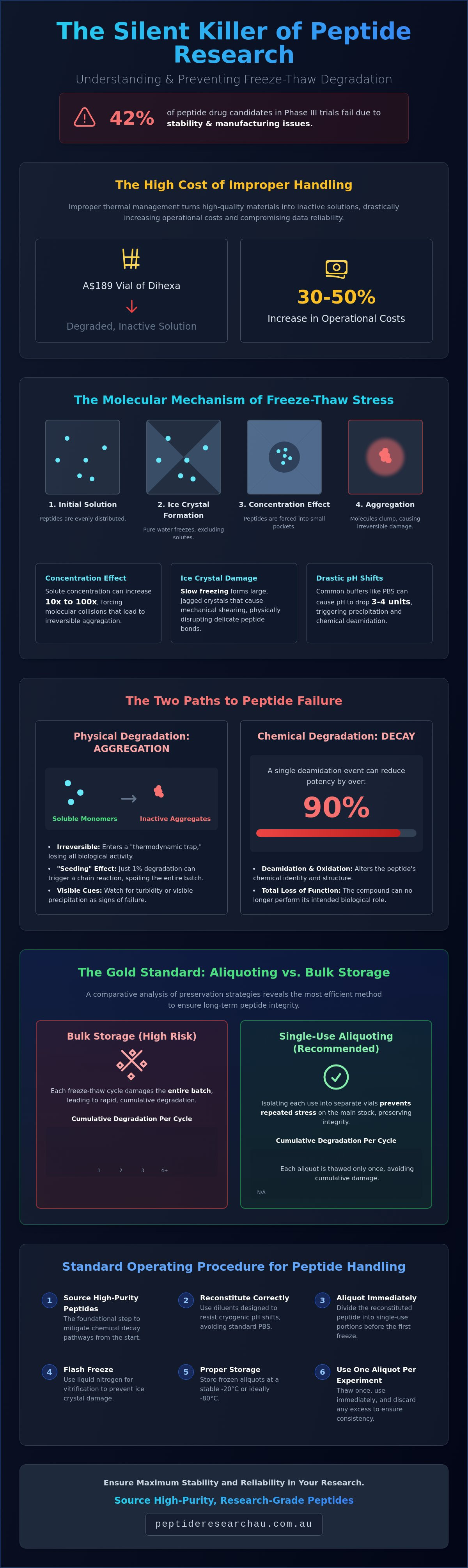
Did you know that 42% of peptide drug candidates in Phase III clinical trials fail because of stability or manufacturing issues? For researchers in Australia, the stakes are equally high when handling laboratory grade compounds. The impact of freeze-thaw cycles on peptide integrity is often the silent killer of experiment consistency, potentially turning a vial of Dihexa worth A$189 into a degraded, inactive solution. It's frustrating to invest in high-quality research materials only to have them fail due to improper thermal management.
We understand that maintaining the precise molecular structure of your compounds is critical for reliable data. This guide reveals the biochemical mechanisms behind peptide degradation during thermal cycling and provides the gold-standard protocols for preserving research-grade stability. You'll discover the science of aggregation and denaturation while gaining a clear protocol for storage. This ensures you maximise the shelf-life of your materials and avoid the 30% to 50% operational cost increase often caused by handling losses and improper reconstitution.
Key Takeaways
Understand how the concentration effect and localized pH shifts during ice crystal formation trigger the molecular degradation of research compounds.
Identify the specific impact of freeze-thaw cycles on peptide integrity, focusing on the physical transition from soluble monomers to inactive aggregates.
Compare the cumulative degradation curves of bulk storage versus single-use aliquoting to determine the most efficient preservation strategy for your laboratory.
Implement a professional Standard Operating Procedure (SOP) for handling lyophilised powders to ensure maximum stability upon reconstitution.
Learn why sourcing high-purity, research-grade peptides is the foundational step in mitigating chemical pathways like deamidation and oxidation.
Table of Contents
The Molecular Mechanism of Freeze-Thaw Stress on Peptides
A freeze-thaw cycle is the repeated transition of a compound between a solid, frozen state and a liquid, thawed state. While it seems like a routine laboratory procedure, each transition subjects the molecule to significant physical and chemical stress. The impact of freeze-thaw cycles on peptide integrity is primarily driven by the "concentration effect." As ice crystals form, they consist of pure water, effectively excluding solutes like peptides and salts into the remaining liquid phase. This results in localized pockets of extremely high concentration, which can be 10 to 100 times higher than the original solution.
These hyper-concentrated micro-environments promote molecular collisions, leading to irreversible aggregation. Additionally, surface-tension stress occurs at the ice-liquid interface, where the hydrophobic regions of the peptide may unfold to minimize energy. Peptide integrity is strictly defined as the maintenance of the primary amino acid sequence and the specific secondary conformation required for biological activity. Maintaining this state is essential for protein folding and stability, as even minor structural shifts can render a research compound useless.
Ice Crystal Formation and Mechanical Shearing
The rate of freezing determines the size and structure of ice crystals. Slow freezing, such as placing a vial directly into a standard -20°C freezer, allows for the formation of large macro-crystals. These jagged structures physically disrupt delicate peptide bonds through mechanical shearing. Long-chain peptides are particularly vulnerable to this force because their complex tertiary structures are easily pulled apart by expanding ice. In contrast, flash freezing using liquid nitrogen achieves vitrification. This process creates a glass-like solid without large crystals, significantly reducing the mechanical impact of freeze-thaw cycles on peptide integrity.
pH Fluctuations and Buffer Instability
Many researchers use phosphate-buffered saline (PBS) for reconstitution, but this choice can be problematic during thermal cycling. Buffers often experience selective crystallization. For example, in a sodium phosphate buffer, the dibasic component crystallizes faster than the monobasic component. This leads to a dramatic drop in pH, sometimes shifting by 3 to 4 units in seconds. Such extreme pH fluctuations cause peptides to reach their isoelectric point, triggering immediate precipitation or chemical deamidation. Using non-stabilised diluents for long-term storage is a common error that compromises laboratory grade compounds. Researchers should opt for laboratory diluents specifically designed to resist these cryogenic pH shifts.
Chemical and Physical Degradation Pathways
Understanding what are peptides is the first step in recognizing why they are so vulnerable to environmental shifts. These short chains of amino acids are defined by their specific sequences and three dimensional shapes. The impact of freeze-thaw cycles on peptide integrity often manifests as a transition from soluble monomers to insoluble aggregates. This physical change isn't just a matter of appearance. It represents a total loss of biological activity. Once a peptide reaches an aggregated state, it enters a thermodynamic "trap." Re-dissolving these clusters typically requires harsh chemical denaturants that would destroy the compound's original research utility.
Chemical degradation pathways like deamidation and oxidation further complicate the storage of laboratory grade compounds. These processes alter the side chains of the amino acids, effectively changing the chemical "identity" of the molecule. Even a single deamidation event can reduce the potency of a research compound by over 90%.
Aggregation: The Irreversible Loss of Potency
Aggregation in a laboratory context is classified as either non-covalent or covalent. Non-covalent aggregation occurs when hydrophobic regions of the peptide stick together to avoid the surrounding liquid. Covalent aggregation is more severe, often involving the formation of permanent disulfide bridges between molecules. A critical risk is the "seeding" effect. If just 1% of the peptide in a vial degrades, those damaged molecules act as a template, causing the remaining healthy peptides to clump around them. Visual indicators like turbidity or visible precipitation are clear signs that the integrity of the batch is compromised.
Oxidation and Hydrolysis Risks
Specific amino acids are highly susceptible to chemical decay during thermal transitions. Methionine and Cysteine are particularly prone to oxidation. Every time a vial is thawed, it is exposed to atmospheric oxygen. This exposure, combined with the energy transfer of the thawing process, accelerates the formation of sulfoxides. A deep understanding of Peptide Biochemistry shows that hydrolysis, the cleavage of peptide bonds by water, also increases during the liquid phase. Using bacteriostatic water can help mitigate microbial induced hydrolysis, but it doesn't stop the chemical impact of freeze-thaw cycles on peptide integrity. For researchers in Australia, maintaining a strict temperature log is the only way to ensure these chemical pathways don't ruin expensive materials.
Aliquoting vs. Bulk Storage: A Comparative Analysis
Choosing a storage workflow is a critical decision in any laboratory setting. The "Thaw-All" approach is often preferred for its perceived simplicity, yet it ignores the cumulative impact of freeze-thaw cycles on peptide integrity. For high value research chemicals, the degradation curve is not linear. While a single cycle might cause negligible loss, the damage accelerates significantly at 5, 10, and 20 cycles. By the tenth thaw, many sensitive sequences show up to 30% loss in purity, which directly compromises experimental results and reproducibility.
A cost-benefit analysis heavily favors a more meticulous approach. While aliquoting requires an initial investment of time and specialized materials, it protects the total value of the batch. For instance, sensitive compounds like PT-141 require strict adherence to stability protocols to maintain their specific receptor affinity. Losing a portion of a vial worth A$85 or more due to avoidable degradation is an unnecessary operational expense that most research budgets can't afford.
The "Thaw-All" Pitfall
Opening a bulk vial repeatedly introduces three primary risks: contamination, moisture ingress, and thermal shock. Every time the seal is broken, atmospheric moisture enters the vial. This leads to hydrolysis even if the sample is quickly re-frozen. Data suggests that bulk vials can lose significant biological activity after just three cycles due to repetitive temperature gradients. This "thermal shock" creates localized melting at the vial edges while the core remains frozen, further exacerbating the concentration effect and accelerating the impact of freeze-thaw cycles on peptide integrity.
Single-Use Aliquoting: The Gold Standard
Dividing a master sample into single-use units, such as 100mcg or 500mcg aliquots, is the most effective way to ensure data reliability. This method ensures that each portion of the peptide only experiences a single thaw event immediately before use. To succeed, researchers must use low-protein binding tubes. Standard plastic tubes can absorb a significant percentage of the peptide onto their walls, leading to inaccurate dosing and wasted material. By prioritizing this workflow, you ensure that the final aliquot in a series remains as potent as the first, maintaining the high standards required for laboratory grade compounds.
Standard Operating Procedure (SOP) for Peptide Handling
Efficient laboratory management begins the moment your shipment of peptides in Australia arrives. Upon receipt, verify the integrity of the cold chain and immediately transfer the lyophilised vials to a dedicated freezer. Lyophilised powders are significantly more stable than reconstituted solutions, yet they still require protection from moisture and temperature fluctuations. For short-term research needs of less than six months, -20°C is generally sufficient. For multi-year storage, -80°C is the gold standard to prevent long-term chemical degradation.
Reconstitution and Initial Aliquoting
The transition from a stable powder to a liquid solution is the most vulnerable phase for any research compound. Always allow the vial to reach room temperature before opening. This prevents atmospheric moisture from condensing inside the vial. When adding a laboratory diluent, let it trickle slowly down the side of the glass. Never vortex the solution. Instead, gently swirl the vial until the powder is fully dissolved. This prevents mechanical shearing and foaming, which can denature the compound.
Divide the solution into single-use aliquots immediately after reconstitution. If your protocol requires 500mcg per session, divide a 5mg vial into ten separate low-protein binding tubes. This meticulous division is the only way to eliminate the negative impact of freeze-thaw cycles on peptide integrity. Using sterile technique throughout this process is non-negotiable to avoid microbial contamination that could degrade the sequence.
Storage Environment and Temperature Control
The hardware used for storage is just as important as the protocol itself. Most domestic and some commercial refrigerators use "frost-free" cycles. These units periodically warm the internal temperature to melt ice buildup. For sensitive research compounds, this creates a series of unintended thermal transitions that mimic a full freeze-thaw cycle. Always use a manual-defrost freezer to maintain a constant temperature.
Light protection is another critical factor. Many peptides are photosensitive and will degrade if exposed to standard laboratory lighting for extended periods. Store vials in amber glass or wrap them in foil if they're kept in clear containers. By controlling these environmental variables, you ensure that your laboratory grade compounds remain viable for the duration of your study. To ensure your project starts with the highest possible stability, source your research peptides from a trusted provider that prioritizes cold-chain integrity.
Ensuring Integrity with Research-Grade Peptides
Starting your study with high-purity, lyophilised powder is the most effective defence against molecular degradation. While previous sections detailed the impact of freeze-thaw cycles on peptide integrity, these protocols only yield results if the initial compound is structurally sound. Professional laboratory grading ensures that the peptide arrives with the correct primary sequence and secondary conformation intact. For example, our BPC-157 guide illustrates how these rigorous standards apply to one of the most studied compounds in modern research. If the starting material contains even 5% impurities, the rate of aggregation during thermal cycling increases exponentially.
The impact of freeze-thaw cycles on peptide integrity is much more severe when the solution contains pre-existing moisture or residual solvents. High-purity compounds are designed to resist these stressors, provided they are handled according to the SOPs outlined in this guide. Investing in research-grade materials is the only way to ensure that your experimental variables remain controlled and your data remains reproducible.
The Importance of Lyophilisation Quality
A well-lyophilised peptide should present as a uniform, solid "cake" at the bottom of the vial. This structure is a reliable visual indicator of high purity and extremely low residual moisture content. Moisture acts as a primary catalyst for hydrolysis and deamidation. If a vial contains loose powder or a collapsed cake, it often suggests the presence of water or a failure in the vacuum sealing process. Vacuum sealing is critical; it removes atmospheric oxygen and prevents oxidation before the researcher even reconstitutes the sample. Peptide Research AU ensures every vial maintains this vacuum seal to withstand the thermal shifts encountered during the final stages of delivery across the Australian climate.
Sourcing Laboratory-Grade Compounds in Australia
Sourcing research compounds domestically offers a significant advantage for maintaining molecular stability. International shipments often face unpredictable customs delays. Packages can sit in uncooled transit hubs for days, exposing the contents to temperatures that exceed safe limits. This uncontrolled exposure can trigger irreversible aggregation before the compound even reaches your laboratory. By choosing domestic Australian shipping, you minimize thermal stress and ensure the cold chain remains as short as possible.
Our commitment to precision supports high-level research into mental and physical wellbeing. When you source laboratory grade compounds, you're investing in the reliability of your data and the longevity of your materials. Our protocols meet the exacting needs of the Australian scientific community, ensuring every compound performs as expected under rigorous study conditions.
Browse our range of Laboratory Grade Research Peptides to secure high-purity compounds for your next project.
Advancing Laboratory Standards for Peptide Stability
Protecting the biological activity of your compounds requires a meticulous approach to thermal management. The impact of freeze-thaw cycles on peptide integrity can derail months of clinical study by triggering irreversible aggregation and chemical deamidation. Transitioning to a single-use aliquot workflow and utilizing manual-defrost freezers are the most effective steps you can take to ensure experimental reproducibility and data reliability. These protocols prevent the 30% to 50% increase in operational costs often associated with handling losses and degraded materials.
Precision in the lab begins with the quality of the starting material. Our compounds are expertly lyophilised to ensure a maximum pre-reconstitution shelf life and arrive via domestic Australian shipping to minimize thermal stress during transit. By maintaining strict laboratory-grade purity standards, we provide the reliable foundation your research demands. High-purity cakes and vacuum-sealed vials are your first line of defense against environmental degradation and pre-reconstitution oxidation.
Secure your research integrity with Laboratory Grade Peptides from Peptide Research AU. We're dedicated to supporting the Australian scientific community with the high-standard compounds necessary for achieving consistent, groundbreaking results in your study.
Frequently Asked Questions
How many freeze-thaw cycles can a peptide survive?
Ideally, a reconstituted peptide should undergo zero freeze-thaw cycles to maintain maximum potency. Research indicates that the impact of freeze-thaw cycles on peptide integrity becomes measurable after just three transitions; some sequences lose 30% of their biological activity by the tenth cycle. Dividing your master sample into single-use aliquots immediately after reconstitution is the only way to avoid this cumulative degradation and ensure data reliability.
Is it better to store peptides as a powder or a liquid?
Peptides are significantly more stable in their lyophilised powder form than in solution. In a vacuum-sealed, lyophilised state at -20°C, most research compounds maintain their integrity for 24 to 36 months. Once you add a diluent, the chemical pathways of hydrolysis and oxidation accelerate. This reduces the stable shelf life to just a few weeks or months depending on the specific storage temperature and sequence complexity.
Can I use a standard kitchen freezer for peptide storage?
Standard kitchen freezers are generally unsuitable for long-term research compound storage. These units lack the precision to maintain a constant temperature and are prone to "frost-free" warming cycles that fluctuate several times a day. For reliable results, you should use a dedicated laboratory freezer that maintains a steady -20°C or -80°C. Ensure the unit is a manual-defrost model to avoid unintended thermal transitions.
What is the best diluent to prevent degradation during freezing?
Bacteriostatic water or specialized laboratory diluents are superior to standard saline for long-term stability. While phosphate-buffered saline is common, it can experience significant pH shifts during the freezing process. This shift negatively affects the impact of freeze-thaw cycles on peptide integrity by promoting deamidation. Using a diluent with a preservative like 0.9% benzyl alcohol helps mitigate microbial growth during the periods the compound is refrigerated.
How do I know if my peptide has degraded?
Visual indicators such as turbidity, cloudiness, or visible precipitation are the most common signs of physical aggregation. However, chemical degradation like oxidation or deamidation often leaves the solution looking perfectly clear. If a compound that previously yielded consistent data suddenly fails to produce expected results in your assays, it's likely that the secondary structure has been compromised through improper thermal handling or excessive cycling.
Does flash-freezing with liquid nitrogen help preserve peptide integrity?
Flash-freezing with liquid nitrogen is a highly effective method for preserving research materials because it induces vitrification. This process solidifies the solution so quickly that large, jagged ice crystals don't have time to form. By preventing these macro-crystals, you eliminate the mechanical shearing forces that typically disrupt delicate peptide bonds. This is especially important for long-chain peptides that are more vulnerable to physical stress during slower cooling.
Why are frost-free freezers bad for research peptides?
Frost-free freezers are detrimental because they use periodic warming cycles to melt ice buildup on the internal coils. These cycles cause the internal temperature of the unit to rise above the set point multiple times per day. For a sensitive peptide, these micro-thaws act as repetitive freeze-thaw cycles. This triggers the same concentration effects and pH shifts that destroy the compound's structural integrity over several weeks of storage.
What is the shelf life of a reconstituted peptide at 4°C vs -20°C?
A reconstituted peptide typically remains stable for 7 to 14 days at 4°C. In contrast, it can last for 1 to 3 months at -20°C if it's kept in a manual-defrost freezer and not subjected to repeated thaws. These timelines vary based on the specific amino acid sequence. Peptides containing Methionine or Cysteine are more prone to oxidation and should be used as quickly as possible once they're in a liquid state.


Comments