

TB-500: A Comprehensive Guide for Scientific Research
- peptideresearchau
- Feb 18
- 11 min read
Updated: Feb 19
Navigating the landscape of peptide research presents significant challenges for the scientific community. Information surrounding the synthetic peptide tb500 is frequently polarised, caught between anecdotal reports and highly technical scientific papers. This creates uncertainty for researchers regarding its precise relationship to endogenous Thymosin Beta-4, the correct protocols for laboratory handling, and the critical issue of sourcing high-purity compounds within Australia.
This comprehensive guide is engineered to provide clarity. We will deliver a complete scientific overview of TB-500, detailing its established mechanism of action based on current studies. You will gain a clear understanding of proper reconstitution, storage, and experimental handling procedures. Furthermore, this guide addresses the essential considerations for Australian researchers seeking a trusted, reliable source for laboratory-grade peptides, empowering your work with a foundation of quality and precision.
Key Takeaways
Understand the critical scientific distinction between the synthetic TB-500 peptide and the full Thymosin Beta-4 protein for accurate research.
Discover the primary mechanism of action studied in pre-clinical models, focusing on the upregulation of the protein actin.
Learn the correct protocols for handling and preparing tb500 in a laboratory setting to maintain compound integrity and ensure valid results.
Clarify the current regulatory status of this peptide in Australia, where it is designated for scientific research purposes only and not approved for human use.
Table of Contents Understanding TB-500: A Scientific Primer for Researchers Mechanism of Action: How is TB-500 Studied to Work? Primary Areas of TB-500 Research and Investigation Handling and Preparation of TB-500 for Laboratory Use Regulatory Status and Sourcing TB-500 in Australia
Understanding TB-500: A Scientific Primer for Researchers
TB-500 is a synthetic peptide that has garnered significant interest within the scientific community for its potential applications in cellular repair and regeneration studies. It is a fragment of a larger, naturally occurring protein called Thymosin Beta-4 (Tβ4). Specifically, TB-500 consists of a 43 amino acid long chain that represents the most biologically active region of the parent Tβ4 protein. Its development stems from early research into the functions of the thymus gland and its role in immune regulation and tissue healing.
It is critical to note that this compound is intended strictly for in-vitro research and laboratory purposes. The study of tb500 aims to elucidate the mechanisms of action inherited from Thymosin Beta-4, providing a focused tool for scientific investigation. All handling and use must be conducted by qualified professionals in a controlled laboratory setting, adhering to established safety protocols.
TB-500 vs. Thymosin Beta-4 (Tβ4)
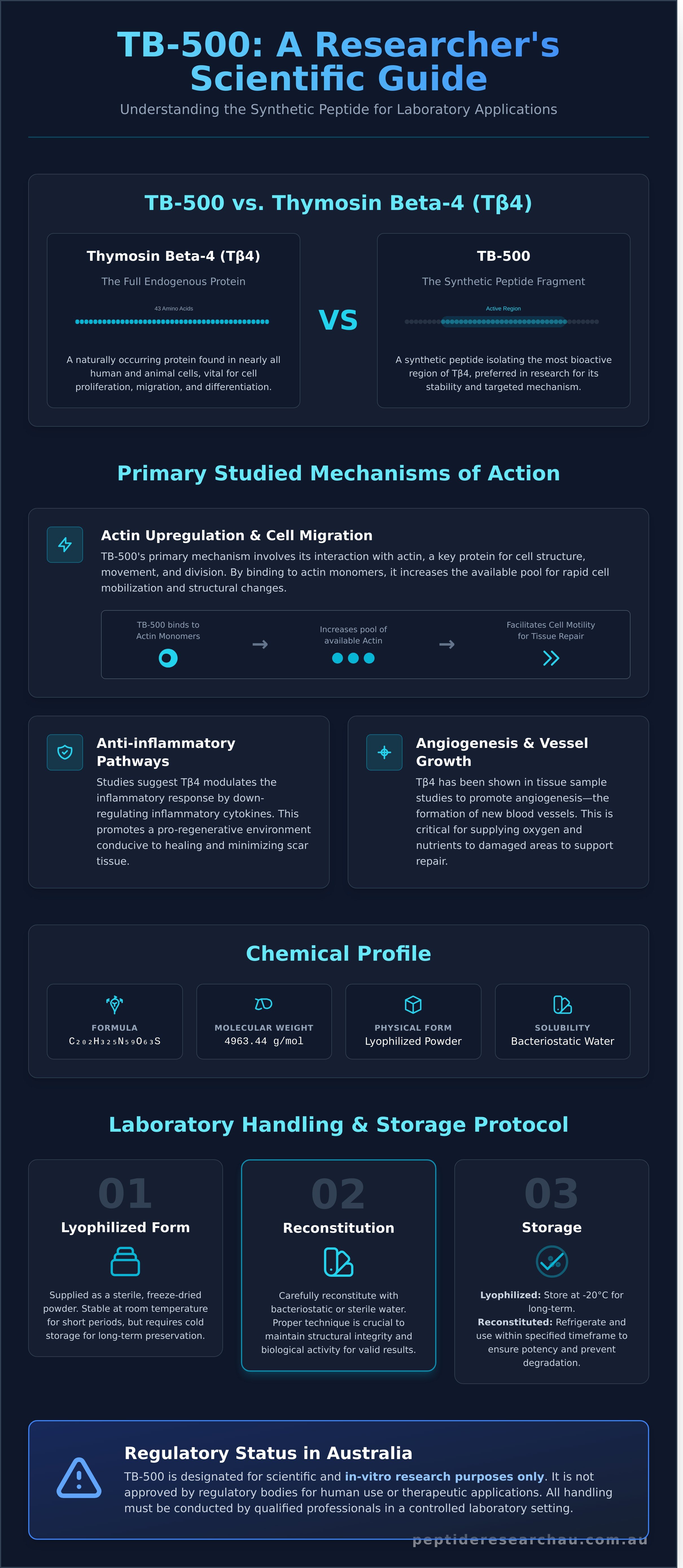
Thymosin Beta-4 is a highly conserved, 43-amino acid protein found in nearly all human and animal cells, where it plays a crucial role in cell proliferation, migration, and differentiation. The TB-500 synthetic peptide was developed to isolate the most bioactive region of Tβ4. This approach is preferred in research for several reasons, including greater stability, lower production costs, and a more targeted mechanism of action, which allows for more precise experimental control. Consequently, research conducted with TB-500 seeks to replicate and study the specific regenerative effects attributed to Tβ4's primary actin-sequestering domain.
Chemical Profile and Properties
For researchers, understanding the fundamental chemical properties of a compound is paramount for accurate and repeatable experimentation. The chemical profile of the tb500 peptide is well-defined, providing a reliable basis for laboratory use.
Molecular Formula: C₂₀₂H₃₂₅N₅₉O₆₃S
Molecular Weight: 4963.44 g/mol
Physical Form: Typically supplied as a sterile-filtered, lyophilized (freeze-dried) white powder in a vial.
Solubility & Reconstitution: It is soluble in bacteriostatic water or sterile water for injection. Proper reconstitution is essential for maintaining its structural integrity and biological activity.
Stability: In its lyophilized form, TB-500 is stable at room temperature for short periods but should be stored at -20°C for long-term preservation. Once reconstituted, the solution should be refrigerated and used within a specified timeframe to ensure potency.
Mechanism of Action: How is TB-500 Studied to Work?
The biological activities of TB-500 are primarily understood through pre-clinical and in-vitro research into its parent protein, Thymosin Beta-4 (Tβ4). It is crucial to note that these findings originate from laboratory and animal models and do not represent proven effects in humans. The research points to a multi-faceted mechanism of action centred on the regulation of fundamental cellular processes.
The primary mechanism attributed to tb500 involves its interaction with actin, a critical protein in the cytoskeleton of eukaryotic cells. Actin is fundamental to cell structure, movement, and division, and its regulation is a key factor in tissue repair and regeneration.
Actin Upregulation and Cell Migration
In laboratory models, Tβ4 has been observed to bind to actin monomers, sequestering them and preventing their polymerisation into filaments. This action increases the concentration of available actin monomers within the cell, which can then be rapidly mobilised to facilitate cell motility and structural changes. This process is vital for the migration of cells such as endothelial cells and keratinocytes to sites of injury. Foundational research into Thymosin β4 regenerative properties has detailed this interaction, highlighting its potential implications for studies on tissue regeneration.
Anti-inflammatory Pathways
Further research suggests that Tβ4 exhibits potent anti-inflammatory effects. Studies in animal models of injury have indicated that it can down-regulate the expression of key inflammatory cytokines. Rather than simply blocking inflammation like traditional non-steroidal anti-inflammatory drugs (NSAIDs), this mechanism is thought to modulate the inflammatory response, promoting a pro-regenerative environment that is more conducive to healing and minimising scar tissue formation.
Angiogenesis and Vessel Growth
Angiogenesis, the formation of new blood vessels from pre-existing ones, is a critical component of tissue repair. It ensures that damaged areas receive an adequate supply of oxygen and nutrients necessary for healing. In various tissue sample studies, Tβ4 has been shown to promote the growth and sprouting of new blood vessels. This angiogenic potential makes the peptide a significant subject of interest in research focused on cardiovascular conditions and complex wound healing models.
Primary Areas of TB-500 Research and Investigation
The synthetic peptide tb500, a fragment of the naturally occurring protein Thymosin Beta 4 (Tβ4), is the subject of extensive scientific inquiry across several disciplines. Research has primarily focused on its potential role in cellular repair, regeneration, and modulation of inflammatory processes. The scientific rationale for these investigations is rooted in Tβ4's known function as a primary actin-sequestering protein, which is critical for cell motility, structure, and differentiation. The following sections summarise the main avenues of investigation based on published preclinical literature.
Studies in Wound Healing and Tissue Repair
A significant body of research has investigated Tβ4 and its derivatives in models of tissue injury. In animal studies, its administration has been examined for potential effects on accelerating dermal wound closure and burn healing. The proposed mechanisms centre on its ability to promote cell migration, particularly of keratinocytes and endothelial cells, and to stimulate angiogenesis (the formation of new blood vessels). Further laboratory research has explored its application in corneal repair models and its potential to support the recovery of muscle, tendon, and ligament injuries.
Cardiovascular Research Applications
In the field of cardiovascular science, Tβ4 has been studied for its potential cardioprotective effects following ischemic events like myocardial infarction. Preclinical animal models suggest that it may help preserve cardiac function by reducing apoptosis (programmed cell death) of cardiomyocytes and promoting the migration of progenitor cells to the site of injury. While this remains a highly complex and experimental area, the foundational research has prompted further exploration, including early-stage human trials like the Phase 1b Study of Thymosin Beta 4 for acute ischemic stroke, which examines related mechanisms of cellular repair.
Neuroprotective and Neurological Research
Handling and Preparation of TB-500 for Laboratory Use
The integrity of any research study depends on the quality and stability of the compounds being investigated. Proper handling and preparation of TB-500 are critical to ensure its biological activity is preserved, leading to valid and reproducible experimental outcomes. This section provides a practical protocol for researchers on the correct reconstitution and storage of lyophilized peptides.
Required Lab Supplies
To correctly prepare your peptide for research, a sterile environment and specific supplies are necessary. The quality of these materials directly impacts the purity of the final solution. Essential items include:
A vial of lyophilized TB-500 peptide powder.
Bacteriostatic water for reconstitution. This sterile water contains 0.9% benzyl alcohol, which acts as a preservative to prevent microbial contamination after the vial is opened.
Sterile 1mL syringes for precise measurement and transfer of the bacteriostatic water.
Alcohol swabs for sterilizing the rubber stoppers of both the peptide and water vials.
Ensuring the sterility of your diluent is paramount for accurate research. Source laboratory-grade bacteriostatic water here.
Step-by-Step Reconstitution Protocol
Reconstitution is the process of mixing the lyophilized peptide powder with a sterile liquid diluent. Follow these steps carefully to avoid denaturing the peptide:
Acclimatise the Vial: Before opening, allow the vial of lyophilized tb500 to reach room temperature for 15-20 minutes. This prevents condensation from forming inside the vial, which can compromise the peptide.
Prepare the Diluent: After sterilizing both vial tops with an alcohol swab, use a sterile syringe to draw the calculated volume of bacteriostatic water required for your desired concentration.
Inject Slowly: Insert the needle into the TB-500 vial and angle it so the bacteriostatic water runs slowly down the inside wall of the glass. Do not inject the liquid directly onto the peptide powder.
Mix Gently: Once all the water is added, gently swirl the vial or roll it between your palms until the powder is fully dissolved. Do not shake vigorously, as this can damage the peptide's delicate molecular structure.
Proper Storage and Stability
Correct storage is essential for maintaining the potency and stability of TB-500 both before and after reconstitution.
Before Reconstitution: Lyophilized (powder) TB-500 should be stored in a freezer at approximately -20°C. In this state, it can remain stable for several years.
After Reconstitution: The liquid solution must be stored in a refrigerator between 2°C and 8°C. When refrigerated, the reconstituted peptide remains stable for several weeks.
It is critical to avoid repeated freeze-thaw cycles with the reconstituted solution, as this process will degrade the peptide and significantly reduce its efficacy for research applications. For high-quality research compounds, always rely on a trusted supplier.
Regulatory Status and Sourcing TB-500 in Australia
For researchers in Australia, understanding the regulatory framework governing peptides is crucial for conducting legitimate and effective studies. The legal status of TB-500 dictates how it can be acquired and utilised, placing a significant emphasis on sourcing from reputable suppliers who adhere to these guidelines. This ensures both compliance and the integrity of research data.
Understanding the 'Research Only' Classification
In Australia, TB-500 is not approved by the Therapeutic Goods Administration (TGA) for human therapeutic use. Consequently, it cannot be legally marketed or sold as a supplement, treatment, or for any form of human consumption. Instead, it is classified as a 'research chemical' or 'research compound'. This designation means its sale and purchase are restricted to laboratory and scientific investigation purposes only. Furthermore, its use is prohibited in competitive sports by the World Anti-Doping Agency (WADA) and the Australian Sports Anti-Doping Authority (ASADA). At Peptide Research AU, all compounds, including our tb500, are supplied under this strict 'research only' guideline.
Why Purity and Domestic Sourcing Matter
The validity of any scientific study depends entirely on the quality of the materials used. When sourcing peptides, particularly from international markets, researchers face risks of receiving impure, counterfeit, or incorrectly synthesised compounds. These inconsistencies can compromise experimental outcomes and lead to unreliable data. To mitigate this, it is essential to source from suppliers who provide third-party verification of purity and sequence analysis, typically through High-Performance Liquid Chromatography (HPLC) and Mass Spectrometry (MS) reports.
Choosing a reputable domestic supplier in Australia offers distinct advantages:
Faster and More Reliable Shipping: Avoids potential delays and seizure issues with the Australian Border Force.
Guaranteed Purity: Ensures access to laboratory-grade compounds that have been independently tested and verified.
Local Accountability: Provides accessible customer support and a clear chain of custody for all products.
For researchers seeking laboratory-grade tb500 with documented purity, sourcing from a trusted domestic supplier is paramount. Peptide Research AU is dedicated to providing verified, high-purity compounds to support the integrity of Australian scientific advancement. You can explore our range of research-grade peptides, all backed by our commitment to quality and transparency.
Final Considerations for TB-500 Research in Australia
TB-500 represents a significant compound for investigation, particularly within preclinical studies exploring tissue regeneration and anti-inflammatory pathways. As this guide has outlined, its mechanism of action and potential applications underscore the importance of meticulous research protocols. For scientists in Australia, adhering to proper handling procedures and understanding the regulatory framework is fundamental to conducting valid and compliant studies with tb500.
The integrity of your research depends directly on the quality of the compounds you use. Sourcing from a trusted domestic supplier ensures that your materials meet the stringent requirements for scientific inquiry. At Peptide Research AU, we provide laboratory-grade compounds, each verified by third-party purity testing to guarantee reliability and consistency for your projects.
Advance your scientific exploration with confidence. Source high-purity TB-500 for your research in Australia. We are committed to supporting the future of scientific discovery.
Frequently Asked Questions
What is the difference between TB-500 and TB4-Frag?
TB-500 is the synthetic counterpart to the full Thymosin Beta-4 (TB4) protein, which consists of 43 amino acids. In contrast, TB4-Frag is a smaller, acetylated and amidated fragment of the full peptide. This fragment contains the primary active region responsible for actin binding and cellular mobility. While both are subjects of research for tissue repair, TB4-Frag is often studied for its more targeted mechanism, whereas TB-500 represents the effects of the entire native protein structure.
Is TB-500 a steroid or a SARM?
No, TB-500 is neither a steroid nor a Selective Androgen Receptor Modulator (SARM). It is a synthetic peptide, which is a short chain of amino acids. Its mechanism of action is fundamentally different from anabolic steroids or SARMs, which interact with androgen receptors. TB-500 primarily functions by upregulating a protein called actin, which is critical for cell migration, proliferation, and differentiation. This distinction is crucial for understanding its profile in a research context.
How is the purity of research peptides like TB-500 verified?
The purity of laboratory-grade peptides is verified using stringent analytical methods. The primary techniques are High-Performance Liquid Chromatography (HPLC) and Mass Spectrometry (MS). HPLC separates the target peptide from any impurities, providing a precise percentage of purity. MS then confirms that the molecular weight of the compound matches the expected structure of TB-500. Reputable suppliers provide Certificates of Analysis (CoA) from third-party laboratories detailing these results for transparency and quality assurance.
Why is TB-500 sold as a lyophilized powder?
Peptides are delicate molecules that can degrade when in a liquid solution. TB-500 is sold as a lyophilized (freeze-dried) powder to ensure maximum stability and a long shelf life. This process removes water from the compound without using heat, which preserves its complex protein structure. For research purposes, the powder is reconstituted with a sterile solvent like bacteriostatic water immediately before use, ensuring the peptide's integrity and viability for the experiment.
Can TB-500 be studied alongside other peptides like BPC-157 in a lab setting?
Yes, in a laboratory setting, it is common for researchers to investigate the effects of multiple compounds. The peptide tb500 is often studied concurrently with BPC-157 as their proposed mechanisms of action are considered complementary, not contradictory. While TB-500 primarily influences actin-mediated cell mobility, BPC-157 is studied for its effects on growth factor signalling and angiogenesis. Such studies aim to observe any potential synergistic effects within a controlled research environment.
What safety precautions are necessary when handling TB-500 in a laboratory?
Standard laboratory safety protocols must be followed when handling research peptides. This includes wearing appropriate Personal Protective Equipment (PPE), such as nitrile gloves, safety glasses, and a lab coat, to prevent accidental skin contact or inhalation. All handling, including reconstitution and measurement, should occur in a clean, controlled environment. Proper storage, typically refrigeration or freezing of the lyophilized powder and refrigerated storage of the reconstituted solution, is critical to maintain compound stability and prevent contamination.


Comments