

Retatrutide Research Protocol: A Guide to Reconstitution, Dosing, and Titration (2026)
- peptideresearchau
- May 11
- 12 min read

Updated: May 16
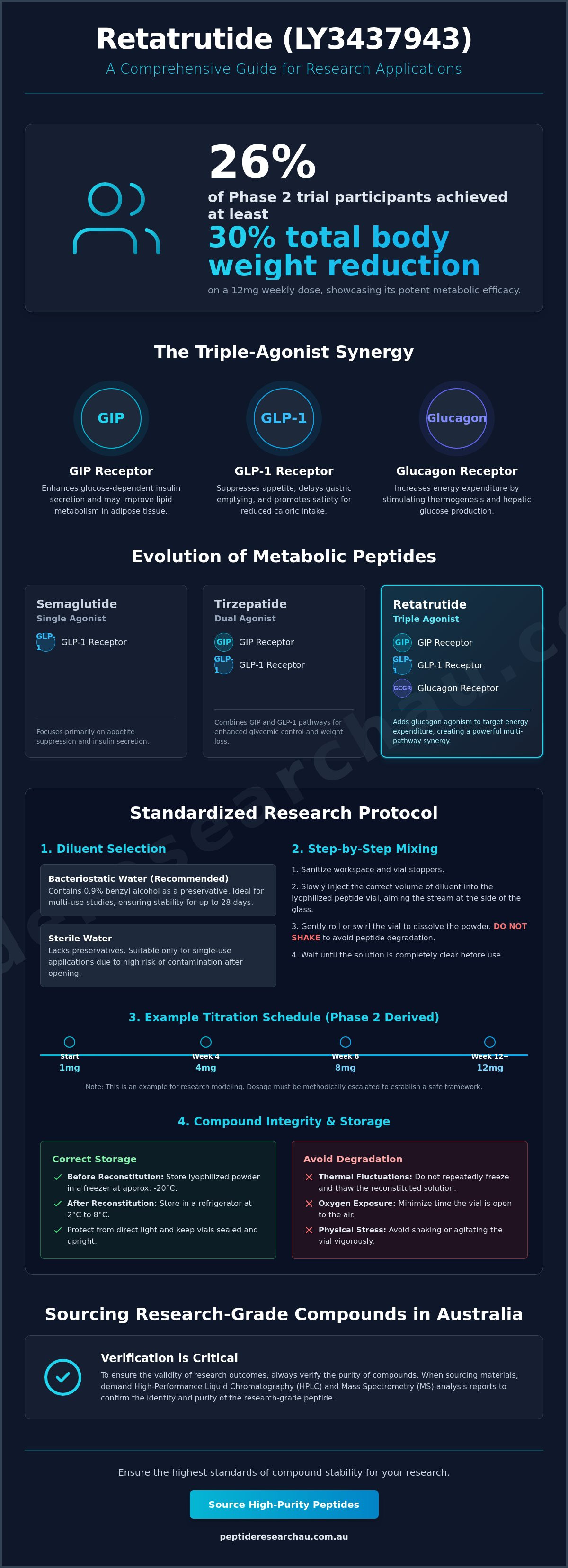
26% of participants in Phase 2 clinical trials achieved a total body weight reduction of at least 30% while on a 12mg weekly dose of retatrutide. You likely recognize that achieving this level of triple-agonist efficacy in a laboratory setting depends entirely on the precision of your methodology. It's frustrating when inconsistent reconstitution or environmental degradation compromises the integrity of a research grade sample; especially given the current regulatory climate following the TGA safety advisory issued on April 13, 2026. Implementing a standardized retatrutide research protocol is essential for any study aiming to replicate these metabolic observations with accuracy.
To maintain consistency in your retatrutide research protocol, calculate your concentration before beginning the mix. If you're working with a 10mg vial and add 2ml of diluent, your resulting concentration is 5mg per ml. Researchers can discover more about Retatrutide 10mg to ensure they are utilizing high-purity materials for these calculations. Common ratios include:
As the TRIUMPH-3 trial reaches its estimated completion in May 2026, we'll provide a comprehensive framework for studying these effects, including standardized instructions for reconstitution using laboratory diluents. You'll also find a clear breakdown of the 1mg to 12mg titration schedule derived from Phase 2 data and critical storage guidelines for maintaining peptide efficacy in the Australian climate. This guide ensures your laboratory work remains grounded in established scientific benchmarks and maintains the highest standards of compound stability for your research grade materials.
Key Takeaways
Gain a clinical understanding of the triple-agonist synergy between GIP, GLP-1, and glucagon receptors for more accurate metabolic modeling.
Implement a precise retatrutide research protocol to standardize reconstitution and prevent the premature degradation of laboratory grade samples.
Navigate the titration logic used in clinical trials to establish a repeatable and safe dosing framework for longitudinal research.
Apply rigorous storage standards to maintain compound integrity against environmental factors like thermal fluctuations and oxygen exposure.
Verify the purity of research compounds by identifying the necessary HPLC/MS analysis standards when sourcing within the Australian supply chain.
Table of Contents
The Triple Agonist Mechanism: Understanding Retatrutide (LY3437943)
Retatrutide (LY3437943) is a synthetic 39-amino acid peptide that represents the current frontier of metabolic research. It functions as a unimolecular triple agonist. This means it activates three distinct nutrient-stimulated hormone receptors simultaneously. Developing a precise retatrutide research protocol requires a clinical understanding of how these three pathways interact to influence metabolic homeostasis. Unlike previous generations of peptides, this compound doesn't just mimic a single hormone; it creates a multi-pathway synergy designed to optimize energy balance and glucose regulation.
GIP, GLP-1, and Glucagon Receptor Synergy
The primary mechanism of action involves the coordinated activation of the glucose-dependent insulinotropic polypeptide (GIP), glucagon-like peptide-1 (GLP-1), and glucagon receptors. GIP receptor agonism is foundational to the compound's profile. It enhances glucose-dependent insulin secretion and potentially improves lipid metabolism within adipose tissue. This works in tandem with the GLP-1 component, which is well-known for its role in appetite suppression and the delay of gastric emptying.
The addition of glucagon receptor agonism is what truly distinguishes this peptide in a laboratory setting. While GLP-1 and GIP focus on caloric intake and insulin sensitivity, glucagon activation targets energy expenditure. It stimulates thermogenesis and hepatic glucose production during fasting states. This triple-receptor approach aims to counteract the metabolic adaptation that typically occurs when caloric intake is reduced. In research subjects, this synergy has demonstrated a more profound impact on body composition than single or dual agonists.
Retatrutide vs. Previous Generation Peptides
Research grade retatrutide offers a significant leap over semaglutide and tirzepatide. Semaglutide is a selective GLP-1 receptor agonist, while tirzepatide is a dual GIP/GLP-1 agonist. Retatrutide maintains high binding affinity for both of those receptors but introduces the third glucagon pillar. A robust retatrutide research protocol must account for this increased complexity. The molecular structure includes a C20 fatty acid diacid moiety attached to the lysine residue at position 17. This specific modification allows the peptide to bind to albumin, extending its half-life to approximately six days. This pharmacokinetic profile supports the once-weekly dosing schedule used in the ongoing TRIUMPH clinical trials.
Primary research objectives for this compound typically include:
Quantifying changes in resting energy expenditure via indirect calorimetry.
Monitoring shifts in insulin sensitivity and glycemic control.
Analyzing the impact on hepatic fat fraction and overall lipid profiles.
Observing the dose-dependent effects on satiety and caloric consumption.
Standardized Reconstitution Protocol for Retatrutide Vials
While clinical data focuses on metabolic outcomes, the integrity of a study starts at the laboratory bench. Lyophilized (freeze-dried) retatrutide is highly sensitive to environmental changes and physical handling. Improper preparation can lead to peptide degradation or "shear stress," which renders the results invalid. A reliable retatrutide research protocol requires meticulous attention to the reconstitution process to ensure the 39-amino acid chain remains structurally intact for the duration of the study.
Selecting the Correct Diluent
Choosing the right medium for dissolution is critical for long-term stability. For most multi-use laboratory studies, bacteriostatic water is the standard requirement. This solution contains 0.9% benzyl alcohol, which acts as a preservative to inhibit bacterial growth over a 28-day period. In contrast, sterile water lacks these preservatives. It's only suitable for single-use applications because it's highly susceptible to contamination once the vial seal is punctured. For a deeper look at these differences, researchers should consult our bacteriostatic water guide. Using high-quality laboratory diluents ensures that the pH level remains stable, further protecting the compound from premature breakdown.
Step-by-Step Mixing Instructions
Precision begins with a sterile environment. You'll need to sanitize the workspace and the rubber stoppers of both the diluent and the retatrutide vial using 70% isopropyl alcohol. Once the surfaces are dry, use a sterile syringe to draw the required volume of diluent. Precision is paramount here; even a 0.1ml variance can skew the concentration data.
The "slow-drip" method is essential for maintaining peptide integrity. Aim the needle at the inner glass wall of the vial rather than directly onto the lyophilized powder. Let the liquid trickle down slowly. This technique prevents foaming and minimizes the risk of breaking the delicate peptide bonds. After the diluent is added, never shake the vial. Shaking creates kinetic energy that can damage the peptide structure. Instead, use a gentle swirling motion or let the vial sit undisturbed in a refrigerated environment until the solution is completely clear.
To maintain consistency in your retatrutide research protocol, calculate your concentration before beginning the mix. If you're working with a 10mg vial and add 2ml of diluent, your resulting concentration is 5mg per ml. Common ratios include:
10mg vial + 1ml diluent: 10mg/ml concentration
10mg vial + 2ml diluent: 5mg/ml concentration
10mg vial + 5ml diluent: 2mg/ml concentration
Following these standardized steps reduces variables in your research and ensures that the triple-agonist properties of the compound are preserved for accurate data collection.
Dosing Frameworks and Titration Schedules in Research
Establishing a standardized retatrutide research protocol requires a deep dive into the dose-response relationships identified during Phase 2 clinical trials. These studies were instrumental in determining how the triple-agonist mechanism influences metabolic markers over extended periods. A primary challenge in laboratory studies is balancing maximum efficacy with subject stability. Data from the 48-week observation windows indicates that while the 12mg weekly dose yielded a 24.2% average weight reduction, the path to that dosage must be carefully managed to maintain the integrity of the research.
Gradual titration is the primary logic used to mitigate gastrointestinal side effects. In clinical settings, researchers often debate between a 2mg and 4mg starting dose. While a 4mg start can accelerate initial data collection, a conservative 2mg baseline is frequently preferred in longitudinal studies to ensure better subject retention. This cautious approach allows the glucagon receptor activity to ramp up without overwhelming the system's metabolic capacity.
Phase 2 Titration Logic
The Phase 2 trials utilized four distinct dosing tiers: 1mg, 4mg, 8mg, and 12mg. The most effective retatrutide research protocol involves a dose-escalation schedule where the amount is increased every 4 weeks. For instance, a study might begin at 2mg for weeks 1 to 4, increase to 4mg for weeks 5 to 8, and continue this pattern until the target 12mg dose is reached. This 4-week interval is crucial. It provides a sufficient window to monitor how the triple-agonist synergy affects glucose-dependent insulin secretion and energy expenditure before introducing a higher concentration.
Calculating Precise Research Dosages
Precision in a laboratory environment depends on the accurate conversion of milligrams to milliliters after reconstitution. To determine the correct volume for a specific dose, you'll use the formula: (Desired Dose / Concentration) = Volume to be drawn. If your solution has a concentration of 5mg/ml and your protocol requires a 2mg dose, you'll draw exactly 0.4ml.
Using standard 1ml insulin syringes is recommended for micro-dosing. These tools allow for increments as small as 0.01ml, which is necessary when managing the lower titration tiers. For researchers handling multiple cohorts or varied concentrations, utilizing a peptide dosage calculator is a reliable way to eliminate manual calculation errors. Maintaining this level of mathematical rigor ensures that every subject receives the exact amount required by the research framework, leading to more valid and repeatable data sets.
Laboratory Storage and Stability: Maintaining Compound Integrity
Maintaining the chemical stability of a 39-amino acid triple agonist is a significant logistical challenge. In the Australian climate, where ambient temperatures often exceed 30°C, the risk of thermal degradation is high. A robust retatrutide research protocol must include a strict cold-chain management strategy to prevent the peptide from unfolding or oxidizing. Exposure to UV light and oxygen are the primary catalysts for sample failure. UV radiation can break the delicate covalent bonds within the peptide chain; oxygen exposure leads to the oxidation of specific amino acid residues. This process results in a loss of biological activity and renders research data inaccurate.
Pre-Reconstitution Storage
Lyophilized retatrutide is most stable when stored in a deep-freeze environment at -20°C or lower. Under these conditions, vacuum-sealed research grade powders can maintain their integrity for up to 24 months. It's vital to use a dedicated laboratory freezer rather than a standard "frost-free" consumer unit. Frost-free models use temperature cycles to prevent ice buildup. These cycles cause subtle but damaging temperature fluctuations for the compound. When moving a vial from deep-freeze to the bench, allow it to reach room temperature before puncturing the seal. This prevents atmospheric moisture from condensing inside the vial, which can lead to the immediate hydrolysis of the powder.
Post-Reconstitution Stability
Once the peptide is in solution, its shelf life drops significantly. Reconstituted samples must be stored in a laboratory refrigerator between 2°C and 8°C. They should never be returned to the freezer once liquid has been added. Ice crystals can physically shear the peptide structure during the freezing process. Following the 28-day rule is essential for any retatrutide research protocol. Even when using bacteriostatic water, the preservative's efficacy and the peptide's structural stability begin to decline after four weeks. For a detailed breakdown of environmental variables, consult our peptide storage checklist.
Researchers must visually inspect vials before every use. Any presence of cloudiness, precipitation, or particulates indicates that the peptide has come out of solution or has been contaminated. These samples are no longer viable for standardized study. To ensure your project uses only the highest quality materials, always source your laboratory grade compounds from trusted suppliers who provide HPLC and Mass Spectrometry verification. This level of oversight ensures that your storage efforts aren't wasted on substandard starting materials.
Sourcing Research-Grade Retatrutide in Australia
Sourcing high-purity compounds is the final, critical component of a valid retatrutide research protocol. Without verified chemical integrity, the data from titration and metabolic studies becomes anecdotal. In Australia, the TGA issued a safety advisory on April 13, 2026, regarding the illegal advertising and supply of unapproved peptides. It's imperative that researchers distinguish between clinical products and laboratory grade compounds intended strictly for scientific study. Ethical procurement involves using suppliers who prioritize transparency and provide verifiable data for every batch produced.
Purity and Quality Standards
A Certificate of Analysis (CoA) is the only objective proof of a compound's quality. This document must include high-performance liquid chromatography (HPLC) and mass spectrometry (MS) data. HPLC measures the purity level by identifying any impurities or related substances. MS confirms the identity of the 39-amino acid sequence by measuring its molecular weight. Using non-verified suppliers for triple-agonist research introduces contaminants that can interfere with receptor binding studies. Peptide Research AU maintains these rigorous benchmarks for peptides in Australia by ensuring every batch meets a minimum purity threshold of 99%.
Procurement and Logistics
The Australian climate presents a unique challenge for cold-chain logistics. International shipments often face customs delays that expose sensitive peptides to extreme heat, which causes structural degradation. Sourcing domestically mitigates these risks. Domestic providers can utilize temperature-controlled express shipping. This ensures the lyophilized powder arrives without thermal damage. Avoiding international transit also removes the risk of seizure by border authorities, as the TGA is actively monitoring the importation of unapproved metabolic peptides.
Before procurement, ensure your facility is ready to implement the full retatrutide research protocol, including -20°C storage capabilities. As of May 2026, research-grade retatrutide is available from specialized suppliers for approximately $139.95 per 10mg vial. This price reflects the high cost of synthesis and the stringent testing required for triple-agonist compounds. Explore our research-grade Retatrutide to begin your next longitudinal metabolic study with compounds that meet strict laboratory standards. Maintaining these high procurement standards is the only way to ensure the reproducibility of your scientific data.
Advancing Metabolic Research Standards
The success of any longitudinal study involving triple-agonist peptides hinges on the rigorous application of a standardized retatrutide research protocol. By prioritizing the slow-drip reconstitution method and adhering to a conservative 4-week titration interval, researchers can maintain the structural integrity of their samples and the validity of their metabolic data. It's clear that environmental control, particularly within the Australian climate, remains a non-negotiable factor for laboratory success. Preserving the 39-amino acid sequence requires meticulous attention to detail from the initial deep-freeze storage to the final 12mg titration tier.
Ensuring that your laboratory grade compounds are third-party HPLC/MS purity verified is the final step in eliminating experimental variables. Peptide Research AU provides these high standards alongside domestic Australian shipping to guarantee maximum compound stability upon arrival. We're your trusted source for research grade compounds that meet the demands of modern science. Secure Laboratory-Grade Retatrutide for Your Research Project and begin your study with the confidence that your materials are as precise as your methodology. Your dedication to scientific precision facilitates the future of metabolic research.
Frequently Asked Questions
What is the recommended starting dose for Retatrutide research?
The recommended starting dose for retatrutide research is typically 2mg weekly. This conservative baseline follows the dose-escalation logic identified in Phase 2 clinical trials to minimize subject instability. While some protocols initiate at 4mg, the lower 2mg entry point allows for a more controlled observation of the triple-agonist effects before moving to the 4mg, 8mg, and 12mg tiers every 4 weeks. Maintaining this incremental approach is vital for gathering accurate longitudinal data.
How much bacteriostatic water should be used for a 5mg Retatrutide vial?
Using 1ml of bacteriostatic water for a 5mg vial results in a concentration of 5mg/ml. If your protocol requires a lower concentration for micro-dosing, adding 2ml of diluent will create a 2.5mg/ml solution. Precise volume measurement is essential for maintaining the accuracy of your retatrutide research protocol. Always ensure the diluent is introduced slowly against the vial wall to prevent structural damage to the delicate peptide chain.
Can Retatrutide be stored at room temperature once reconstituted?
Reconstituted retatrutide must never be stored at room temperature because it's highly susceptible to thermal degradation. Once mixed with a diluent, the solution must be kept in a laboratory refrigerator between 2°C and 8°C. Samples kept outside these ranges for even short periods risk oxidation and structural unfolding. Following the 28-day rule ensures that the peptide maintains its biological activity before the preservative in the bacteriostatic water begins to fail.
What is the primary difference between Retatrutide and Tirzepatide in a lab setting?
The primary difference lies in the receptor activation profile. Retatrutide is a triple agonist targeting GLP-1, GIP, and glucagon receptors; tirzepatide is a dual agonist targeting only GLP-1 and GIP. The addition of glucagon receptor activation in retatrutide is designed to increase energy expenditure and thermogenesis. This makes it a more complex compound for metabolic studies compared to previous generation dual or single agonists like semaglutide.
Is Retatrutide legal for research use in Australia in 2026?
Retatrutide is legal for laboratory research and scientific study in Australia as of May 2026. It's classified as an unapproved therapeutic good by the TGA and isn't registered for human consumption. On April 13, 2026, the TGA issued a safety advisory regarding illegal advertising and importation for personal use. Researchers should source laboratory grade compounds from domestic suppliers to ensure compliance with current Australian regulations and avoid customs delays.
How often should Retatrutide be administered in a longitudinal research protocol?
Retatrutide is administered once every seven days in a standard longitudinal retatrutide research protocol. This frequency is supported by its pharmacokinetic profile, specifically a half-life of approximately six days enabled by a C20 fatty acid diacid modification. Maintaining a consistent weekly schedule is vital for achieving steady-state concentrations in research subjects. Most protocols observe subjects over a 48-week window to gather comprehensive data on the compound's triple-agonist efficacy.
What are the common signs of Retatrutide peptide degradation?
Visible changes in the solution are the most common signs of peptide degradation. If a reconstituted vial appears cloudy, shows precipitation, or contains floating particulates, the peptide structure has likely failed. These physical shifts indicate the compound has come out of solution or has been compromised by contamination or heat exposure. Any vial showing these characteristics should be discarded immediately to avoid compromising the integrity of your laboratory data.
Does Retatrutide require a specific type of syringe for laboratory use?
Standard 1ml insulin syringes are the preferred tool for precise laboratory micro-dosing. These syringes feature 0.01ml increments, which are necessary for accurately measuring the small volumes required during the initial titration phases. Using larger syringes can lead to measurement errors that skew the results of your study. For maximum accuracy, researchers should use a new sterile syringe for every draw to prevent cross-contamination and maintain the highest sample purity standards.


Comments