

Retatrutide: A Comprehensive Guide to the Triple Agonist Peptide (2026)
- peptideresearchau
- Mar 13
- 13 min read

Could a single molecule achieve a 24.2% reduction in body weight within 48 weeks? This was the unprecedented result observed in Phase 2 clinical trials for retatrutide, a potent triple hormone receptor agonist that's currently reshaping the landscape of metabolic science. Most researchers recognize that dual-agonists often reach an efficacy plateau, which creates a significant need for more complex molecular interventions.
We understand that transitioning from dual to triple agonism requires precise data and reliable laboratory standards. This guide provides a rigorous scientific analysis of how this compound targets GLP-1, GIP, and glucagon receptors to redefine metabolic research benchmarks. You'll gain clear insights into exact reconstitution protocols and how to identify high-purity, laboratory-grade compounds from trusted Australian suppliers. Accuracy is vital. We'll examine the specific chemical interactions and handling requirements necessary for maintaining peptide stability in a professional AU research setting.
Key Takeaways
Explore the "triple threat" mechanism of retatrutide, a unimolecular polyagonist that synergizes GLP-1, GIP, and glucagon receptors for advanced metabolic signaling.
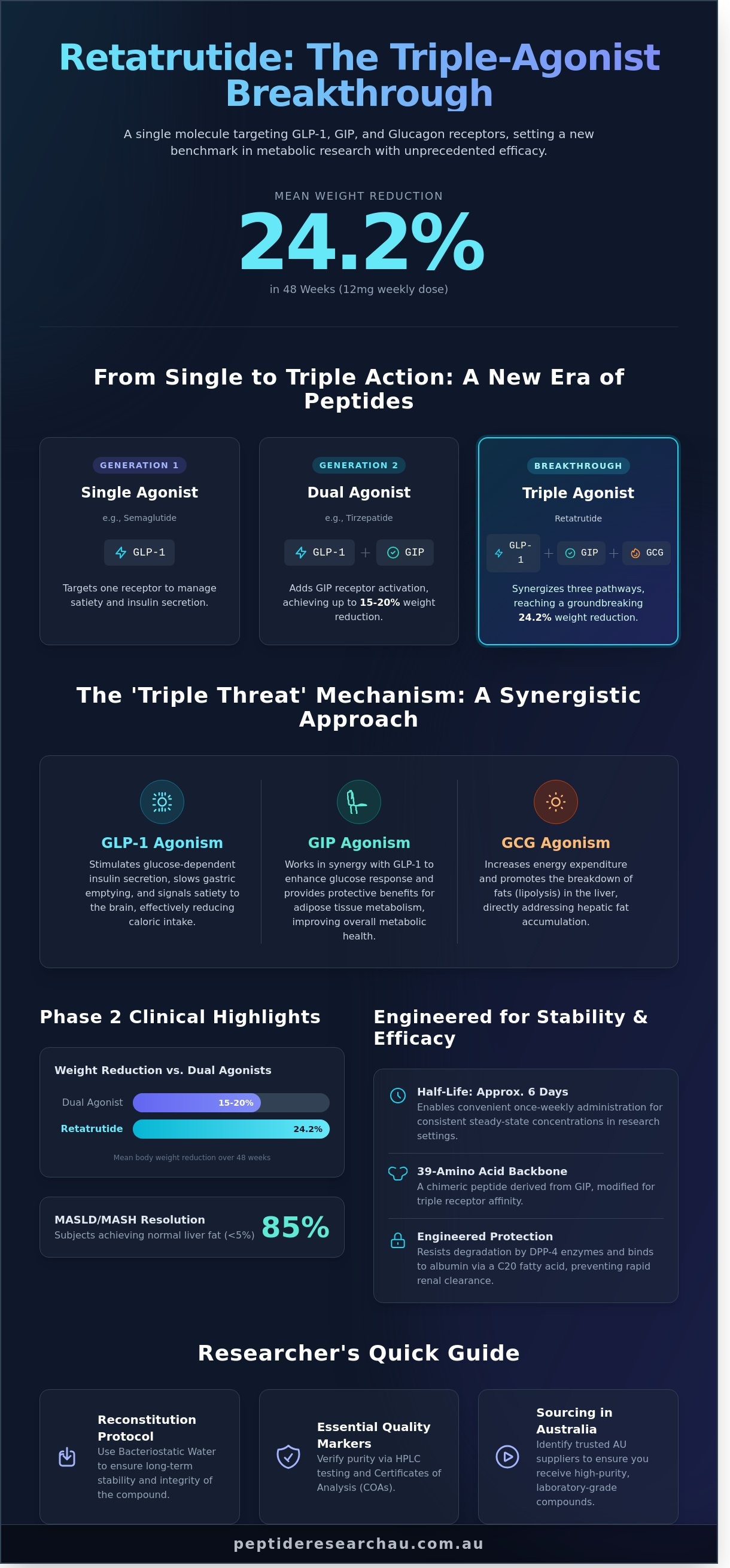
Review comparative efficacy data highlighting a mean weight reduction of 24.2% over 48 weeks, establishing a new benchmark for metabolic research.
Implement standardized laboratory handling and reconstitution protocols using Bacteriostatic Water to ensure the long-term stability of research-grade compounds.
Identify essential quality markers for sourcing within Australia, including the critical role of HPLC testing and Certificates of Analysis (COAs) in verifying purity.
Table of Contents Understanding Retatrutide: The Evolution of Metabolic Research The Triple Agonist Mechanism: Synergizing GLP-1, GIP, and Glucagon Retatrutide vs. Tirzepatide: Comparative Research Data Laboratory Handling: Reconstitution and Stability Protocols Sourcing Research-Grade Retatrutide in Australia
Understanding Retatrutide: The Evolution of Metabolic Research
Retatrutide represents a pivotal shift in metabolic pharmacology. It's a unimolecular polyagonist. This compound marks a transition from single-target therapies to a more complex, multi-receptor approach. Early research focused on GLP-1 receptor agonists like Semaglutide. The field then progressed to dual agonists like Tirzepatide, which adds GIP receptor activation. Now, Retatrutide integrates a third component: the glucagon receptor. This triple-action mechanism aims to address metabolic dysfunction with higher precision than previous generations of peptides.
By early 2026, the clinical landscape for this compound has expanded significantly. The TRIUMPH Phase 3 clinical program is currently evaluating long-term safety and efficacy across diverse populations. Phase 2 data, which served as the foundation for these studies, showed that participants lost a mean of 24.2% of their body weight over a 48-week period. These results were achieved using a 12mg weekly dose. Such figures exceed the 15% to 20% benchmarks established by dual-agonist precursors. Researchers are now focusing on three primary areas of application:
Chronic Weight Management: Targeting significant body mass reduction in patients with obesity.
Type 2 Diabetes: Improving glycaemic control and insulin sensitivity through triple-receptor synergy.
MASLD/MASH: Resolving Metabolic Dysfunction-Associated Steatotic Liver Disease by reducing hepatic fat accumulation.
In specific MASLD trials, 85% of subjects achieved a normal liver fat content of less than 5% within 48 weeks of treatment. These outcomes suggest that the addition of glucagon receptor agonism provides a direct benefit to hepatic lipid metabolism. It's a level of efficacy that single-target peptides haven't yet replicated in laboratory settings.
The Chemical Structure of Retatrutide
The molecule features a 39-amino acid backbone sequence. It's a chimeric peptide derived from the GIP sequence but modified to enable affinity for GLP-1 and glucagon receptors. A critical modification occurs at position 17. Here, a C20 fatty acid diacid moiety is attached to a lysine residue. This structural choice is deliberate. It facilitates high-affinity binding to albumin, which protects the peptide from rapid renal clearance.
Further engineering includes the use of alpha-aminoisobutyric acid at position 2. This helps the compound resist degradation by the enzyme dipeptidyl peptidase-4 (DPP-4). These modifications result in a half-life of approximately 6 days. This duration is ideal for research protocols requiring once-weekly administration. It ensures steady-state concentrations are maintained without the need for frequent daily dosing, which often complicates long-term metabolic studies.
Why 'Triple Agonism' is a Research Breakthrough
Targeting the GLP-1 receptor alone has clear limitations. While it effectively manages satiety and insulin secretion, it doesn't always address the metabolic rate or complex liver pathologies. Triple agonism overcomes these hurdles through synergistic pathways. GLP-1 and GIP work together to suppress appetite and improve the body's response to glucose. The third element, glucagon receptor agonism, increases energy expenditure and promotes the breakdown of fats in the liver.
Retatrutide is a single peptide molecule designed to activate the GLP-1, GIP, and glucagon receptors simultaneously to maximise metabolic output. This multi-pathway targeting aims to resolve metabolic dysfunction more comprehensively than previous models. By stimulating three distinct receptors, researchers can observe a more profound impact on energy balance. It's an innovative approach that challenges the 'plateau' effect often seen in single-receptor research.
The Triple Agonist Mechanism: Synergizing GLP-1, GIP, and Glucagon
Retatrutide represents a significant shift in metabolic research. It's the first compound to utilize a triple agonist mechanism, targeting three distinct hormonal pathways simultaneously. While previous generations of research chemicals focused on single or dual receptors, this laboratory grade peptide engages the glucagon-like peptide-1 (GLP-1), glucose-dependent insulinotropic polypeptide (GIP), and glucagon (GCG) receptors. This multi-pathway approach aims to address metabolic dysfunction with higher precision than earlier models.
The GLP-1 component is responsible for stimulating insulin secretion in a glucose-dependent manner. It slows gastric emptying and signals the brain's satiety centres to reduce caloric intake. GIP works in tandem with GLP-1 but adds a layer of protection for adipose tissue metabolism. It's been shown to improve insulin sensitivity and may play a role in reducing the nausea often associated with GLP-1 agonists. The inclusion of glucagon is the most innovative aspect of the retatrutide profile. Glucagon acts as a metabolic accelerator, increasing energy expenditure directly through hepatic and adipose tissue signaling.
The Role of Glucagon Agonism in Energy Expenditure
Glucagon is often misunderstood as merely a counter-regulatory hormone to insulin. In the context of this triple agonist, it serves to increase the basal metabolic rate. By activating GCG receptors, the compound stimulates thermogenesis. Data from Phase 2 trials published in June 2023 indicated that subjects reached a mean weight reduction of 24.2% over 48 weeks. This result is largely driven by the activation of brown adipose tissue, which converts stored energy into heat rather than storing it as white fat. This mechanism helps balance the insulinotropic effects, ensuring the body remains in a high-energy-use state.
GIP and GLP-1: The Foundation of Incretins
The synergy between GIP and GLP-1 provides the necessary stability for metabolic research. GIP receptors are heavily expressed in fat cells, where they influence how lipids are buffered and stored. In laboratory models, this dual action improves the rate of glucose clearance from the bloodstream. It also appears to modulate the central nervous system more effectively than GLP-1 alone, leading to a more profound suppression of appetite. Researchers seeking high-quality research compounds often prioritise this synergy because it helps maintain a more stable side-effect profile while maximizing the impact on gastric emptying rates.
By combining these three signals, the peptide addresses the complexities of the human endocrine system. It doesn't just reduce intake; it actively alters how the body processes and expends energy. This triple-threat strategy is currently being evaluated for its ability to reduce hepatic fat content, with some 2023 data sets showing up to an 80% reduction in liver fat for specific research cohorts. The precision of this molecular design marks a new era for laboratory-grade metabolic studies.
Retatrutide vs. Tirzepatide: Comparative Research Data
Retatrutide represents the third generation of incretin mimetics, moving beyond the dual-agonist approach of tirzepatide. While semaglutide targets only the GLP-1 receptor and tirzepatide targets both GLP-1 and GIP, retatrutide adds a third layer by engaging the glucagon receptor (GCGR). This triple-action mechanism creates a broader metabolic impact on research subjects. Clinical data reveals a significant jump in efficacy. In a study published in June 2023, subjects receiving the highest dose of retatrutide achieved a 24.2% mean weight reduction over 48 weeks. This surpasses the 20.9% reduction seen with tirzepatide over a longer 72-week period. The Phase 2 clinical trial data confirms that these results are dose-dependent, with weight loss plateaus occurring much later than with previous compounds.
Metabolic markers also show distinct shifts. HbA1c levels in diabetic cohorts typically drop by 2.1% on average, while lipid profiles show marked improvement. Specifically, triglyceride levels often decrease by 40% and LDL cholesterol by 22% at 48 weeks. Safety profiles remain a critical area of study. Retatrutide causes a transient increase in heart rate, peaking at approximately 24 weeks before gradually declining. This is a unique side effect of glucagon receptor activation not typically seen with GLP-1 monotherapy. Gastrointestinal side effects, such as nausea and vomiting, remain the most common adverse events, occurring in 45% to 60% of subjects depending on the titration schedule.
Head-to-Head: Potency and Receptor Selectivity
Peptide GLP-1R Affinity GIPR Affinity GCGR Affinity Semaglutide High None None Tirzepatide High High None Retatrutide High High High
Higher potency across three receptors doesn't always guarantee better research outcomes if the side effect profile becomes intolerable. Retatrutide maintains a half-life of roughly 6 days. This allows for once-weekly administration, similar to tirzepatide. The bioavailability remains high in subcutaneous injections, making it a reliable compound for laboratory settings focused on metabolic rate and energy expenditure.
Impact on Hepatic Fat: A New Research Frontier
One of the most striking findings in retatrutide research is the impact on liver health. Subjects with Metabolic Dysfunction-Associated Steatotic Liver Disease (MASLD) showed an average liver fat reduction of 81.4% at the 12mg dose. In comparison, tirzepatide generally achieves a 30% to 50% reduction in similar cohorts. Over 85% of subjects in the retatrutide group achieved a "normal" liver fat percentage of less than 5% by the end of the trial. These results suggest that retatrutide might be a primary candidate for future fatty liver disease interventions, offering a level of clearance that was previously unattainable with earlier GLP-1 peptides.
Laboratory Handling: Reconstitution and Stability Protocols
Executing precise research with retatrutide requires strict adherence to laboratory handling standards. The reliability of experimental data depends on the structural integrity of the peptide. Researchers must start with high-purity, laboratory-grade lyophilizate to ensure that results aren't skewed by contaminants or degraded sequences. Lower-grade compounds often contain trifluoroacetic acid (TFA) residues or moisture levels exceeding 5%, which can destabilise the peptide chain and lead to inconsistent binding affinity during assays.
The reconstitution process is the most critical phase of handling. To prepare the solution, researchers typically use Bacteriostatic Water. This diluent contains 0.9% benzyl alcohol, which acts as a preservative to inhibit microbial growth for a period of up to 28 days. When introducing the diluent, it's vital to aim the needle at the inner wall of the vial. Allowing the liquid to drip slowly down the glass prevents the "spraying" effect that can shear the delicate peptide bonds. Mechanical stress is a primary cause of peptide denaturation. Scientists should never shake the vial; instead, a gentle swirling motion is used until the lyophilizate is completely dissolved. If the solution remains cloudy after five minutes of rest, it indicates the peptide has precipitated or the sample is compromised.
Reconstitution Best Practices
Precision in calculating concentration is the foundation of accurate dosing in a lab setting. For instance, adding 2mL of diluent to a 5mg vial of retatrutide creates a concentration of 2.5mg/mL. Using a consistent mg/mL ratio across different batches reduces the margin for error in longitudinal studies. Most high-quality vials are vacuum-sealed during the freeze-drying process. When the needle pierces the septum, the internal vacuum should naturally draw the diluent into the vial. A lack of suction often suggests a compromised seal, which may have exposed the peptide to atmospheric moisture and oxygen. For a detailed step-by-step breakdown of these procedures, refer to our Peptide Reconstitution Guide.
Stability and Shelf Life
Retatrutide is highly sensitive to thermal fluctuations and light exposure. In its lyophilized (powder) form, the peptide is stable at room temperatures of 20°C to 25°C for approximately 30 to 60 days. For long-term storage exceeding three months, the powder should be kept in a freezer at -20°C to maintain a purity level above 98%. Once the peptide is in a liquid state, its shelf life decreases significantly. Reconstituted solutions must be stored in a dark environment at 2°C to 8°C. Exposure to UV light or repeated freeze-thaw cycles will trigger peptide fragmentation. The optimal stability for Retatrutide in solution is maintained within a pH range of 5.0 to 7.0. Researchers can identify compromised solutions by looking for degradation markers such as visible "floaters," changes in colour, or a sudden shift in the solution's viscosity.
Ensure your laboratory is equipped with the highest standard of reagents for your next study. Purchase laboratory grade compounds from a trusted Australian source.
Sourcing Research-Grade Retatrutide in Australia
Procuring retatrutide for Australian laboratory environments requires a focus on domestic supply chains. International orders frequently spend 10 to 14 days in transit. This duration exposes peptides to fluctuating cargo hold temperatures that can reach 50°C. Domestic shipping reduces this window to 24 or 48 hours. The Australian regulatory environment is shifting. By March 2026, the Therapeutic Goods Administration (TGA) is expected to implement stricter reporting requirements for synthesized peptides under the updated Schedule 4 framework. Researchers who establish relationships with compliant Australian suppliers now will avoid future disruptions. Reliable data depends on the chemical integrity of the starting material. Using sub-standard compounds leads to failed experiments and wasted grant funding. Professional researchers prioritize vendors who maintain local stock to ensure consistency across longitudinal studies.
Identifying High-Quality Peptide Suppliers
Professionalism in this sector is defined by documentation. A Certificate of Analysis (COA) must accompany every batch. This document isn't just a summary; it should include a Mass Spectrometry (MS) report and an HPLC chromatogram. These tests confirm the molecular weight and the purity percentage of the retatrutide. Avoid labs that sell products in unlabelled vials or lack a physical Australian presence. Research-grade labeling is a legal necessity. It clarifies that the compound is intended for in vitro or animal studies only. This compliance protects the researcher and the institution from regulatory scrutiny. Buying locally also avoids the A$75 to A$150 customs processing fees often applied to bulk research imports. High-quality suppliers also provide the following indicators of reliability:
HPLC testing verifying 99% or higher purity levels.
Vacuum-sealed vials featuring lyophilized powder for maximum stability.
Batch-specific data rather than generic "representative" reports.
Climate-controlled storage facilities that prevent peptide degradation.
The Australian summer presents a specific risk for peptide transport. When temperatures exceed 35°C, the molecular bonds in non-lyophilized peptides can begin to break down. Domestic suppliers use express cold-chain logistics to mitigate this risk. This ensures that the compound arriving at your facility is identical to the compound that left the lab.
The Peptide Research AU Advantage
Our team maintains a stringent testing protocol for all laboratory-grade compounds. We verify every batch to ensure it meets the 99% purity threshold required for high-stakes science. We believe that Australian researchers shouldn't have to rely on uncertain international markets or risk their projects on unverified materials. Our inventory is managed in climate-controlled environments to preserve peptide stability throughout the year. This meticulous approach empowers local scientists to push the boundaries of metabolic research without worrying about batch-to-batch variability. We provide the consistency needed for the 1,400+ independent researchers currently operating across the country. By choosing a domestic partner, you secure your supply line against global logistics shocks and changing import laws. Explore our full range of Research Peptides to secure high-purity compounds for your next project.
Advancing Metabolic Science with Triple Agonist Research
The shift toward triple agonist peptides marks a significant milestone in metabolic research. The evolution of metabolic science is currently defined by the potential of retatrutide; its unique mechanism targets three distinct pathways simultaneously to optimize research outcomes. Phase 2 clinical data published in 2023 demonstrated a mean weight reduction of 24.2% over a 48-week period at the highest dosage, surpassing benchmarks established by previous dual agonists. Maintaining research integrity requires strict adherence to reconstitution protocols and sourcing from verified suppliers who understand the Australian landscape. Peptide Research AU provides the essential infrastructure needed for precise laboratory studies. We ensure every batch undergoes independent HPLC and MS testing to meet strict laboratory grade purity standards. Researchers across Australia benefit from fast domestic shipping, which helps preserve the chemical stability of these sensitive compounds. High-quality data depends on the quality of your materials. We're committed to supporting your next scientific breakthrough with reliable, verified research compounds.
Frequently Asked Questions
What is the primary difference between Retatrutide and Ozempic?
Retatrutide is a triple agonist targeting GLP-1, GIP, and glucagon receptors, while Ozempic acts only on the GLP-1 receptor. Phase 2 clinical data published in June 2023 showed retatrutide achieved up to 24.2% weight loss at 48 weeks. Ozempic typically achieves around 15% weight loss over a longer 68-week period. The addition of glucagon agonism in retatrutide increases energy expenditure, which distinguishes it from the single-receptor mechanism of semaglutide.
For those interested in current, approved treatments for weight management or diabetes, consulting with a healthcare provider is essential. As an example of a community pharmacy offering personalized support for managing such conditions, you can visit Sage Creek Pharmacy.
Is Retatrutide currently legal for research use in Australia?
Retatrutide is legal in Australia exclusively for laboratory research and scientific evaluation purposes under Therapeutic Goods Administration guidelines. It's classified as a research chemical and hasn't received TGA approval for clinical use or human consumption as of October 2024. Researchers must source laboratory grade compounds from reputable Australian suppliers to ensure compliance with local biosecurity and chemical handling regulations for non-clinical studies.
How should Retatrutide be stored to maintain its potency?
Retatrutide must be stored in a refrigerated environment between 2°C and 8°C to maintain its structural integrity. Lyophilized powder remains stable for up to 24 months when kept in a medical-grade freezer at -20°C. Once you reconstitute the peptide, it's essential to keep the vial away from direct light and use it within 28 days. Temperature fluctuations can cause the amino acid chain to degrade, which reduces the compound's effectiveness in research settings.
Can Retatrutide be reconstituted with sterile water instead of bacteriostatic water?
Bacteriostatic water is the required diluent because it contains 0.9% benzyl alcohol to inhibit bacterial growth during the study period. While sterile water can dissolve the peptide, it lacks antimicrobial agents. This means a solution made with sterile water must be used immediately and discarded. Bacteriostatic water allows the research grade retatrutide to remain viable for multiple draws over a 30-day period when properly refrigerated at 4°C.
What are the most common side effects observed in Retatrutide research trials?
Gastrointestinal events are the most frequent side effects, occurring in approximately 82% of participants receiving the 12mg dose in Phase 2 trials. Researchers documented nausea, diarrhoea, and vomiting as the primary reactions. These effects are usually dose-dependent and occur during the initial escalation phase. A transient increase in heart rate, peaking at 24 weeks, was also recorded in clinical data published by Eli Lilly researchers in 2023.
What is the documented half-life of Retatrutide in clinical studies?
The documented terminal half-life of retatrutide is approximately 6 days, which translates to 144 hours. This long duration allows for a once-weekly dosing schedule in clinical research protocols. The extended half-life is achieved through specific structural modifications to the peptide backbone. These modifications prevent rapid enzymatic degradation by dipeptidyl peptidase-4, ensuring sustained receptor activation throughout the seven-day research cycle.
Does Retatrutide require a specific temperature-controlled shipping environment?
Retatrutide requires cold chain logistics using insulated packaging and gel ice packs to stay below 8°C during transit. While the lyophilized form is stable at room temperature for short periods, exposure to Australian summer temperatures exceeding 30°C can compromise the peptide bonds. Reliable suppliers use express shipping to ensure the product arrives at your laboratory within 24 to 48 hours to maintain the necessary thermal profile for laboratory grade compounds.
How does Retatrutide affect liver fat compared to other GLP-1 agonists?
Retatrutide reduced liver fat by an average of 81.4% in patients with non-alcoholic fatty liver disease after 48 weeks of treatment. This significantly outperforms standard GLP-1 agonists like semaglutide, which typically show a 30% to 50% reduction in liver fat content. The glucagon receptor agonism in retatrutide directly targets hepatic lipid metabolism. This triple-action approach promotes the oxidation of fatty acids within the liver more effectively than single-agonist research compounds.


Comments