
Lab Safety Procedures for Handling Peptides: A 2026 Researcher’s Guide
- peptideresearchau
- 3 days ago
- 12 min read
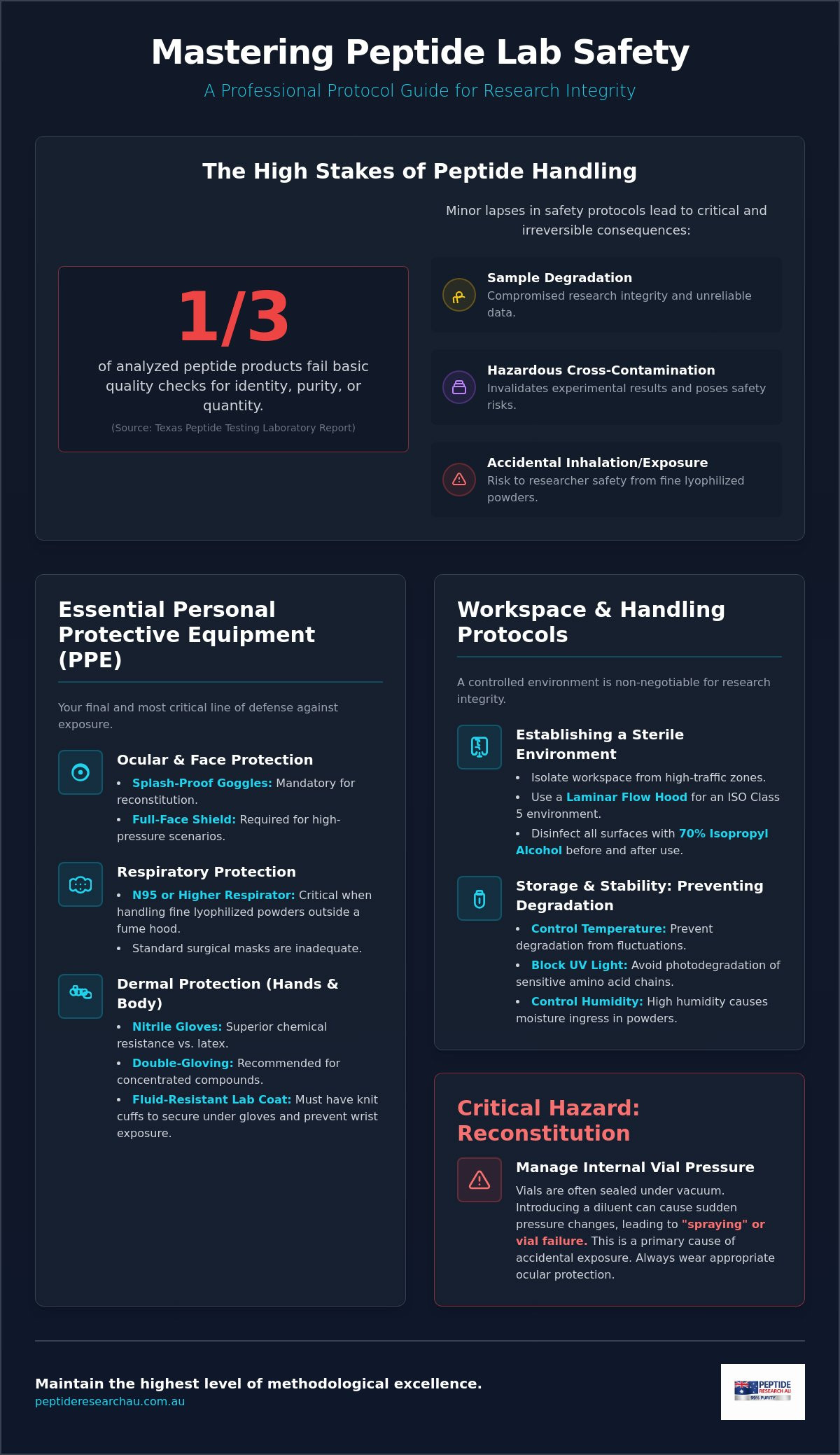
A peptide testing laboratory in Texas recently reported that approximately one-third of analyzed peptide products fail basic quality checks for identity, purity, or quantity. This statistic underscores the inherent volatility of these compounds and the high stakes involved in their management. You recognize that even a minor lapse in lab safety procedures for handling peptides can lead to irreversible sample degradation or hazardous cross-contamination. Protecting the integrity of your research compounds is as critical as ensuring your own safety against the accidental inhalation of fine lyophilized powders.
This guide provides a professional framework to master the rigorous safety protocols required in a modern laboratory environment. You'll learn to establish a compliant chemical hygiene plan that aligns with the July 2026 OSHA training deadlines for the updated Hazard Communication Standard. We will also detail specific personal protective equipment requirements and stabilization techniques to ensure your research remains precise, reliable, and safe. By implementing these standards, you can mitigate the risks associated with the regulatory gray zone and maintain the highest level of methodological excellence.
Key Takeaways
Identify specific PPE requirements, including the selection of nitrile gloves for superior chemical resistance when handling lyophilized powders.
Establish a sterile workspace using 70% isopropyl alcohol and aseptic techniques to protect the integrity of your research compounds.
Master storage protocols that prevent molecular degradation caused by light exposure and temperature fluctuations.
Execute precise lab safety procedures for handling peptides during reconstitution to manage internal vial pressure and prevent accidental exposure.
Develop compliant disposal and incident response plans for biohazardous waste and laboratory spills.
Table of Contents
Essential Personal Protective Equipment (PPE) for Peptide Handling
Effective lab safety procedures for handling peptides begin with a comprehensive assessment of personal protective equipment (PPE). While research compounds vary in their toxicity profiles, the high biological activity of multi-peptide complexes necessitates a rigorous barrier strategy. Adhering to fundamental laboratory safety principles ensures that researchers mitigate exposure risks during every stage of the workflow, from initial unboxing to final disposal. PPE serves as the final line of defense when engineering controls, such as fume hoods, aren't enough to eliminate risk entirely.
Dermal Protection and Lab Attire
Nitrile gloves are the preferred choice for handling research peptides. Unlike latex, nitrile offers superior resistance to a wider range of laboratory diluents and chemicals. It also eliminates the risk of latex-associated allergies. For protocols involving concentrated research compounds or large volumes of liquid, double-gloving provides an additional layer of security. If the outer glove becomes compromised, the inner layer maintains the barrier while the researcher performs a controlled exit and replacement. Standardized lab coats must be fluid-resistant and feature knit cuffs to secure the sleeve under the glove gauntlet. This configuration prevents skin exposure at the wrist, which is a common site for accidental contact. Contaminated attire should never leave the laboratory environment; it must be laundered or disposed of according to biohazardous waste protocols to prevent cross-area transfer.
Respiratory and Ocular Safety Standards
Lyophilized powders present a significant inhalation risk because they're easily aerosolized during weighing or vial opening. Standard surgical masks don't provide adequate protection against these fine particles. Researchers should utilize N95 or higher-grade respirators when working with dry powders outside of a certified chemical fume hood. Respiratory safety is especially critical given the 2026 OSHA updates to the Hazard Communication Standard, which require stricter labeling and training for pure substances.
Ocular protection is equally vital. While safety glasses are sufficient for routine tasks, splash-proof goggles are mandatory during reconstitution. Vials are often sealed under vacuum; the introduction of a diluent can cause sudden pressure changes, potentially leading to "spraying" or vial failure. In these high-pressure scenarios, a full-face shield provides the necessary coverage to prevent mucosal membrane exposure. Always verify the integrity of safety equipment before use. Scratched lenses or degraded elastic straps can compromise the effectiveness of these lab safety procedures for handling peptides.
Maintaining a Sterile Laboratory Environment and Aseptic Technique
Establishing a dedicated workspace is the first step in rigorous sterility. This area should be isolated from high-traffic zones to minimize airborne particulates. Researchers working with peptides australia must ensure their environment is free from cross-contaminants that could compromise experimental data. Utilizing a Laminar Flow Hood is standard practice for providing an ISO Class 5 environment. These hoods use HEPA-filtered air to create a unidirectional flow that prevents room air from entering the work zone. This setup is a cornerstone of professional lab safety procedures for handling peptides.
Environmental variables like humidity and light must be strictly monitored. High humidity can lead to moisture ingress in lyophilized powders, which triggers premature degradation. Similarly, UV light can cause photodegradation of sensitive amino acid chains. The University of Washington Laboratory Safety Manual provides detailed standards on chemical hygiene and environmental controls that are applicable here. Maintaining these stable conditions ensures that the molecular integrity of the compounds remains intact throughout the study.
Surface Disinfection and Contamination Control
Routine sterilization of all benchtop surfaces is mandatory before and after each session. 70% Isopropyl Alcohol (IPA) is the industry standard for this task. It effectively denatures proteins and disrupts microbial cell membranes. While chemical sterilization is sufficient for surfaces, lab tools like spatulas or glass stirrers should undergo autoclaving to ensure total sterilization. When handling vials, always wipe the rubber septum with a fresh IPA swab before needle insertion. This simple step is a core component of lab safety procedures for handling peptides and prevents the introduction of contaminants into the sterile vial.
Aseptic Transfer Procedures
Maintaining a sterile field requires all movements to be deliberate and controlled. Keep vials capped until the exact moment of transfer to minimize exposure to ambient air. If you're sourcing high-quality research compounds, protecting their purity through these techniques is essential for accurate results. Aseptic technique in peptide research is the systematic practice of performing laboratory tasks under sterile conditions to prevent the introduction of microorganisms or foreign particulates into the sample. Limit the time any container remains open. Work in the center of the flow hood to ensure the air remains undisturbed and filtered.
Storage and Stability: Preventing Degradation and Contamination
Maintaining the molecular integrity of research compounds requires strict adherence to environmental controls. Peptides are inherently unstable and prone to degradation when exposed to heat, light, or moisture. Implementing precise lab safety procedures for handling peptides during the storage phase is essential to ensure experimental reproducibility. If a compound degrades, the resulting data is invalidated, and the risk of unexpected chemical reactions increases. Researchers must treat storage as a dynamic part of the laboratory workflow rather than a passive state.
Lyophilized Powder Storage Protocols
Lyophilized research peptides are most stable when kept in a dry, temperature-controlled environment. For short-term use of less than one month, refrigeration at 4°C is generally sufficient. For multi-year preservation, however, compounds must be stored at -20°C or -80°C. Because these powders are hygroscopic, they readily absorb moisture from the air. This leads to hydrolysis and rapid degradation. To prevent this, vials should be stored with desiccants in a sealed secondary container.
A critical requirement for high-precision research is the avoidance of frost-free freezers. These units utilize internal heating cycles to prevent ice buildup, which causes significant temperature fluctuations. Such cycles can compromise the delicate peptide bonds over time. Researchers should only use manual defrost freezers to maintain a constant thermal environment. Before opening a frozen vial, allow it to reach room temperature in a desiccator. This prevents atmospheric moisture from condensing on the cold powder, a common cause of sample contamination.
Reconstituted Solution Stability
Once a peptide is reconstituted into a liquid state, its shelf life decreases dramatically. Most solutions require constant refrigeration at 2-8°C and should be used within narrow timeframes to ensure potency. Light exposure is a primary catalyst for photodegradation, particularly for peptides containing aromatic amino acids like tyrosine or tryptophan. Utilizing amber vials or wrapping clear vials in aluminum foil provides a necessary barrier against UV damage.
Freeze-thaw cycles represent one of the most significant threats to reconstituted stability. Repeatedly freezing and thawing a solution causes physical stress that can denature the peptide structure. To mitigate this risk, researchers should aliquot the solution into single-use volumes immediately after reconstitution. This ensures that each sample is only subjected to a single thaw event. Monitoring for signs of degradation is a mandatory part of lab safety procedures for handling peptides. If you observe turbidity, precipitation, or any unexpected color change, the sample must be discarded. These visual cues often indicate bacterial growth or advanced molecular breakdown, both of which render the compound useless for professional study.
Effective inventory management supports both safety and traceability. Every vial must be clearly labeled with the compound name, concentration, date of receipt, and date of reconstitution. This practice prevents the accidental use of expired materials and ensures that all laboratory diluents and research compounds are accounted for during safety audits.
Safe Reconstitution and Dilution Protocols
Reconstitution is the most volatile stage of peptide preparation. It requires a high degree of precision to prevent both sample loss and researcher exposure. Following standardized lab safety procedures for handling peptides ensures that the transition from lyophilized powder to liquid solution doesn't compromise the compound's primary structure. The choice of diluent is the first critical decision. Bacteriostatic water, containing 0.9% benzyl alcohol, is typically preferred for multi-use vials because it inhibits bacterial growth. Sterile saline is an alternative for studies where preservatives might interfere with the experimental outcome. Each diluent must be selected based on the specific solubility profile of the research compound.
Pressure management is a frequently overlooked aspect of this process. Most research vials are sealed under a vacuum. If a researcher introduces a diluent without first equalizing the internal pressure, the liquid will "spray" into the vial with significant force. This rapid injection can shear the delicate peptide bonds and create hazardous aerosols. To avoid this, use an empty syringe to vent the vial or pull back the plunger to equalize pressure before introducing the liquid. This step is vital for maintaining a controlled and safe laboratory environment.
The Diluent Introduction Process
A successful reconstitution protocol begins with slow, controlled liquid introduction. Direct the stream of the diluent against the glass wall of the vial rather than directly onto the lyophilized cake. This "wall-running" method allows the powder to saturate gradually, which reduces the risk of foaming and protein denaturation. Once the diluent is added, the vial must sit undisturbed. Mechanical agitation is unnecessary and often detrimental. Allowing for natural dissolution over several minutes preserves the molecular integrity of the sample. For researchers who require high-quality laboratory diluents, maintaining these rigorous standards is non-negotiable for data accuracy.
Handling Reconstituted Vials
Physical handling after liquid introduction must be exceptionally gentle. Vigorous shaking is a primary cause of peptide denaturation; the shear forces can break the fragile amino acid chains. Instead, utilize a gentle swirling motion. Hold the vial between the thumb and forefinger and rotate it in a small circle until the solution is clear and homogenized. Some compounds, such as bpc 157, are particularly sensitive to mechanical stress and require careful monitoring for complete dissolution without inversion.
Once homogenized, the vial should be moved immediately to refrigerated storage at 2-8°C. This immediate cooling slows down the degradation process that begins the moment the compound enters a liquid state. Adhering to these lab safety procedures for handling peptides protects the accuracy of your long-term research data and ensures that your compounds remain viable for the duration of your study. Never leave reconstituted vials at room temperature for longer than is strictly necessary for the immediate transfer of the solution.
Disposal and Incident Management in the Peptide Laboratory
The safety cycle concludes with rigorous disposal and incident management protocols. In Australia, researchers must align their practices with Safe Work Australia’s Model Code of Practice for managing risks of hazardous chemicals in the workplace. This alignment ensures that lab safety procedures for handling peptides meet international standards, specifically the GHS Revision 7 updates that became mandatory for laboratory training in July 2026. Proper management of waste prevents environmental contamination and protects laboratory support staff from accidental exposure to potent research compounds.
Waste Management and Disposal
All sharps, including needles used during the reconstitution phase and broken glass vials, must be deposited into puncture-resistant, yellow biohazard containers. These containers should never be filled beyond the indicated fill line to prevent needle-stick injuries during closure. Vials containing residual research compounds or multi-peptide complexes require specific handling. They shouldn't be discarded in regular waste streams. Instead, they require neutralization or professional collection by a certified hazardous waste contractor.
Biohazard bags used for contaminated PPE, such as gloves and lab coats, must be clearly labelled and stored in a designated, secure area. Professional collection schedules should be strictly maintained to prevent the accumulation of hazardous materials. This meticulous approach to waste ensures that the laboratory remains compliant with both local and international safety mandates. It also minimizes the risk of cross-contamination between different research projects within the same facility.
Emergency Response Procedures
Accidents require immediate, scripted actions to mitigate harm. In the event of dermal exposure to a peptide solution, the researcher should flush the affected area with water for at least 15 minutes. Ocular exposure is more critical and requires the immediate use of an emergency eyewash station. Maintain a 15-minute flush while keeping the eyelids open. Powder spills are particularly hazardous due to the risk of inhalation. Researchers shouldn't use a broom or compressed air to clean up lyophilized powders; these methods aerosolize the particles and increase exposure risk. Instead, utilize a certified HEPA-filtered vacuum or wet-mopping techniques with 70% isopropyl alcohol to contain and neutralize the spill.
Needle-stick injuries represent a high-priority risk in the research environment. If a needle stick occurs, wash the wound thoroughly with soap and water and seek immediate medical evaluation. Documenting every incident is a critical component of lab safety procedures for handling peptides. An incident report must include the time, the specific research compound involved, the nature of the exposure, and the corrective actions taken. This documentation is essential for safety audits and for refining future laboratory protocols to prevent recurrence. Maintaining these high standards of incident management protects the integrity of the research institution and the wellbeing of the scientific community.
Advancing Scientific Integrity Through Standardized Protocols
Adherence to rigorous lab safety procedures for handling peptides is the foundation of high-precision science. You've learned that barrier protection, sterile environment maintenance, and pressure-controlled reconstitution are not just safety measures; they're essential for protecting the molecular stability of your compounds. By implementing these 2026 standards, you ensure that environmental variables don't compromise your data or your personal safety. Consistency in these protocols is what separates successful, reproducible studies from those hindered by sample degradation.
Reliable research requires more than just protocol; it requires high-quality materials. We provide laboratory-grade compounds for professional research, supported by third-party purity testing on every batch. With Australian-based shipping and technical support, we ensure your facility has the necessary resources to maintain excellence. View our range of laboratory-grade research peptides to find the right compounds for your next study. Maintain the highest standards in your laboratory and achieve the precision your research demands.
Frequently Asked Questions
What is the most common safety mistake when handling research peptides?
The most common mistake is failing to equalize vial pressure before introducing a diluent. This oversight often leads to the sudden aerosolization of the compound, which increases the risk of inhalation. Researchers should always use a venting needle or pull back the syringe plunger to manage the internal vacuum. Ignoring this step compromises the safety of the laboratory environment and can lead to the loss of expensive research compounds.
Can I handle peptides without a fume hood if they are in liquid form?
You can handle liquid peptides on a clean bench, but using a fume hood or laminar flow hood is superior for maintaining a sterile field. While the inhalation risk is lower for liquids than for powders, a hood provides a physical barrier against accidental splashes. It also ensures that the air surrounding the sample remains filtered, which is a key part of lab safety procedures for handling peptides.
How should I dispose of expired or degraded peptide vials in Australia?
Expired or degraded vials must be treated as hazardous waste and placed in a yellow sharps container. In Australia, these disposal methods must align with the Safe Work Australia Model Code of Practice for hazardous chemicals. Don't discard vials in general waste or down laboratory sinks. Professional hazardous waste contractors should be engaged to handle the final collection and incineration of these research compounds.
Is bacteriostatic water safer than sterile water for peptide research?
Bacteriostatic water is safer for multi-use vials because it contains 0.9% benzyl alcohol to inhibit bacterial growth. Sterile water lacks this preservative, meaning any contaminant introduced during the first needle entry can multiply rapidly. For studies requiring extreme purity without preservatives, sterile water is used, but the vial must be treated as a single-use sample and discarded immediately after the first transfer.
What happens if a peptide vial is dropped or shaken vigorously?
Dropping or shaking a vial can cause irreversible denaturation of the peptide's molecular structure. The physical shear forces are often strong enough to break the fragile bonds between amino acids. If a vial is shaken vigorously, the resulting solution may appear foamy or cloudy, which indicates that the peptide is no longer biologically active. Always use a gentle swirling motion to homogenize your research compounds.
Are there specific Australian regulations for peptide lab safety in 2026?
Yes, Australian laboratories must comply with the GHS Revision 7 updates that were fully adopted into the Model Work Health and Safety laws. By July 2026, all facilities must have updated their chemical labeling and provided employee training on these specific hazard communication standards. These regulations provide the legal framework for all lab safety procedures for handling peptides within Australian research institutions and private facilities.
How do I detect if a peptide sample has been contaminated during handling?
Contamination is often identified through visual changes such as turbidity, precipitation, or an unexpected change in the solution's color. If a clear solution becomes cloudy after storage, it typically indicates microbial growth or advanced chemical degradation. However, visual inspection isn't foolproof. The only way to definitively confirm the purity and identity of a sample is through professional third-party testing or high-performance liquid chromatography.
Should I use a mask when opening a vial of lyophilized peptide powder?
You should use an N95 respirator or higher when opening vials of lyophilized powder to prevent the inhalation of fine particles. Lyophilized peptides are easily aerosolized by minor air currents or pressure changes when the seal is broken. Standard surgical masks don't provide a sufficient seal to filter out these bioactive particles. Using the correct respiratory protection is a mandatory requirement for maintaining a safe laboratory workspace.


Comments