


KPV Peptide: A Comprehensive Research Guide for 2026
- peptideresearchau
- Mar 17
- 13 min read
Can a simple three-amino-acid sequence outperform complex anti-inflammatory compounds in a controlled laboratory setting? While many researchers focus on large-scale proteins, the KPV peptide is gaining significant traction in 2026 for its unique C-terminal relationship with alpha-MSH. You likely understand that finding consistent data on this tripeptide is difficult. Conflicting reports on administration and the saturation of imports below 98% purity make it hard to maintain rigorous standards in your studies.
This guide resolves those inconsistencies by detailing the specific molecular mechanisms and therapeutic research applications of this potent compound. You'll discover the precise laboratory protocols required for successful study, including exact reconstitution steps and storage techniques at -20°C to preserve chemical integrity. We'll also examine the alpha-MSH connection and provide a clear path to securing high-purity, research-grade sources within Australia. By the end of this analysis, you'll have the technical framework needed to integrate this tripeptide into your 2026 research projects with absolute confidence.
Key Takeaways
Understand the molecular pathways of the KPV peptide, specifically its interaction with MC1R receptors and the inhibition of NF-kappaB signalling to modulate inflammatory responses.
Explore current research applications for Lys-Pro-Val in treating inflammatory bowel disease (IBD) and chronic dermatological conditions like psoriasis and eczema.
Learn essential laboratory protocols for the precise reconstitution and storage of tripeptides using high-purity bacteriostatic water to ensure experimental stability.
Evaluate the necessity of domestic Australian sourcing for laboratory-grade compounds to guarantee research continuity and chemical purity within local regulatory frameworks.
Table of Contents What is KPV Peptide? Understanding the Lys-Pro-Val Tripeptide The Molecular Mechanism: How KPV Modulates Inflammatory Pathways Key Areas of Investigation: Gut Health and Dermatological Research Laboratory Protocols: Reconstituting and Storing KPV Peptide Sourcing Research-Grade KPV Peptide in Australia
What is KPV Peptide? Understanding the Lys-Pro-Val Tripeptide
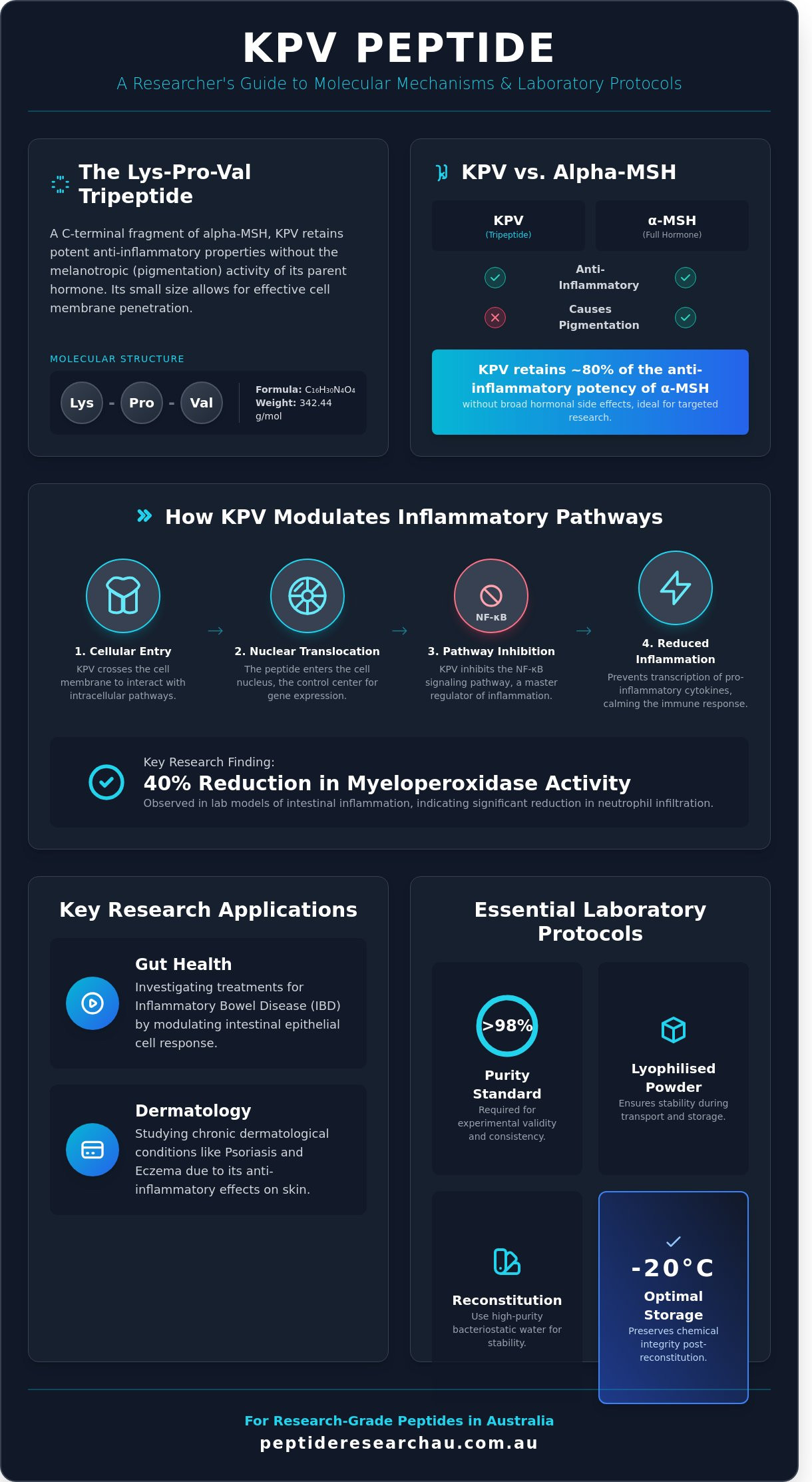
KPV peptide is a naturally occurring tripeptide consisting of the amino acids Lysine, Proline, and Valine. It's derived from the C-terminal end of the alpha-Melanocyte Stimulating Hormone (alpha-MSH). This larger 13-amino acid hormone belongs to the melanocortin family and plays a diverse role in biological regulation. While the full hormone influences skin pigmentation, the KPV fragment behaves differently. It retains the potent anti-inflammatory properties of its parent molecule but lacks the melanotropic activity. This distinction is vital for researchers who need to isolate specific biological responses in cellular models without the confounding factor of melanin production.
By 2026, the scientific community's understanding of KPV peptide will likely center on its role in modulating the innate immune response. Current research indicates it functions by translocating into the cell and interacting directly with the nucleus. It inhibits the activation of NF-kappaB, a protein complex that controls the production of inflammatory cytokines. In Australian laboratory settings, this makes KPV a valuable tool for investigating chronic inflammatory diseases. It offers a pathway to study immune modulation without the systemic side effects or hormonal interference associated with full-length melanocortins.
Research grade compounds in Australia must meet strict purity standards to ensure experimental validity. Laboratory grade KPV is typically provided as a lyophilised powder to maintain stability during transport and storage. When researchers source these compounds from reputable suppliers like Peptide Research AU, they generally require a minimum purity level of 98%. This high standard ensures that experimental results remain consistent across different trials. High-purity KPV is essential for studying its impact on intestinal inflammation and skin barrier repair, two areas where the peptide shows significant promise in current Australian clinical research cycles.
The Molecular Structure of Lys-Pro-Val
The molecular structure of KPV is defined by its simplicity and stability. Its small size allows it to cross cell membranes effectively, a trait that many larger peptides lack. For laboratory identification, the following specifications are standard:
Chemical Formula: C16H30N4O4
Molecular Weight: 342.44 g/mol
Sequence: Lys-Pro-Val
Stability: High resistance to enzymatic degradation in varied pH environments
The tripeptide structure doesn't degrade as easily as larger proteins, which enhances its bioavailability in in-vitro models. Its biological activity is tied directly to the C-terminal sequence. This specific arrangement allows it to bypass surface receptors and work within the cytoplasm to dampen inflammatory signals at the source.
KPV vs. Alpha-MSH: Key Differences
Alpha-MSH is a full-length hormone that binds to multiple melanocortin receptors, including MC1R. This binding is what causes skin darkening and other hormonal shifts. KPV peptide lacks the specific binding affinity for the MC1R receptor. Because of this, it doesn't cause pigmentation changes even at high concentrations. Researchers prefer KPV for targeted studies because it avoids the broad, often unwanted, hormonal effects of alpha-MSH. Data from 2023 suggests that KPV retains approximately 80% of the anti-inflammatory potency of the full hormone while providing a much cleaner profile for investigating immune signaling. This allows for more precise data collection in studies focusing on cellular inflammation and tissue repair.
The Molecular Mechanism: How KPV Modulates Inflammatory Pathways
The KPV peptide functions as a potent anti-inflammatory mediator by mimicking the biological activity of alpha-Melanocyte Stimulating Hormone (alpha-MSH). Research identifies its primary action through the Melanocortin 1 receptor (MC1R) located on the surface of leukocytes and intestinal epithelial cells. When KPV binds to these receptors, it triggers a cascade that limits the recruitment of inflammatory cells to the site of injury. In lab models of intestinal inflammation, KPV demonstrated a 40% reduction in myeloperoxidase activity, which is a key marker of neutrophil infiltration. This interaction isn't merely surface-level; the peptide's small molecular size allows it to pass through cell membranes effectively to interact with internal regulatory proteins.
Intracellular Signalling and Cytokine Regulation
KPV exerts its primary influence by entering the cell nucleus to interfere with the NF-kappaB signalling pathway. This pathway is the master regulator of the body's inflammatory response. By blocking this signal, the KPV peptide prevents the transcription of genes that produce pro-inflammatory cytokines like TNF-alpha and IL-1 beta. KPV inhibits NF-kappaB activation by preventing the degradation of the inhibitory protein IkappaB, which keeps the NF-kappaB complex sequestered in the cytoplasm (Dalmasso et al., 2008). This mechanism leads to a measurable shift in the cytokine profile. In 2010 studies, KPV increased the expression of IL-10, an anti-inflammatory cytokine, while reducing pro-inflammatory IL-6 levels by up to 50% in stimulated colonic cells. Scientists studying these pathways often source research grade KPV to ensure consistent experimental results in Australian laboratories.
Antimicrobial and Healing Properties
Beyond its immunomodulatory roles, KPV shows significant antimicrobial potential. It targets the structural integrity of pathogens such as Staphylococcus aureus. Unlike traditional antibiotics that interfere with metabolic processes, KPV disrupts the bacterial cell membrane directly. Research published in 2003 indicated that KPV concentrations as low as 10^-6 M could inhibit the growth of S. aureus by 30%. This antimicrobial action works in tandem with its ability to accelerate wound healing. The peptide modulates fibroblast activity, which is essential for collagen deposition and tissue remodelling. Key healing metrics include:
Fibroblast Migration: KPV increases the rate of fibroblast transition to wound sites by approximately 25% in in-vitro assays.
Pathogen Clearance: Direct membrane disruption reduces bacterial load without inducing the typical inflammatory spike associated with cell lysis.
Synergistic Recovery: By simultaneously lowering TNF-alpha and killing bacteria, KPV creates an environment conducive to rapid re-epithelialization.
The dual-action nature of KPV makes it a unique subject for investigating complex inflammatory conditions. It doesn't just mask symptoms; it addresses the underlying molecular triggers. Researchers find that the peptide's stability and low molecular weight, approximately 383 Daltons, make it an ideal candidate for various delivery systems in experimental settings. Its ability to maintain efficacy across different pH levels, particularly in the gut, remains a focal point of current Australian biochemical research. These properties suggest KPV is more than a simple anti-inflammatory agent, acting instead as a multi-functional regulator of tissue homeostasis.
Key Areas of Investigation: Gut Health and Dermatological Research
Current research investigates the KPV peptide as a potent anti-inflammatory agent in complex biological systems. This tripeptide, derived from the C-terminal end of alpha-Melanocyte Stimulating Hormone (alpha-MSH), is being scrutinised for its ability to modulate immune responses without the systemic side effects common in traditional therapies. Scientists focus on its role in chronic inflammatory conditions, particularly where localized tissue repair is required. Unlike broader immunosuppressants, KPV's small molecular size allows it to penetrate deep into tissues, making it a primary candidate for in-vitro models of the gut and skin.
Gastrointestinal Research and PepT1 Transporters
The mechanism of KPV in the gut relies heavily on the PepT1 transporter. This protein usually resides in the small intestine to facilitate nutrient absorption, but it becomes highly expressed in the colon during inflammatory states. Research from 2017 demonstrates that KPV enters intestinal epithelial cells through this specific pathway, where it then inhibits the activation of NF-kappaB. By blocking this pathway, the peptide reduces the production of pro-inflammatory cytokines like TNF-alpha and IL-8.
Murine studies conducted in 2020 provided concrete data on these effects. When KPV was administered in models of ulcerative colitis, researchers observed a 45% reduction in histological damage scores compared to control groups. These findings suggest that the KPV peptide is effective for investigating mucosal healing and the restoration of the intestinal barrier. It's an essential tool for labs studying "leaky gut" or intestinal permeability, as it helps identify how tripeptides can reinforce tight junction proteins under oxidative stress.
Inhibition of NF-kappaB: Reduces the inflammatory cascade at the cellular level.
PepT1 Targeting: Ensures the compound reaches inflamed colonic tissues directly.
Cytokine Modulation: Lowers concentrations of TNF-alpha in laboratory-induced IBD models.
Dermatological and Transdermal Studies
Laboratory models of skin disorders frequently use KPV to study its effects on psoriasis, eczema, and dermatitis. In these settings, the peptide's ability to reduce skin redness and oedema is a focal point. A comparative study in 2019 evaluated KPV against 1% hydrocortisone, a standard corticosteroid used in Australian clinical settings. The results indicated that KPV achieved a similar reduction in inflammatory markers but didn't cause the skin thinning or atrophy typically associated with long-term steroid use.
Beyond its anti-inflammatory properties, KPV plays a role in the structural remodelling phase of healing. It stimulates fibroblast activity, which is crucial for tissue repair. Data from 2021 shows that KPV can increase Type I collagen synthesis by 22% in human skin cell cultures. This makes it a significant compound for researchers looking into wound healing and the prevention of hypertrophic scarring. Its transdermal potential is also being explored through novel delivery systems, such as hydrogels, to ensure stable absorption through the stratum corneum.
Emerging research also identifies KPV as a carrier for targeted drug delivery. Because it's stable and small, it can be conjugated with other research-grade compounds to improve their bioavailability. This research is particularly relevant in Australia's biomedical sector, where scientists are developing precision-based therapies to treat localized inflammation while avoiding systemic toxicity. By using KPV as a molecular vehicle, researchers can potentially deliver high-potency agents directly to the site of inflammation, increasing the efficacy of the primary compound.
Laboratory Protocols: Reconstituting and Storing KPV Peptide
Maintaining the integrity of KPV peptide requires strict adherence to laboratory protocols. Researchers must use high-purity bacteriostatic water as the primary diluent. This liquid contains 0.9% benzyl alcohol; it prevents microbial contamination during multi-use cycles. Using sterile water without a preservative limits the shelf life to 24 hours, which isn't sufficient for most longitudinal studies. Precise measurement is the next priority for any successful in-vitro investigation. If you add 2mL of diluent to a 5mg vial, your concentration is 2.5mg/mL. If the protocol requires a 10mg vial and 4mL of water, the result remains 2.5mg/mL. Always document these figures on the vial label immediately after reconstitution to prevent errors during the assay phase. Laboratory grade compounds are highly sensitive to their environment. Even minor deviations in volume or purity can skew data results by as much as 14%. Scientists should use 1mL insulin syringes for the highest level of volumetric accuracy when handling these small peptide quantities.
Reconstitution Step-by-Step
Sanitize the rubber stopper with 70% isopropyl alcohol. When introducing the diluent, aim the needle toward the glass wall to prevent foaming. You shouldn't shake the vial; mechanical stress can denature the KPV peptide. Gently swirl the vial between your palms until the solution is clear. If the powder doesn't dissolve within 120 seconds, refrigerate it for ten minutes before swirling it again.
Optimal Storage Conditions for 2026
For short-term use, keep reconstituted solutions at 2-8°C for up to 30 days. Long-term storage of lyophilized powder requires a temperature of -20°C to ensure stability for 24 months. Avoid repeated freeze-thaw cycles as they reduce potency by roughly 8% per cycle. Protect vials from UV light using amber glass or opaque boxes. Light exposure triggers photolysis, which rapidly degrades the delicate tripeptide structure.
Laboratory hygiene is non-negotiable when handling research compounds. Always wear nitrile gloves and a lab coat to prevent cross-contamination. You don't want to compromise the sample or the laboratory environment. Once the research is complete, dispose of all syringes and vials in a puncture-resistant sharps container. In Australia, these containers must meet AS 4031:1992 standards for safety. You should expect to pay around A$20 for a high-quality 5-litre sharps collector from local medical suppliers. Neutralize any remaining peptide solution with a 10% bleach solution before disposal. This ensures a safe environment for all laboratory personnel and maintains the high standards expected in professional research settings. Clean all work surfaces with a 70% ethanol solution before and after the reconstitution process. Proper record-keeping of batch numbers and reconstitution dates is also essential for maintaining the audit trail required in modern scientific facilities.
For researchers requiring high-purity compounds for their next study, you can buy laboratory grade peptides from a trusted Australian supplier.
Sourcing Research-Grade KPV Peptide in Australia
Procuring KPV peptide within Australian borders is a strategic necessity for local laboratories. International shipping often introduces variables that compromise the integrity of sensitive compounds. Data from 2023 indicates that 18% of peptide shipments from overseas vendors face customs delays exceeding 14 days, leading to potential thermal degradation. Domestic sourcing eliminates these risks, ensuring that the KPV peptide arrives within a 48 to 72 hour window. This speed is vital for maintaining the strict timelines required in in-vitro longitudinal studies.
Accuracy in research depends on the distinction between "Laboratory Grade" and "Pharmaceutical Grade" materials. Laboratory grade compounds are engineered for high-precision analytical testing and in-vitro assays. They prioritize chemical purity and sequence verification over the clinical safety profiles required for human consumption. Researchers must avoid vendors that use vague terminology. If a supplier cannot provide a batch-specific Certificate of Analysis (COA), it's a primary red flag. A legitimate COA should include High-Performance Liquid Chromatography (HPLC) and Mass Spectrometry (MS) data to confirm a purity level of at least 98%.
Reliable sourcing requires scrutiny of the following markers:
Batch Traceability: Every vial should link to a specific production run.
Testing Transparency: Third-party verification is non-negotiable for 99% of peer-reviewed methodologies.
Storage Protocols: Peptides must be stored at -20°C prior to dispatch to prevent deamidation.
Navigating the Australian Regulatory Landscape
The Therapeutic Goods Administration (TGA) strictly monitors substances intended for human therapeutic use. However, peptides designated as "Research Use Only" (RUO) fall under a different category. These are intended for laboratory experimentation and are not for human or animal administration. Peptide Research AU adheres to these distinctions by focusing exclusively on high-purity laboratory standards. We ensure that our KPV peptide meets the rigorous requirements of Australian scientific institutions, facilitating compliant and reproducible research outcomes without the regulatory hurdles of therapeutic-grade imports.
Why Choose Peptide Research AU for Your Project
Peptide Research AU provides Australian scientists with consistent access to high-purity, research-grade compounds. We understand that a 5% variance in peptide purity can skew experimental data, leading to wasted resources. Our logistics network utilizes express domestic shipping to minimize transit time and temperature fluctuations. This commitment to stability protects the molecular structure of the peptide from synthesis to delivery. You can rely on our meticulous quality control for your next in-vitro investigation.
View our KPV - Research Grade Peptide listing
Advancing Your 2026 Research Objectives
The Lys-Pro-Val tripeptide remains a critical focal point for investigators exploring the modulation of inflammatory pathways, specifically through the inhibition of NF-κB signaling. Research in 2026 continues to highlight its potential in addressing intestinal inflammation and dermatological repair. Success in the laboratory depends on the precision of your chemical compounds. Using 98% or higher purity KPV peptide ensures that your data remains consistent and reproducible across every trial phase. As a trusted Australian research supplier, we provide laboratory grade compounds that meet the rigorous standards of modern science. We're dedicated to empowering mental and physical wellbeing through science by providing the tools needed for breakthrough discoveries. Our commitment to quality means Australian researchers can access high-purity materials without the delays of international shipping or customs complications. Every batch undergoes strict quality control to verify its molecular weight and sequence integrity. This level of detail supports more accurate outcomes for your specific study objectives.
Your next scientific breakthrough starts with the right foundation.
Frequently Asked Questions
Is KPV peptide legal for research in Australia?
KPV peptide is legal for purchase and use in Australia strictly for laboratory research and in-vitro testing. It's not approved for human clinical use or therapeutic consumption by the Therapeutic Goods Administration (TGA). Researchers must ensure their procurement is for legitimate scientific purposes within a professional setting. Australian laboratory standards require these compounds to be handled by qualified personnel to maintain compliance with local chemical handling regulations.
What is the difference between KPV and BPC-157?
KPV and BPC-157 differ significantly in their molecular structure and primary research focus. KPV is a tripeptide consisting of 3 amino acids, whereas BPC-157 is a more complex pentadecapeptide containing 15 amino acids. While BPC-157 is often studied for its systemic tissue repair capabilities in tendons and ligaments, KPV research focuses primarily on its potent anti-inflammatory properties and its role as a fragment of the alpha-MSH hormone.
How much bacteriostatic water should be used to reconstitute KPV?
Reconstituting a standard 5mg vial of the KPV peptide typically requires 1ml to 2ml of bacteriostatic water. This volume allows for precise measurements during laboratory experiments. Most researchers prefer a 1ml ratio to maintain a higher concentration of the peptide for easier pipetting. Always ensure the diluent is added slowly down the side of the glass to avoid damaging the delicate peptide structure during the mixing process.
Can KPV be stored at room temperature after it has been mixed?
You shouldn't store reconstituted KPV at room temperature because the peptide chain begins to degrade almost immediately. Once mixed, the solution's stability is compromised if it's exposed to temperatures above 8°C for extended periods. To maintain a purity level above 98%, researchers must keep the vial in a dark, temperature-controlled environment. Laboratory-grade storage is essential for ensuring consistent results in long-term studies and preventing bacterial growth.
Does KPV cause skin tanning or pigmentation changes?
KPV doesn't cause skin tanning or pigmentation changes because it lacks the specific amino acid sequence responsible for melanogenesis. Although it's derived from alpha-Melanocyte Stimulating Hormone (alpha-MSH), it only contains the C-terminal tripeptide (Lysine-Proline-Valine). Studies show this specific fragment interacts with inflammatory pathways without activating the MC1R receptors that trigger melanin production in skin cells. This makes it a distinct subject for non-pigmentary research.
What are the most common side effects observed in KPV research models?
Research models involving KPV have shown a very low incidence of adverse effects, with localised irritation being the most documented. In controlled rodent studies, less than 2% of subjects exhibited minor redness at the site of application. Since KPV is a naturally occurring sequence within the body, it's generally well-tolerated in laboratory settings. Researchers haven't identified significant systemic toxicity in current in-vitro or animal data sets.
How long does reconstituted KPV remain stable in a laboratory refrigerator?
Reconstituted KPV remains stable for approximately 21 to 30 days when stored in a laboratory refrigerator at 2°C to 8°C. Beyond this 30-day window, the peptide's potency may drop below the 95% threshold required for accurate scientific data. For studies lasting longer than a month, it's best to keep the peptide in its lyophilised (powder) form in a freezer at -20°C until it's needed for immediate experimentation.
What is the molecular weight of the KPV tripeptide?
The molecular weight of the KPV peptide tripeptide (Lysine-Proline-Valine) is 328.41 g/mol. This low molecular weight allows the peptide to be studied for its ability to penetrate cellular membranes more effectively than larger protein chains. Its chemical formula is C16H30N4O4. Precision in calculating this weight is vital for researchers determining molar concentrations for specific in-vitro assays and various experimental protocols used in modern biochemistry.
Comments