

How to Use GHK-Cu In Vitro: A Scientific Protocol for Laboratory Research
- peptideresearchau
- May 10
- 11 min read
Why do so many regenerative studies yield conflicting results despite using the same copper tripeptide? You likely understand that GHK-Cu is highly sensitive to molecular degradation and improper concentration calculations. It's frustrating when laboratory grade compounds don't produce the expected gene expression modulation because of minor handling errors. This guide provides a definitive protocol on how to use ghk-cu in vitro to ensure your research remains reproducible and accurate.
You'll master the precise laboratory procedures required for handling this peptide, starting with the reconstitution of lyophilized powder verified at ≥99% purity via HPLC. We will examine the critical stoichiometry of copper-ion binding and the specific molar concentrations necessary to trigger biological responses without inducing toxicity. By following this standardized methodology, you can eliminate variables that lead to inconsistent data and focus on the innovative potential of GHK-Cu in regenerative science.
Key Takeaways
Select the optimal diluent, such as sterile phosphate-buffered saline or bacteriostatic water, to maintain the stability of research grade GHK-Cu during reconstitution.
Master the precise laboratory steps for how to use ghk-cu in vitro to achieve reproducible data in gene expression and cellular modulation studies.
Maintain a strict 1:1 stoichiometry between the GHK peptide and copper (II) ions to prevent molecular dissociation and ensure experimental accuracy.
Monitor pH levels closely throughout your protocol, as excessive acidity can compromise the structural integrity of the copper-tripeptide complex.
Identify high-quality Australian suppliers that provide HPLC-verified peptides with ≥99% purity and reliable cold-chain logistics for laboratory use.
Table of Contents
Introduction to GHK-Cu in In Vitro Laboratory Research
GHK-Cu, or Glycyl-L-histidyl-L-lysine copper, is a specialized tripeptide-copper complex that has remained a focal point of regenerative biology since its isolation in 1973. Dr. Loren Pickart first identified this peptide in human plasma, observing its unique ability to restore the regenerative potential of aged liver tissue. While much of the public discourse surrounds topical applications, scientific progress relies on understanding how to use ghk-cu in vitro to isolate specific cellular responses. Laboratory environments allow researchers to observe the complex's influence on human fibroblasts and DNA repair mechanisms without the interference of systemic biological variables.
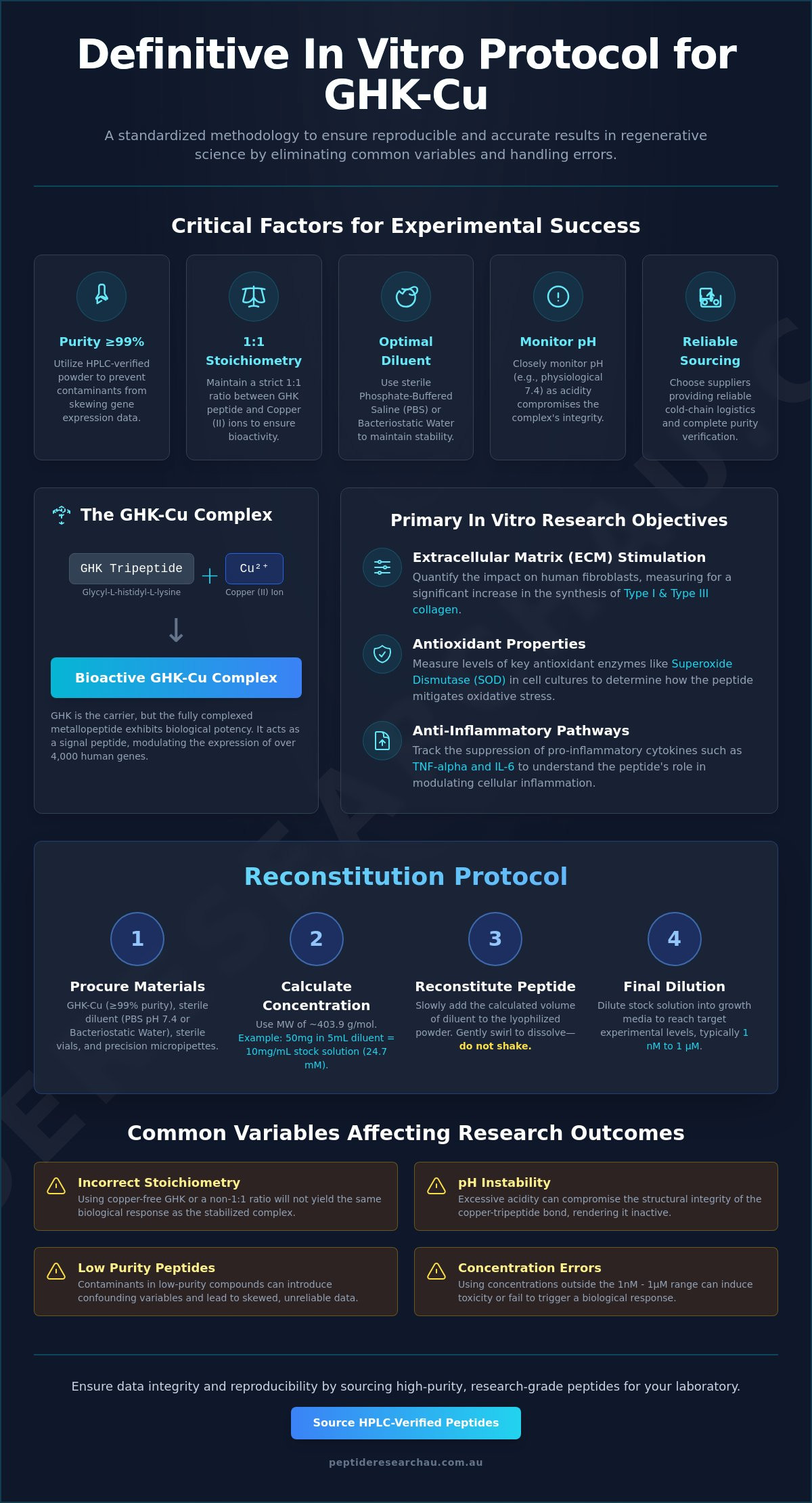
A fundamental distinction exists between the GHK carrier and the bioactive GHK-Cu peptide complex. GHK is the tripeptide sequence that acts as a high-affinity carrier for copper (II) ions; however, it's the complexed metallopeptide that exhibits full biological potency. In a research setting, using the copper-free GHK peptide won't yield the same results as the stabilized GHK-Cu complex, particularly when studying antioxidant pathways or gene modulation. This distinction is vital for maintaining the integrity of experimental data and ensuring that the compounds used are of a consistent, research grade standard.
The Molecular Structure of the GHK-Cu Complex
The tripeptide sequence consists of glycine, histidine, and lysine. This specific arrangement creates a high-affinity binding site that readily sequester divalent copper ions from the surrounding environment. In cellular environments, the peptide functions as a copper-transporting molecule, facilitating the uptake of copper into cells where it's required for enzyme function. GHK-Cu is a signal peptide that modulates gene expression across 4,000+ human genes. Laboratory protocols must account for this high affinity, as the stability of the 1:1 ratio between the peptide and the copper ion is essential for maintaining bioactivity during in vitro assays.
Primary Research Objectives for In Vitro Studies
Researchers typically utilize GHK-Cu in vitro to quantify its impact on the extracellular matrix (ECM). Studies frequently measure the stimulation of human fibroblasts, which often results in a significant increase in the synthesis of Type I and Type III collagen. Beyond structural proteins, GHK-Cu is studied for its antioxidant properties. Scientists measure the levels of superoxide dismutase (SOD) in cell cultures to determine how the peptide mitigates oxidative stress. Investigating anti-inflammatory pathways is another priority; labs often track the suppression of pro-inflammatory cytokines like TNF-alpha and IL-6 to understand the peptide's role in modulating cellular inflammation. These objectives require precise concentration levels to ensure the data accurately reflects the peptide's gene-modulating capabilities.
Preparation and Reconstitution Protocol for In Vitro Study
Accurate in vitro research begins with the procurement of high-purity, lyophilized GHK-Cu. When determining how to use ghk-cu in vitro, researchers must ensure the peptide is verified by HPLC at ≥99% purity to avoid contaminants that could skew gene expression data. While many basic protocols suggest bacteriostatic water, cell culture assays often require sterile phosphate-buffered saline (PBS) to maintain a physiological pH of 7.4. This choice is critical because the stability of the copper-peptide complex is highly dependent on the alkalinity or acidity of the environment. GHK-Cu is widely studied for its tissue remodeling properties, but these biological effects are only observable when the peptide remains stable and correctly concentrated in solution.
Concentration calculations are a frequent point of failure in laboratory settings. In vitro studies typically utilize concentrations ranging from 1 nanomolar (nM) to 1 micromolar (µM). Since GHK-Cu has a molecular weight of approximately 403.9 g/mol, a 50mg vial reconstituted in 5ml of diluent creates a stock solution of 10mg/ml, or roughly 24.7 mM. This stock must be further diluted in growth media to reach the desired experimental levels. For high-precision studies, sourcing laboratory grade compounds ensures that your baseline remains consistent across multiple trials.
Essential Laboratory Supplies for Reconstitution
Reconstitution requires sterile, pyrogen-free vials and precision micropipettes calibrated for microlitre accuracy. The role of bacteriostatic water is essential in preventing microbial growth during multi-day studies, particularly when the stock solution is accessed multiple times. Once reconstituted, GHK-Cu is temperature-sensitive. It's best practice to aliquot the solution into single-use volumes and store them at 2-8 °C for short-term use or -20 °C for long-term stability to prevent peptide shearing and degradation.
Step-by-Step Reconstitution Procedure
Maintaining the structural integrity of the peptide requires a gentle touch. Follow these steps to ensure a stable solution:
Equalize the vial pressure by inserting a sterile needle before introducing the diluent to avoid aerosolization of the lyophilized powder.
Introduce the solvent slowly along the vial wall using a micropipette. Don't spray the liquid directly onto the powder cake.
Use gentle swirling techniques rather than aggressive agitation. Never use a vortex mixer, as high-speed agitation can cause the peptide to denature or the copper ion to dissociate.
Following this precise protocol for how to use ghk-cu in vitro ensures that the metallopeptide remains bioactive for the duration of your cellular assays.
Mechanisms of Action: Cellular Interactions In Vitro
The biological potency of GHK-Cu is rooted in its ability to influence complex genomic signaling. When investigating how to use ghk-cu in vitro, researchers often observe a comprehensive resetting of the human genome. Data suggests the peptide acts as a modulator of multiple cellular pathways, affecting over 4,000 genes. This shift moves cellular profiles toward a regenerative state, which is measurable through specific molecular markers in controlled cell cultures. It's not a superficial reaction; it's a fundamental change in how the cell processes repair signals.
One primary outcome of this modulation is the significant upregulation of antioxidant enzymes. In stressed cell models, GHK-Cu increases the expression of superoxide dismutase (SOD), providing a robust defense against oxidative damage. Additionally, the peptide accelerates wound healing mechanisms in vitro by acting as a potent chemo-attractant. It facilitates the migration of macrophages and mast cells to the site of cellular injury. This process is essential for initiating the transition from the inflammatory phase to the proliferative phase in laboratory models.
Collagen and Elastin Synthesis in Fibroblast Cultures
GHK-Cu plays a critical role in extracellular matrix (ECM) production by activating the SMAD pathway. In fibroblast cultures, this activation leads to a quantifiable increase in both Type I and Type III collagen. Research indicates that GHK-Cu efficacy often rivals standard growth factors like TGF-beta, though it operates through distinct molecular channels. This makes it an invaluable tool for studying tissue regeneration. For a broader perspective on these biological interactions, consult our GHK-Cu comprehensive research guide.
Anti-Inflammatory and DNA Repair Pathways
The peptide's anti-inflammatory profile is equally significant in a laboratory setting. It consistently suppresses pro-inflammatory cytokines such as IL-1 and TNF-alpha. These cytokines are typically elevated in damaged or aged cell lines, and their reduction marks a return to cellular homeostasis. Beyond inflammation, GHK-Cu activates DNA repair genes, including p53, in cells subjected to ultraviolet radiation. This restorative capacity extends to neural research, where scientists have observed the stimulation of nerve growth factor (NGF). Understanding how to use ghk-cu in vitro to trigger these specific repair pathways is essential for developing accurate regenerative protocols.
Variables Affecting In Vitro GHK-Cu Research Outcomes
Successful data collection in cellular models depends entirely on the chemical stability of the copper-peptide bond. When refining your protocol for how to use ghk-cu in vitro, you must account for environmental factors that can trigger molecular dissociation. Unlike more resilient compounds, GHK-Cu is highly sensitive to its surrounding medium. Minor fluctuations in pH or stoichiometry can turn a precise signal peptide into an inactive sequence or, worse, a source of oxidative stress. Precision in these variables is what separates reproducible laboratory results from inconsistent data sets.
Concentration-dependent responses in GHK-Cu research don't follow a linear path. Most cellular assays reveal a 'bell-shaped' dose-response curve, meaning that increasing the dosage beyond a specific threshold often results in diminished biological activity. For instance, while 1 nM to 10 nM concentrations might significantly upregulate collagen synthesis, concentrations exceeding 100 µM can lead to inhibitory effects. Researchers must establish a tight range through pilot studies to identify the optimal window for their specific cell line.
The Importance of Copper Stoichiometry
The biological efficacy of the complex relies on a strict 1:1 molar ratio of GHK peptide to Copper (II) ions. Using GHK alone lacks the necessary signal for gene modulation, while excess free copper in the medium can induce cytotoxicity through Fenton-type reactions. You can verify the integrity of the complex through spectrophotometry; GHK-Cu typically shows a distinct absorbance peak near 630 nm. Maintaining this balance is a core requirement for those sourcing research peptides in Australia for high-stakes regenerative studies.
Avoiding Common Research Pitfalls
Stability during incubation is another critical variable. GHK-Cu is susceptible to degradation from UV light and elevated temperatures. It's best to use opaque tubes or wrap vials in foil during long-term experiments. Furthermore, the choice of media significantly impacts bioavailability. Serum-containing media may introduce competing ligands that bind to the copper ion, effectively lowering the concentration of the bioactive complex. In contrast, serum-free media provides a cleaner environment for observing direct cellular interactions but requires more frequent monitoring of cell viability. Preventing contamination throughout these processes is achieved by adhering to strict peptide storage and handling standards.
To ensure your laboratory work remains accurate and professional, always source your laboratory grade compounds from a trusted supplier that prioritizes purity and stability.
Sourcing and Handling GHK-Cu for Australian Research
The 2026 regulatory landscape in Australia requires a clear distinction between therapeutic goods and laboratory chemicals. For researchers, GHK-Cu is strictly classified as a research grade compound, intended for in vitro study rather than human consumption. This classification ensures that procurement remains compliant with the Therapeutic Goods Administration (TGA) guidelines, which regulate human-use peptides as Schedule 4 medicines. Understanding how to use ghk-cu in vitro begins with identifying domestic suppliers that adhere to these rigorous laboratory standards and provide comprehensive documentation for every batch.
Selecting a supplier involves evaluating their commitment to cold-chain logistics and third-party verification. Peptide stability is easily compromised by temperature fluctuations during transit. Reliable Australian sources utilize temperature-controlled shipping to maintain the integrity of the lyophilized powder. Market data from May 2026 indicates that research-grade GHK-Cu is typically priced near $109.00 AUD for a 50mg vial. While price is a factor, the priority must remain on the analytical data provided by the supplier to ensure the success of subsequent cellular assays.
Quality Standards for Research-Grade Peptides
Interpreting High-Performance Liquid Chromatography (HPLC) and Mass Spectrometry (MS) reports is essential for verifying that a compound meets the ≥99% purity threshold. These reports confirm the molecular weight and the absence of residual solvents or contaminants that could interfere with sensitive gene expression data. 'Laboratory Grade' is the non-negotiable standard for reproducible in vitro data. Peptide Research AU provides verified, high-purity compounds for laboratory study.
Safe Handling and Disposal of Laboratory Peptides
Safety protocols are vital when working with concentrated peptide powders. Researchers must utilize standard Personal Protective Equipment (PPE), including nitrile gloves, lab coats, and safety goggles, to prevent accidental exposure. While GHK-Cu is a stable tripeptide, avoiding the inhalation of fine lyophilized particles is a basic requirement for maintaining a safe laboratory environment. Proper disposal of biohazardous materials, including used vials and sharps, must follow institutional waste management guidelines to prevent environmental contamination.
Once you've established a stable in vitro model and gathered consistent data, the next logical step is transitioning to in vivo research models to observe systemic interactions. This progression requires a solid foundation of reproducible results built on precise handling and sourcing. To begin your study with the highest quality materials, explore our range of research-grade GHK-Cu and laboratory supplies.
Advancing Regenerative Research with Standardized Protocols
Mastering the complexities of this metallopeptide requires a meticulous approach to chemical stability and molecular handling. You've learned that maintaining a strict 1:1 stoichiometry and a physiological pH of 7.4 is non-negotiable for preserving the copper-peptide bond. This guide has detailed the essential steps for how to use ghk-cu in vitro, from pressure-equalized reconstitution to the identification of bell-shaped dose-response curves in human fibroblast cultures. By standardizing these laboratory variables, your research can yield the accurate gene expression data necessary for advancing regenerative medicine.
The success of your cellular assays depends on the quality of your compounds. It's essential to use chemicals that meet the highest industry standards for purity and stability. You can secure high-purity GHK-Cu for your 2026 research projects through our streamlined platform. Every batch arrives with HPLC and MS verification to ensure ≥99% purity, supported by fast domestic shipping across Australia. We look forward to supporting your next scientific breakthrough with laboratory-grade precision.
Frequently Asked Questions
What is the recommended concentration of GHK-Cu for in vitro fibroblast studies?
The recommended concentration for fibroblast studies typically ranges from 1 nM to 10 nM to achieve optimal gene expression. Research indicates that concentrations exceeding 10 µM can lead to diminished returns or inhibitory effects on collagen synthesis. Maintaining these precise levels is crucial when learning how to use ghk-cu in vitro to ensure reproducible and accurate cellular data without inducing toxicity in your cultures.
Can I use normal saline instead of bacteriostatic water for GHK-Cu reconstitution?
Bacteriostatic water is the preferred diluent for multi-day studies because it contains 0.9% benzyl alcohol to inhibit microbial growth during repeated vial access. While normal saline or sterile PBS can be used for single-use assays, they don't offer the same protection against contamination. Using a dedicated laboratory diluent ensures the structural integrity of the peptide remains uncompromised throughout the duration of your research experiment.
How long does GHK-Cu remain stable after it has been reconstituted?
Reconstituted GHK-Cu remains stable for approximately 7 to 14 days when stored at 2-8 °C in a light-protected environment. For extended research periods, aliquoting the solution and freezing it at -20 °C can preserve molecular integrity for several months. Repeated freeze-thaw cycles must be avoided as they cause peptide shearing and the dissociation of the copper-ion complex, which renders the compound inactive for research.
Is there a difference between GHK-Cu powder and pre-mixed copper peptide solutions?
Lyophilized GHK-Cu powder is the industry standard for laboratory research because it offers superior long-term stability compared to pre-mixed solutions. Pre-mixed copper peptide products often contain stabilizers or preservatives that can interfere with sensitive in vitro assays and skew results. Starting with a high-purity powder allows researchers to control the exact stoichiometry and molarity of the final solution for more precise data collection.
Does GHK-Cu require refrigeration during the incubation period of a study?
GHK-Cu doesn't require refrigeration during the actual incubation period, as most cell culture models operate at a standard 37 °C. However, the stock solution should always be returned to cold storage immediately after the required volume is withdrawn. Exposure to room temperature for more than 60 minutes can accelerate the degradation of the peptide sequence in aqueous environments, potentially compromising the concentration levels of your experimental groups.
What are the common signs of GHK-Cu peptide degradation in a laboratory setting?
A shift in the solution's characteristic deep blue color to a pale green or clear state is a primary indicator of GHK-Cu degradation. This color change often signifies the dissociation of the copper (II) ion from the tripeptide carrier. Other signs include the formation of visible precipitates or a significant shift in pH. These changes indicate the peptide sequence has denatured and is no longer suitable for accurate research.
Can GHK-Cu be used in conjunction with other peptides like BPC-157 in vitro?
GHK-Cu can be used in conjunction with other research compounds like BPC-157 to observe potential synergistic effects on cellular migration and ECM remodeling. When combining peptides, researchers must ensure the diluents are compatible and the pH remains stable to prevent molecular interference. Understanding how to use ghk-cu in vitro alongside other signal peptides is a growing area of interest in regenerative biology and wound healing studies.
Is GHK-Cu legal for laboratory research in Australia in 2026?
GHK-Cu is legal for laboratory research in Australia as of May 2026 when classified as a research chemical or for laboratory use only. These products are distinct from therapeutic goods regulated by the TGA for human use, which require a valid prescription. Researchers are responsible for ensuring their procurement and handling practices comply with all local regulations and institutional guidelines governing the use of non-clinical laboratory compounds.


Comments