
Buy Multi-Peptide Complexes Australia: A Guide to Research-Grade Blends
- peptideresearchau
- Jun 15
- 12 min read
The analytical integrity of a research project is compromised when cosmetic-grade products are substituted for high-purity laboratory reagents. When you look to buy multi-peptide complexes australia, you're often confronted with retail serums that lack the chemical precision required for professional study. These consumer-focused products don't provide the necessary documentation or the specific molar concentrations required for valid experimental outcomes.
You understand that reliable data depends on the quality of your inputs, yet finding a domestic supplier who offers verifiable purity remains a significant challenge. This guide provides a technical framework for sourcing, evaluating, and utilizing research-grade multi-peptide complexes within the Australian scientific landscape. We'll examine how to interpret Certificates of Analysis, the mechanisms of peptide synergy, and the precise protocols required for laboratory storage and reconstitution.
Key Takeaways
Distinguish between retail cosmetic formulations and high-purity research compounds to ensure the analytical integrity of laboratory data.
Examine how synergistic peptide interactions influence molecular signaling pathways and cellular receptor activity during tissue repair research.
Identify critical criteria for evaluating domestic suppliers to safely buy multi-peptide complexes australia within the 2026 regulatory framework.
Interpret HPLC and Mass Spectrometry results to verify the precise chemical identity and purity levels of research-grade reagents.
Implement standardized protocols for the reconstitution and sterile handling of lyophilized complexes to maintain chemical stability and prevent degradation.
Table of Contents
Defining Multi-Peptide Complexes for Laboratory Research
Scientific research requires reagents that meet stringent analytical standards to ensure data reproducibility and accuracy. When institutions seek to buy multi-peptide complexes australia, the primary objective is usually the investigation of complex cellular signaling pathways. A multi-peptide complex is a precisely calibrated blend of two or more amino acid chains synthesized for laboratory study. Peptides are short chains of amino acids linked by peptide bonds, and their combination in a single complex allows researchers to observe concurrent biological interactions that a single compound cannot replicate.
The synthesis of these complexes involves precise molar ratios designed to trigger specific physiological responses in a controlled environment. By utilizing multiple compounds, scientists can explore the cumulative effects of various molecular signals. This methodology is particularly relevant in musculoskeletal research and metabolic studies where multiple pathways operate in tandem. Researchers must distinguish these technical reagents from consumer-grade products to maintain the integrity of their findings.
Cosmetic vs. Research Grade: The Critical Difference
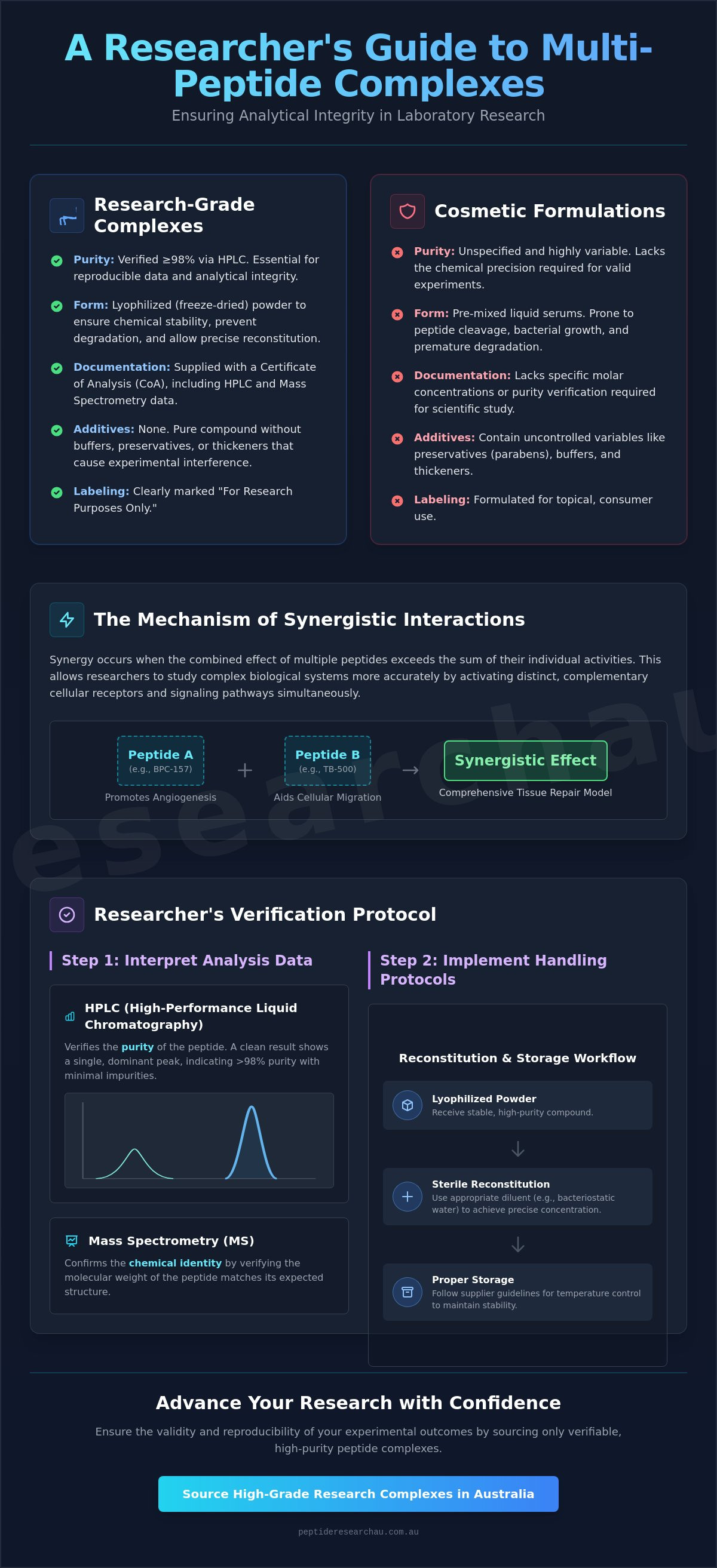
The distinction between laboratory compounds and retail products is defined by chemical purity and the absence of exogenous additives. Research-grade complexes must maintain purity thresholds of 98% or higher. Cosmetic serums typically contain buffers, thickeners, and preservatives such as phenoxyethanol or parabens. These substances introduce uncontrolled variables into a laboratory environment, potentially invalidating results or interfering with analytical equipment. Authentic research materials are strictly labeled "For Research Purposes Only," signifying they haven't been formulated for human consumption or topical application. It's essential to verify these standards before you buy multi-peptide complexes australia to avoid cross-contamination in your study.
The Rationale for Multi-Peptide Blends in Science
Single-peptide studies provide insights into isolated mechanisms, but multi-peptide complexes facilitate the examination of synergistic interactions. For instance, blends containing BPC-157 and TB-500 are frequently utilized in tissue repair research. These pairings allow investigators to study how different signaling molecules interact across various cellular receptors simultaneously. This approach reflects the complexity of biological systems more accurately than isolated compounds. By studying these interactions, researchers can identify how specific peptide ratios influence cellular migration and protein synthesis.
Stability remains a critical factor in scientific inquiry. High-purity peptides are provided in a lyophilized powder form rather than pre-mixed liquid solutions. Lyophilization preserves the molecular structure and prevents premature degradation during transit and storage. Liquid serums found in retail markets are prone to peptide cleavage and bacterial growth, making them unsuitable for precise scientific measurement. Lyophilized compounds allow for exact reconstitution using specific laboratory diluents, ensuring the final solution meets the precise concentration requirements of the experimental protocol.
The Mechanism of Synergistic Peptide Interactions
Synergistic interactions occur when the combined effect of multiple peptides exceeds the sum of their individual biological activities. This phenomenon is driven by the simultaneous activation of distinct yet complementary cellular receptors. When investigators choose to buy multi-peptide complexes australia, they're often examining how these compounds modulate signaling cascades like the MAPK/ERK or PI3K/Akt pathways. Precision in molecular weight and sequence compatibility is vital. If sequences aren't compatible, steric hindrance can prevent optimal receptor binding. This leads to compromised experimental data and inconsistent observations across research trials.
The interaction between a peptide and its target receptor is highly specific. Multi-peptide complexes allow for the study of cross-talk between different receptor types. This is particularly useful in research involving complex physiological systems where a single stimulus is insufficient to trigger a full biological response. Researchers use these blends to map how different amino acid sequences influence binding affinity and downstream cellular signaling.
Cellular Repair and Tissue Regeneration Blends
Musculoskeletal research frequently focuses on the synergy between BPC-157 and TB-500. While BPC-157 influences the expression of growth factors and promotes angiogenesis, TB-500 plays a role in actin sequestration and cellular migration. This dual-action approach provides a more comprehensive model for studying tissue regeneration than using isolated compounds. Researchers can find detailed data on these specific mechanisms in this BPC-157 research in Australia guide. Utilizing these complexes requires an understanding of the TGA compliance focus on unapproved peptides, as regulatory scrutiny remains high for all compounds not explicitly approved for therapeutic use.
Metabolic and Performance Research Complexes
Metabolic research often utilizes combinations of Growth Hormone Releasing Hormones (GHRH) and Growth Hormone Releasing Peptides (GHRP). These complexes are designed to study the pulsatile release of endogenous growth hormone in laboratory models. GHRH analogs stimulate the pituitary gland, while GHRPs target the ghrelin receptor to suppress somatostatin. By using a multi-peptide complex, scientists can observe the systemic biological response to simultaneous receptor agonism. This is critical for understanding binding affinity and how minor variations in amino acid sequences alter metabolic outcomes. When you buy multi-peptide complexes australia for metabolic study, ensuring the exact molar ratio is essential for replicating peer-reviewed results.
Neurological research is another expanding field for multi-peptide complexes. Blends designed for neuroprotection focus on reducing oxidative stress and promoting neuronal survival in models of neurodegeneration. These studies require high-purity research peptides to ensure that no contaminants or additives interfere with delicate neural tissue cultures.
Evaluating Purity and Grade in the Australian Market
Determining the chemical grade of a compound is the most critical step before you buy multi-peptide complexes australia. High-purity reagents are essential because even trace amounts of contaminants can alter cellular responses or damage sensitive laboratory equipment. A Certificate of Analysis (COA) provides the empirical evidence required to validate a supplier's claims. Researchers shouldn't accept generic documentation. Instead, they must insist on batch-specific data that corresponds directly to the vial in their possession. Relying on unverified third-party suppliers often leads to the acquisition of compounds containing chemical impurities that compromise experimental baseline data.
HPLC and MS: The Gold Standards of Verification
High-Performance Liquid Chromatography (HPLC) is the industry standard for determining the purity percentage of a peptide. It separates the components of a sample to identify the precise concentration of the target molecule. Most reputable research-grade suppliers in Australia advertise a purity of 99% or higher. Mass Spectrometry (MS) complements this by verifying the molecular weight of the compound. This ensures the amino acid sequence matches the theoretical design exactly. These tests also detect residual solvents or common impurities like Trifluoroacetic acid (TFA). While TFA is often used during the synthesis process, it must be minimized in the final product to avoid unintended toxicity in delicate cell cultures.
Sourcing Transparency and Supplier Accountability
Transparency in testing separates professional suppliers from high-risk vendors. Reliable Australian sources provide clear, accessible documentation for every batch produced. This level of accountability is vital given the current TGA compliance on unapproved peptides, which highlights the risks associated with products that lack proper oversight. When you evaluate a supplier, look for independent laboratory verification rather than internal reports. This ensures the data is objective and verifiable. For a deeper analysis of these standards, consult Peptides Australia: The Researcher’s Guide. Using unverified compounds introduces chemical noise that can render an entire study inconclusive, wasting both time and institutional resources.
The Australian market is seeing a growth in online suppliers, which makes rigorous vetting even more necessary. A supplier's commitment to excellence is demonstrated through their willingness to provide comprehensive HPLC and MS data upon request. Without these metrics, there's no way to confirm the identity or concentration of the multi-peptide complex. Professional researchers prioritize these data points to ensure their methodology remains sound and their results remain reproducible.
Storage and Reconstitution Protocols for Peptide Complexes
Maintaining the structural integrity of peptide chains is essential for achieving accurate experimental results. When you buy multi-peptide complexes australia, the compounds arrive in a lyophilized (freeze-dried) state to ensure maximum shelf life. Reconstitution is the process of returning these powders to a liquid state for laboratory application. This step requires precision, as the fragile covalent bonds between amino acids are susceptible to degradation through thermal fluctuations or mechanical force. Researchers must treat these reagents with extreme care to prevent the loss of biological activity before the study even begins.
The physics of reconstitution involves more than just mixing. The vacuum within the vial is a deliberate manufacturing feature that protects the compound from oxidation. Abruptly breaking this vacuum by removing the stopper can introduce environmental contaminants. Instead, the diluent should be injected through the septum using a sterile syringe. This maintains the sterile environment required for sensitive analytical work. If you're conducting longitudinal studies, consider aliquoting the reconstituted solution into smaller, single-use vials to avoid repeated freeze-thaw cycles, which are known to degrade peptide sequences over time.
Reconstitution Best Practices
Researchers must calculate the exact volume of diluent required to reach their target molar concentration. Most protocols utilize bacteriostatic water, which contains 0.9% benzyl alcohol to inhibit bacterial proliferation throughout the study. When introducing the diluent into a vacuum-sealed vial, allow the liquid to flow slowly down the interior glass wall. Direct impact on the lyophilized powder can cause structural damage. Once the diluent is added, never shake the vial. Instead, use a gentle swirling motion until the solution is completely clear. Any visible particulates indicate incomplete dissolution, which will lead to inaccurate dosing in your research models.
Stability and Storage Requirements
Temperature control is the most significant factor in preserving peptide potency. Lyophilized powders should be stored at -20°C for long-term stability, though they remain stable at 4°C for shorter durations. Light exposure must be minimized, as ultraviolet radiation can trigger peptide cleavage. Once reconstituted, most peptide complexes should be utilized within 30 days when stored at 4°C. Beyond this window, the risk of hydrolysis and chemical degradation increases significantly, potentially compromising the validity of your data.
Environmental factors like humidity also play a role. Lyophilized peptides are hygroscopic, meaning they readily absorb moisture from the air. If a vial is opened in a high-humidity environment before it has reached room temperature, condensation can form inside, leading to rapid degradation. Always allow vials to equilibrate to ambient temperature before opening or reconstituting. These meticulous steps ensure that when you buy multi-peptide complexes australia, the chemical profile remains identical to the manufacturer's specifications throughout your entire project.
Sourcing High-Grade Research Complexes in Australia
Procurement strategies for laboratory reagents must prioritize supply chain stability and regulatory compliance. In 2026, the Therapeutic Goods Administration (TGA) designated unapproved peptides as a high-priority compliance area. This shift in the regulatory landscape makes domestic sourcing a critical factor for institutional risk management. When you choose to buy multi-peptide complexes australia, you eliminate the unpredictable variables associated with international transit. Local sourcing ensures that your research materials aren't subject to the increasing frequency of border seizures or lengthy customs inspections that can compromise the chemical integrity of the compounds.
The Australian scientific community requires a consistent and verifiable supply of research compounds. Relying on international vendors often introduces "chemical noise" due to poor temperature control during long-haul flights. Domestic suppliers understand the specific environmental challenges of the Australian climate and implement logistics solutions tailored to these conditions. This localized approach protects the molecular structure of the peptides from thermal degradation, ensuring that the reagents perform as expected in a laboratory setting.
The Benefits of Domestic Australian Sourcing
Domestic procurement offers significant logistical advantages over international orders. The most immediate benefit is the elimination of customs delays, which can often hold sensitive materials for weeks. These delays are particularly hazardous for peptides, as even lyophilized powders can degrade if exposed to fluctuating warehouse temperatures. Sourcing locally allows for rapid, tracked delivery that maintains cold-chain integrity from the supplier to the laboratory. Furthermore, working with an Australian provider grants access to technical experts who understand the specific legal and scientific requirements of the domestic research environment. This local support is invaluable when navigating complex experimental setups or requiring immediate batch-specific clarification.
Peptide Research AU: Precision in Every Complex
Peptide Research AU is dedicated to supporting the Australian scientific community with high-purity laboratory reagents. We maintain a strict purity threshold of 98% or higher for all our offerings, ensuring that your data remains accurate and reproducible. Our multi-peptide complexes are synthesized using advanced methodology to ensure precise molar ratios and sequence stability. We provide comprehensive technical support and access to batch-specific data, allowing you to buy multi-peptide complexes australia with complete confidence in their analytical grade. Our streamlined domestic shipping protocols ensure that your laboratory receives its materials quickly and in optimal condition. For scientists seeking to maintain the highest standards of inquiry, you can explore our range of research-grade multi-peptide complexes to find the specific chemical blends required for your next project.
Advancing Analytical Precision in Australian Research
The validity of complex signaling research depends entirely on the chemical integrity of the starting materials. Achieving reproducible data requires a commitment to 98%+ purity and standardized reconstitution protocols. When you buy multi-peptide complexes australia from a domestic supplier, you're not just securing reagents; you're mitigating the logistical risks that often compromise international shipments. Precise batch-specific HPLC and MS testing remains the only definitive way to verify that your compounds meet the theoretical requirements of your experimental design. You don't have to compromise on data quality when high-grade reagents are available locally.
Reliability in sourcing allows you to focus on the data rather than the variables of chemical degradation. We're committed to providing the Australian scientific community with reagents that meet the highest technical benchmarks. Browse Laboratory-Grade Multi-Peptide Complexes at Peptide Research AU to ensure your project benefits from 98%+ Purity Guaranteed, batch-specific HPLC and MS testing, and discreet domestic Australian shipping. We're here to help you maintain the highest standards of scientific excellence.
Frequently Asked Questions
Is it legal to buy multi-peptide complexes for research in Australia?
It's legal to buy multi-peptide complexes for laboratory research in Australia provided they aren't intended for human therapeutic use. The Therapeutic Goods Administration (TGA) maintains high compliance standards for unapproved peptides, so the onus is on the researcher to ensure the compounds are used strictly within a controlled environment. Sale is typically restricted to "For Research Purposes Only" to distinguish them from regulated therapeutic goods.
What is the difference between cosmetic peptides and research peptides?
Chemical purity and the intended application define the difference. Research peptides are synthesized to 98% or higher purity and provided as lyophilized powders to maintain structural integrity. Cosmetic peptides are finished consumer products found in retail serums. These serums contain low peptide concentrations along with thickeners, perfumes, and preservatives that would invalidate laboratory results.
How do I know if a peptide complex is of high purity?
High purity is confirmed through independent laboratory testing using HPLC and Mass Spectrometry. These tests provide a quantitative analysis of the peptide's concentration and confirm that the amino acid sequence matches the theoretical design. Always request a batch-specific Certificate of Analysis (COA) to verify these metrics before you buy multi-peptide complexes australia.
Do I need a prescription to buy research peptides in Australia?
A prescription isn't required for the purchase of research-grade peptides because they aren't intended for human administration. Prescriptions are mandatory for therapeutic goods regulated by the TGA. Since research compounds are sold strictly for laboratory study or in vitro experimentation, they don't fall under the same prescription requirements as medical treatments or scheduled medications.
How should I store my multi-peptide complexes once they arrive?
Lyophilized powders should be stored in a freezer at -20°C for maximum long-term stability. If the compounds are intended for immediate use, a refrigerator set to 4°C is sufficient for short-term storage. Once you've reconstituted the complex, it's vital to keep the solution refrigerated and utilize it within 30 days to avoid molecular degradation and ensure the integrity of your experimental data.
What is the best diluent for reconstituting peptide blends?
Bacteriostatic water is the preferred diluent for reconstituting most multi-peptide complexes. This specialized water contains 0.9% benzyl alcohol, which acts as a preservative to inhibit bacterial proliferation. Using standard sterile water is possible for single-use applications, but it lacks the antimicrobial properties required to maintain solution sterility throughout a multi-day research project involving multiple draws from the same vial.
Can I buy multi-peptide complexes as a student for university research?
Students can buy multi-peptide complexes australia for university-led laboratory projects and scientific inquiry. It's essential that procurement follows the specific safety guidelines and institutional ethics requirements of the research facility. These reagents are professional tools designed for analytical study rather than personal use, and they must be handled according to established laboratory safety protocols.
Why are research-grade peptides more expensive than cosmetic serums?
The price reflects the rigorous synthesis and purification processes required to reach 98% purity levels. Producing a high-concentration, laboratory-grade compound involves significant overhead for HPLC testing, Mass Spectrometry, and specialized cold-chain logistics. Retail serums are priced lower because they contain negligible amounts of active peptides diluted in large volumes of water and inexpensive cosmetic fillers.


Comments