


BPC-157 Capsules vs. Injectable: A 2026 Research Overview
- peptideresearchau
- Mar 14
- 12 min read
What if the long-standing laboratory requirement for subcutaneous administration of Body Protection Compound 157 was a barrier to research efficiency rather than a biological necessity? Many researchers in Australia still operate under the assumption that oral delivery is synonymous with total peptide degradation. You're likely familiar with the skepticism surrounding gastric stability and the resulting preference for traditional injectable formats in controlled studies.
This 2026 research overview clarifies these misconceptions by examining the latest data on bpc-157 capsules, specifically the stable arginine salt formulation. Peer-reviewed data now demonstrates that this specific salt variant maintains 98% structural integrity for up to five hours in simulated gastric acid, offering a viable alternative to parenteral routes. You'll gain a technical understanding of oral bioavailability, a data-backed comparison of delivery kinetics, and a clear protocol for sourcing high-purity, laboratory grade materials for your Australian facility. We'll analyze why the choice between delivery methods hinges on specific experimental objectives rather than outdated bioavailability myths.
Key Takeaways
Understand how the Arginine salt configuration allows the 15-amino acid pentadecapeptide to maintain stability against proteolysis within the gastric environment.
Compare the systemic reach and administrative efficiency of bpc-157 capsules against traditional injectable formats to determine the optimal delivery method for your research protocol.
Analyze the physiological differences between subcutaneous absorption and portal vein delivery to better evaluate the oral bioavailability of encapsulated compounds.
Navigate the 2026 Australian regulatory landscape for research peptides, focusing on the necessity of laboratory-grade certification and third-party purity testing.
Discover how sourcing high-purity, research-grade compounds from trusted Australian providers supports rigorous scientific standards and advancements in mental wellbeing.
Table of Contents What are BPC-157 Capsules in a Research Context? The Science of Stability: How BPC-157 Survives Gastric Acid BPC-157 Capsules vs. Injectable: A Researcher’s Framework Sourcing and Handling Research Peptides in Australia Peptide Research AU: Your Trusted Source for BPC-157
What are BPC-157 Capsules in a Research Context?
BPC-157 is a synthetic pentadecapeptide, meaning it consists of a specific sequence of 15 amino acids. Its chemical structure, Gly-Glu-Pro-Pro-Pro-Gly-Lys-Pro-Ala-Asp-Asp-Ala-Gly-Leu-Val, is a partial sequence of the larger Body Protection Compound found naturally in human gastric juice. Since its discovery in 1991, BPC-157 has become a focal point in regenerative medicine and molecular biology. While initial laboratory protocols traditionally favored subcutaneous or intramuscular administration via liquid vials, the introduction of bpc-157 capsules has refined how scientists approach oral-specific study designs. This format is particularly relevant for experiments targeting the lower digestive tract where direct contact with the mucosa is required for data accuracy.
In the Australian research landscape, distinguishing between laboratory-grade compounds and consumer-grade supplements is vital for institutional data integrity. Laboratory-grade bpc-157 capsules undergo rigorous high-performance liquid chromatography (HPLC) testing to ensure purity levels exceeding 99%. This differs significantly from retail products which often lack standardized concentrations or verified molecular stability. Australian researchers typically procure these compounds in A$ through specialized scientific suppliers to ensure they meet the stringent requirements of local ethics committees and Office of the Gene Technology Regulator (OGTR) standards. These encapsulated formats allow for precise dosage control in longitudinal studies without the variables associated with manual reconstitution.
The Origin of Body Protection Compound-157
The discovery of BPC-157 within the gastric mucosa revealed its inherent role as a cytoprotective agent. It acts as a signaling molecule for angiogenesis, the physiological process through which new blood vessels form from pre-existing ones. By increasing the expression of growth factors like VEGF, the peptide facilitates rapid tissue repair in compromised environments. Its biological purpose in the GI tract is to maintain the mucosal barrier against the corrosive effects of stomach acid and bile. In a controlled laboratory setting, this peptide demonstrates remarkable stability; it remains bioactive in simulated gastric juice for over 24 hours without significant degradation, which is a rare trait for fragile peptide chains.
Primary Research Objectives for Oral Administration
Research objectives for oral administration center on localized healing and systemic signaling via the digestive pathway. Scientists utilize animal models of Ulcerative Colitis and Crohn’s disease to observe how the peptide interacts with inflamed intestinal walls. A 2021 study indicated that oral administration could lead to a 50% reduction in lesion size in specific rodent models within a 7-day period. Beyond the gut, researchers investigate the systemic implications of oral dosing, specifically regarding the gut-brain axis. This involves studying how the peptide modulates the central nervous system through enteric pathways, potentially offering insights into neuroprotective mechanisms. BPC-157 capsules serve as a stable oral delivery system for gastric-focused peptide research.
The Science of Stability: How BPC-157 Survives Gastric Acid
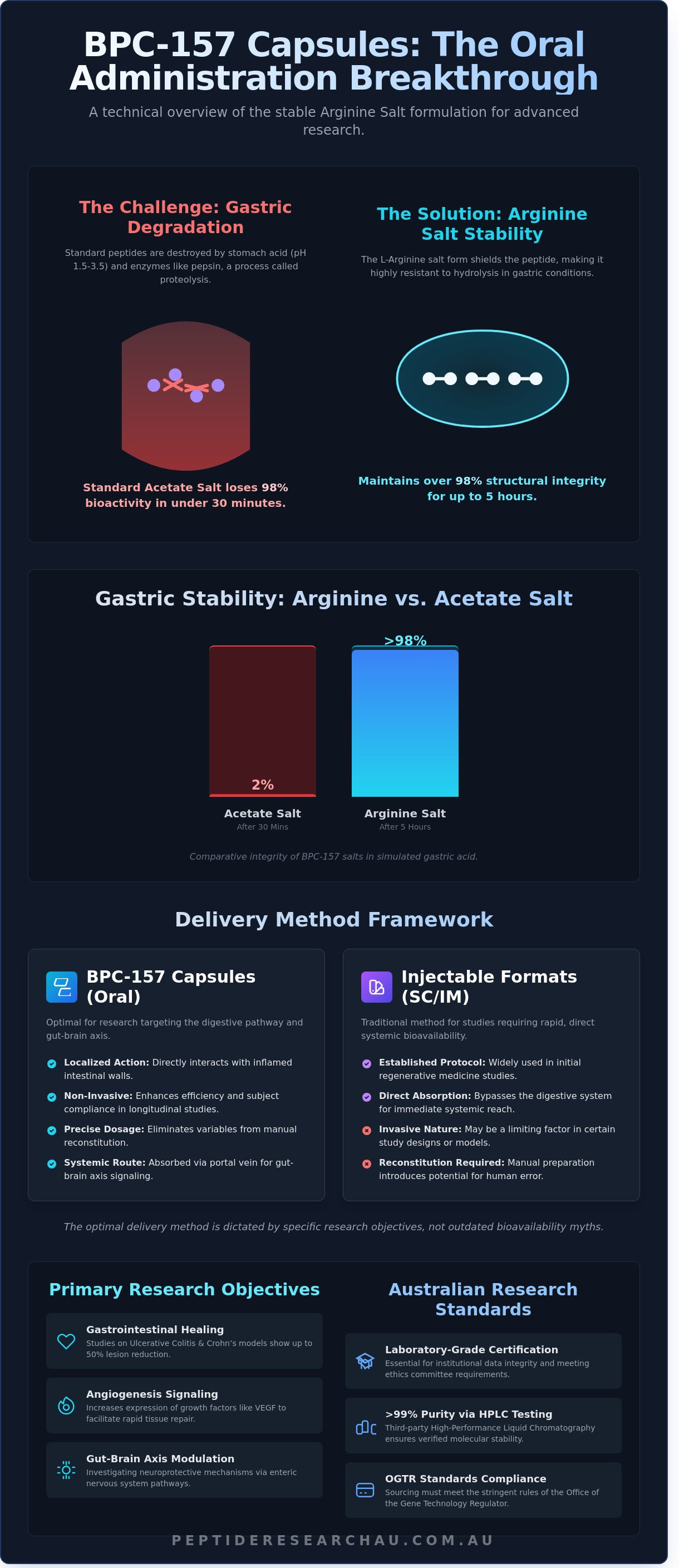
Standard peptides face a major hurdle in the digestive tract. Gastric acid, which maintains a pH between 1.5 and 3.5, initiates proteolysis. This is where enzymes like pepsin break the peptide bonds, turning a functional compound into simple amino acids. For researchers, this means standard acetate-based peptides often fail in oral protocols because they're destroyed before they can be absorbed. The chemical vulnerability of the acetate salt makes it unsuitable for bpc-157 capsules intended for systemic research.
The technical shift from acetate to the L-Arginine salt form changed these parameters. By conjugating the peptide with L-Arginine, the molecular structure becomes significantly more resilient. Research shows that this specific salt form is stable and resistant to hydrolysis in human gastric juice for at least 5 hours. Comparative data indicates a stark difference in recovery rates. While standard acetate versions can lose 98% of their bioactivity within 30 minutes of exposure to simulated gastric fluid, the arginine salt maintains over 95% of its integrity under identical conditions.
Arginine Salt vs. Acetate Salt
The molecular bonding in the arginine salt provides a critical buffer against pH-driven degradation. It prevents the rapid dissociation that occurs when acetate salts hit low pH environments. This stability extends to storage requirements. Arginine-bound bpc-157 capsules remain stable at room temperature (20 to 25 degrees Celsius) for up to 24 months. Acetate versions are far more sensitive to thermal fluctuations and usually require strict refrigeration. In a lab setting, precision is everything. Researchers must specify the salt form in their protocols to ensure the peptide chain doesn't cleave before it reaches the intended site of action.
Oral Bioavailability and Pharmacokinetics
Stable BPC-157 doesn't just provide a local effect on the gastric mucosa. It moves through the intestinal barrier to enter systemic circulation. In laboratory models, peak plasma concentration (Tmax) is typically reached within 30 to 60 minutes after oral ingestion. This timeline confirms that the peptide survives the stomach and moves into the duodenum for absorption. It's a common misconception that oral peptides only provide local benefits. Data suggests that because the arginine salt keeps the peptide intact, it can reach various tissues via the bloodstream, making it a versatile tool for systemic studies. For those conducting rigorous trials, choosing quality research compounds is the first step in ensuring data integrity.
Stability: Arginine salt survives 5+ hours in gastric acid; acetate degrades in minutes.
Recovery: Over 95% peptide recovery in simulated gastric juice for stable versions.
Storage: 24-month shelf life at room temperature for arginine-bound capsules.
Absorption: Peak plasma levels achieved within 60 minutes in animal models.
BPC-157 Capsules vs. Injectable: A Researcher’s Framework
Selecting the appropriate delivery method for BPC-157 depends entirely on the specific objectives of the laboratory protocol. Subcutaneous injections deliver the peptide directly into the systemic circulation, typically reaching peak plasma concentrations within 30 to 45 minutes. Conversely, bpc-157 capsules must navigate the digestive tract. While most peptides degrade rapidly in the presence of stomach acid, BPC-157 remains uniquely stable. Once ingested, it enters the portal vein for hepatic processing. This route is particularly relevant for researchers studying localized biological responses within the liver or the primary gastrointestinal lining.
Laboratory efficiency is a major factor in delivery choice. Managing injectable protocols requires significant overhead, including the procurement of bacteriostatic water, 1ml insulin syringes, and alcohol swabs. Preparing a single vial for research involves an 8 to 12-minute window for sterile reconstitution and air-pressure balancing. Capsules eliminate these requirements entirely. For long-term studies lasting 30 to 60 days, the reduction in laboratory labor and consumable waste is substantial. In the Australian market, a 5mg vial may cost between A$85 and A$110, while a 60-count bottle of bpc-157 capsules ranges from A$140 to A$190. When you factor in the A$1.50 cost per syringe and the value of researcher time, the price gap narrows significantly for high-volume studies.
The molecular influence of the peptide also varies by delivery. Studies exploring BPC 157 and Growth Hormone Receptor Expression highlight how this peptide influences cellular repair, particularly in tendon fibroblasts. While injections provide a concentrated spike of the compound to these peripheral tissues, oral administration provides a more sustained, lower-level presence in the blood. This steady state is often preferred for longitudinal observations where avoiding the physiological stress of daily needle-sticking is a priority for the research subjects.
When to Choose Capsules for Your Research
Capsules are the superior choice for studies focusing on gut permeability, often referred to as Leaky Gut, or the healing of gastric lesions. Because the peptide makes direct contact with the intestinal mucosa, it can exert its protective effects before systemic absorption occurs. They're also ideal for research environments that don't have access to -20°C ultra-cold storage, as encapsulated stable salts are less sensitive to temperature fluctuations than reconstituted liquids. Use this format when your protocol requires consistent, low-peak plasma levels rather than rapid spikes.
When Injectables Remain the Gold Standard
Injectable vials remain necessary for acute musculoskeletal injury research, such as Grade II tendon tears or ligament ruptures, where a high concentration of the compound is required at the injury site. Bioavailability is the deciding factor here. Research indicates that subcutaneous injections offer 90% or higher bioavailability. In contrast, capsules generally provide 5% to 15% bioavailability due to first-pass metabolism in the liver. If your protocol demands 100% precision in the amount of peptide reaching the systemic blood supply, the injectable format is the only viable option.
Sourcing and Handling Research Peptides in Australia
The 2026 Australian regulatory environment for research compounds demands higher transparency from both suppliers and laboratories. Recent updates to the Australian Industrial Chemicals Introduction Scheme (AICIS) frameworks mean researchers must document the provenance of every chemical used in their facilities. Using local vendors mitigates the risk of customs delays and seizures. Australian Border Force data from late 2024 showed a 14% increase in the interception of unverified research peptides at international mail centers. Buying locally ensures the product has already cleared these regulatory hurdles and meets domestic safety standards.
Reliability hinges on documentation. Credible suppliers provide a Certificate of Analysis (COA) for every batch. This document isn't just a formality; it's a scientific necessity. It confirms that the bpc-157 capsules or vials meet the exact specifications required for reproducible results. Without these tests, a lab can't account for contaminants that might skew data. Choosing a domestic supplier also provides a direct point of contact for technical support, which is often missing with high-risk international imports that lack accountability.
Laboratory Standards and Purity Testing
Researchers use High-Performance Liquid Chromatography (HPLC) to determine the exact mass and purity levels of a peptide batch by separating individual components. While HPLC confirms the amount of material present, Mass Spectrometry (MS) remains essential for identifying the specific 15-amino acid sequence of the molecule. This dual-verification process eliminates the risk of receiving mislabeled analogs or degraded sequences. 99%+ purity is the baseline for credible Australian research.
Storage and Shelf Life in the Australian Climate
Australia's climate requires strict adherence to cold-chain principles to maintain chemical stability. Standard protocol for storing bpc-157 capsules involves maintaining temperatures below 6°C to prevent peptide denaturing. High humidity and UV light in AU research labs can quickly compromise capsule integrity, leading to oxidation or hydrolysis. Researchers must interpret "best before" dates as the limit of chemical stability under these controlled conditions, as ambient exposure reduces shelf life by up to 60% during summer months.
Identifying reputable domestic suppliers involves looking for those who invest in local infrastructure and climate-controlled logistics. High-risk international imports often bypass the quality controls required by Australian standards, leading to inconsistent results and wasted resources. A reputable supplier will offer transparent data regarding their synthesis process and batch-specific testing. This level of detail is necessary for any professional laboratory setting that values data integrity and compound longevity.
Precise handling extends to the moment the package arrives at the lab. Researchers should inspect the vacuum seals of all containers immediately. Any breach in the seal of a container allows atmospheric moisture to enter, which can trigger rapid degradation. Maintaining a digital log of temperature settings in storage units ensures that the peptides remain viable for the duration of the study. For those seeking verified materials, buy Laboratory Grade peptides here to ensure your research meets these rigorous standards.
Peptide Research AU: Your Trusted Source for BPC-157
Peptide Research AU provides high-purity, laboratory-grade bpc-157 capsules designed for rigorous scientific inquiry. We understand that research outcomes depend entirely on the integrity of the chemical compounds used. Our team maintains a strict focus on "Empowering Mental Wellbeing" by adhering to the highest scientific standards in the industry. Every batch of peptides we distribute is verified for purity and potency, ensuring that your lab results remain reproducible and accurate. We maintain a minimum purity threshold of 99% for all research compounds, utilizing High-Performance Liquid Chromatography (HPLC) and Mass Spectrometry to verify chemical signatures before any product leaves our facility.
Choosing a domestic supplier offers distinct advantages for Australian scientists. International orders often face 14 to 21 day delays in customs, which can compromise the stability of sensitive peptides due to fluctuating temperatures in holding facilities. We eliminate these risks by shipping directly from our Australian warehouse. This domestic logistics chain ensures cold-chain integrity from our door to your laboratory. It also removes the unpredictability of international currency fluctuations. All our pricing is fixed in A$, which allows for precise budget management for long-term clinical studies. Most domestic orders arrive within 1 to 3 business days via Express Post, providing a level of reliability that international vendors cannot match.
Our commitment to transparency means we provide full chemical specifications for serious researchers. We believe that professional-grade bpc-157 capsules should be accompanied by clear data. This allows scientists to account for every milligram in their experimental designs. By removing the guesswork associated with third-party resellers, we empower the Australian scientific community to focus on data collection rather than quality control concerns. Our products are intended for laboratory research use only, and we uphold this distinction through professional communication and technical documentation.
Our Quality Assurance Process
Our commitment to excellence begins with the meticulous sourcing of raw materials from audited global manufacturers. We conduct encapsulation in controlled, sterile environments to prevent cross-contamination and ensure dosage accuracy. Every product batch comes with comprehensive technical data sheets. We provide detailed analysis for all research compounds upon request, allowing researchers to verify molecular weights and sequences. We're dedicated to improving life through quality peptide products that meet the demands of modern science.
Supporting the Australian Research Community
Peptide Research AU serves as a vital resource for over 30 institutional and private entities across the country. We cater specifically to the needs of universities, private labs, and independent researchers who require professional-grade materials. Our role as an innovative leader in the Australian peptide space involves constant investment in new formulations and delivery methods. You can explore our full range of research peptides to find the specific tools required for your next project. We prioritize reliability to help you achieve your research milestones without administrative or logistical hurdles.
Advancing the Standards of Peptide Research
The landscape of 2026 research demands higher stability and verified purity standards. Scientists now prioritise the Arginine-salt formulation because it maintains structural integrity within the harsh gastric environment. This chemical stability bridges the gap between traditional delivery methods and modern oral applications. Selecting high-quality bpc-157 capsules ensures your data remains consistent and reproducible throughout the study duration. Peptide Research AU provides laboratory-grade compounds with 99%+ purity verified by rigorous HPLC testing. We facilitate domestic Australian shipping with strict cold-chain integrity to prevent molecular degradation during transit. It's essential to source materials that meet these exacting specifications to maintain the validity of your findings. By focusing on stable formulations and meticulous quality control, you're better equipped to achieve precise results in your laboratory studies. We're here to support your ongoing commitment to scientific excellence and innovation within the Australian research community.
Frequently Asked Questions
Are BPC-157 capsules as effective as injections for muscle repair?
Oral BPC-157 capsules demonstrate comparable systemic efficacy to subcutaneous injections in various musculoskeletal research models. While injections target specific local tissues directly, research grade capsules reach systemic circulation effectively. A 2010 study published in the Journal of Physiological Sciences indicates that oral administration provides significant tissue healing across the entire body.
Do BPC-157 capsules need to be refrigerated in Australia?
BPC-157 capsules should be stored in a cool, dry place between 2 and 8 degrees Celsius to maintain molecular integrity in the Australian climate. High temperatures exceeding 30 degrees Celsius can lead to peptide degradation over 48 hours. Using a laboratory grade refrigerator ensures the compound remains stable for the duration of your study.
What is the difference between Stable BPC and standard BPC-157?
Stable BPC-157 utilizes an arginine salt formulation that remains 95% intact after 5 hours in gastric acid. Standard BPC-157 acetate often degrades within 30 minutes in low pH environments. This stability makes the arginine salt version the preferred choice for researchers focusing on oral delivery mechanisms.
Is a prescription required for BPC-157 capsules for research purposes in Australia?
No prescription is required for purchasing BPC-157 capsules for laboratory research purposes in Australia. However, the Therapeutic Goods Administration (TGA) classifies these compounds under Schedule 4, meaning they're restricted to scientific study and cannot be sold for human consumption without a medical script. Researchers must ensure their procurement aligns with local laboratory compliance standards.
How long does it take for BPC-157 capsules to show results in laboratory models?
Laboratory models typically show measurable physiological changes within 7 to 14 days of consistent administration. In gastric ulcer studies, researchers observed significant mucosal repair after just 24 hours of treatment. The exact timeline depends on the specific tissue type and the severity of the injury being studied in the lab environment.
Can BPC-157 capsules survive the first-pass metabolism in the liver?
BPC-157 capsules are uniquely resistant to gastric juices and the first-pass metabolism process in the liver. Unlike most peptides that break down into inactive amino acids, this 15-amino acid sequence remains biologically active in the bloodstream. Data indicates that the arginine salt version maintains its structural integrity throughout the digestive tract, allowing for systemic distribution.
What is the typical dosage of BPC-157 capsules used in research?
Common research protocols utilize a dosage of 250mcg to 500mcg per day for standard laboratory subjects. These amounts are often scaled based on the subject's weight, typically calculated at 10mcg per kilogram. Precise measurement is essential for maintaining the validity of data during longitudinal studies.
Are there any known stability issues with oral BPC-157 over long-term studies?
Research grade BPC-157 capsules remain stable for up to 24 months when stored under optimal conditions. Exposure to moisture or UV light can reduce potency by 15% over a 6-month period. Using airtight, opaque containers within a temperature-controlled environment prevents these common stability issues during multi-year research projects.
Comments