

Bacteriostatic Water for Injection Australia: The 2026 Researcher’s Guide
- peptideresearchau
- Apr 19
- 12 min read
A single contamination event in a multi-dose vial can invalidate months of laboratory data and waste thousands of dollars in research-grade compounds. You likely recognize that your experimental results are only as reliable as the purity of your solvents. Selecting the correct bacteriostatic water for injection australia is a fundamental requirement for maintaining peptide stability and ensuring a sterile research environment. It's a meticulous choice that separates professional laboratory standards from high-risk amateur errors.
It's frustrating when international shipping delays of 14 days or more stall your progress, or when the technical distinction between sterile water and bacteriostatic solutions remains unclear. This 2026 guide provides the technical clarity you need to master the science of peptide reconstitution and rigorous safety protocols. We'll examine the specific chemical standards required for multi-dose vials, compare preservative efficacy across different laboratory grades, and show you how to secure Australian-stocked supplies to maintain the integrity of your research without the wait.
Key Takeaways
Distinguish between bacteriostatic and bactericidal mechanisms to understand how 0.9% benzyl alcohol preserves the structural integrity of delicate peptide chains.
Compare the shelf life and compatibility of various diluents to determine when your research requires sodium chloride versus a bacteriostatic preparation.
Master precise laboratory protocols for sterile reconstitution, including exact volume calculations to ensure accurate concentration of research-grade compounds.
Identify the logistical advantages of sourcing laboratory-grade bacteriostatic water for injection australia from domestic suppliers to ensure rapid delivery and temperature stability.
Navigate the 2026 regulatory landscape and safety standards required for the legal procurement and handling of laboratory supplies within Australia.
Table of Contents Understanding Bacteriostatic Water for Injection in Australia The Science of Bacteriostasis: How it Preserves Compounds Comparing Diluents: Bacteriostatic Water vs. Sterile Water vs. Saline Protocols for Reconstitution and Safe Laboratory Handling Sourcing Research-Grade Bacteriostatic Water in Australia
Understanding Bacteriostatic Water for Injection in Australia
Bacteriostatic water for injection australia is a specialized sterile preparation designed for the reconstitution and dilution of laboratory compounds. It's different from standard Water for injection, which is intended for single-use applications. This specific solution contains 0.9% (9 mg/mL) benzyl alcohol as a bacteriostatic preservative. This addition allows researchers to access a single vial multiple times within a 28-day period while maintaining a sterile environment. In the Australian research landscape, where precision and reproducibility are paramount, selecting high-quality bacteriostatic water for injection australia is a standard requirement for maintaining long-term vial sterility.
The distinction between bacteriostatic and bactericidal agents is fundamental to laboratory protocol. Bactericidal substances actively kill existing bacteria. Bacteriostatic agents like benzyl alcohol inhibit the reproduction and growth of bacteria. This distinction is critical for researchers because it prevents contamination from taking hold without introducing aggressive chemicals that might degrade the primary compound. Simple sterile water lacks this protective mechanism. Once a needle punctures a sterile water vial, any introduced microbes can multiply rapidly, rendering the solution unsafe for continued study.
The Role of Benzyl Alcohol as a Preservative
The 0.9% concentration of benzyl alcohol is the globally recognized optimal balance for preservation. At this specific level, the alcohol effectively halts microbial metabolic processes. It extends the shelf life of reconstituted compounds to 28 days post-puncture when stored correctly. Research labs in Melbourne and Sydney typically maintain these vials at controlled room temperatures between 20 and 25 degrees Celsius. Handling requires strict adherence to aseptic techniques. Benzyl alcohol is a mild local anesthetic, but its primary function here is ensuring the stability of multi-dose research vials throughout a month-long study cycle.
Why Research Grade Standards Matter
Quality variance between laboratory-grade solvents and lower-quality alternatives can compromise months of data. High-purity bacteriostatic water must be non-pyrogenic. Pyrogens are substances, often bacterial debris, that cause inflammatory responses or fever in test subjects. Verified research-grade products provide several layers of security:
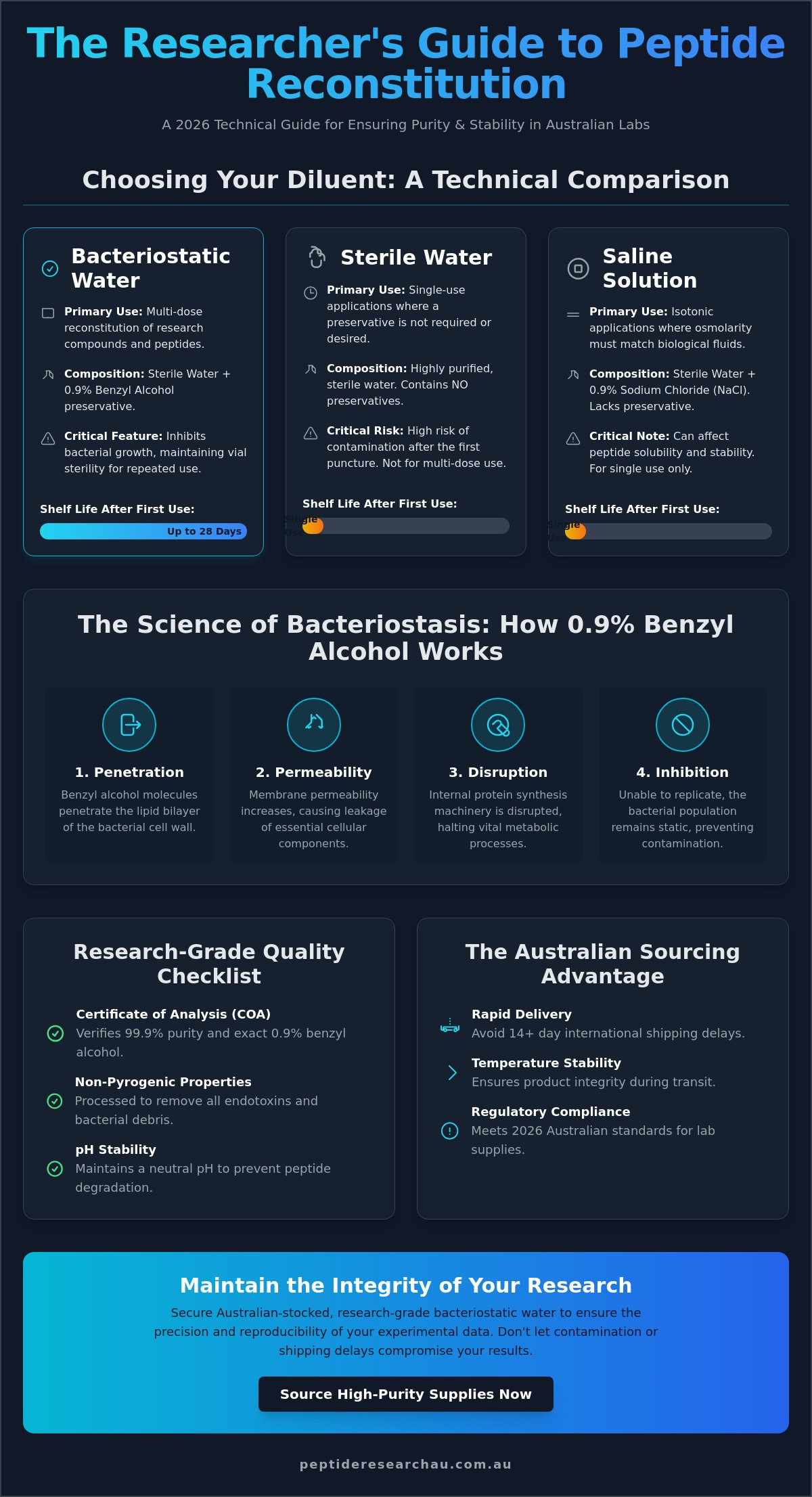
Certificate of Analysis (COA): Every batch undergoes testing to verify 99.9% purity and the exact 0.9% benzyl alcohol concentration.
Non-Pyrogenic Properties: Solutions are processed to remove all endotoxins, ensuring no biological interference.
pH Stability: Professional solvents maintain a neutral pH to prevent the premature degradation of sensitive peptides.
Australian researchers prioritize these standards to ensure that experimental outcomes result from the compound itself, not from impurities in the diluent. Using sub-standard water sources often leads to inconsistent results and wasted resources.
The Science of Bacteriostasis: How it Preserves Compounds
Bacteriostasis is the metabolic arrest of bacterial replication without immediate cell death. This physiological state is vital for maintaining the purity and efficacy of sensitive research materials. When scientists use Bacteriostatic Water for Injection, USP, they're employing a solution containing 0.9% benzyl alcohol as a preservative. This specific concentration prevents the growth of bacteria that might be introduced during repeated needle punctures, ensuring the compound remains viable for the duration of the study.
Mechanism of Bacterial Inhibition
The chemical interaction between benzyl alcohol and microbial cells occurs in a series of distinct steps. First, the alcohol molecules penetrate the lipid bilayer of the bacterial cell wall. This increases the permeability of the membrane, causing essential cellular components to leak out. Simultaneously, the alcohol disrupts the protein synthesis machinery within the cell. Because the bacteria can't produce the proteins required for replication, the population remains static.
This prevention of microbial proliferation is why researchers rely on bacteriostatic water for injection australia for multi-dose vials. Without this inhibitory mechanism, even a single microscopic contaminant could cause a "crash," where the bacteria consume the research compound or alter the solution's pH, rendering the peptide useless. By arresting metabolic activity, the preservative maintains the chemical environment required for delicate molecular structures.
Peptide Longevity and Diluent Interaction
Peptides like BPC-157 are notoriously fragile. Their efficacy depends on the integrity of their amino acid chains, which can be broken by oxidation or hydrolysis. The use of a high-quality diluent prevents these degradative processes. Bacteriostatic water provides a controlled environment where the 0.9% benzyl alcohol acts as a stabilizer against microbial-induced oxidation. This is particularly important in Australian research environments where ambient temperatures can fluctuate, potentially accelerating chemical breakdown.
Several factors can compromise the bacteriostatic effect over time, including:
Exposure to direct UV light, which degrades the benzyl alcohol.
Storage in temperatures exceeding 30°C, leading to rapid peptide denaturation.
Repeated air exchange in the vial, which introduces fresh oxygen and potential contaminants.
The pH level of the water also plays a critical role. Most bacteriostatic water is formulated to be slightly acidic, typically ranging from 4.5 to 7.0. This acidity is beneficial for many research chemicals, as it reduces the rate of deamidation, a common degradation pathway for peptides. While the water itself is thermally stable at room temperature, it's standard practice to store reconstituted laboratory grade peptides in a refrigerator between 2°C and 8°C. This cold-chain management, combined with the bacteriostatic properties of the water, ensures that bacteriostatic water for injection australia remains effective for the standard 28-day window after the initial vial breach.
Comparing Diluents: Bacteriostatic Water vs. Sterile Water vs. Saline
Selecting the correct diluent is a fundamental requirement for maintaining the integrity of laboratory grade compounds. While bacteriostatic water for injection australia is the industry standard for multi-dose protocols, researchers must evaluate the chemical compatibility of each solvent. The primary difference lies in the preservative content and osmotic pressure. Bacteriostatic water contains 0.9% benzyl alcohol, which inhibits bacterial growth for up to 28 days. In contrast, sterile water for injection lacks this agent, making it susceptible to rapid contamination after the first puncture. Sodium chloride solutions introduce electrolytes that can stabilize or destabilize specific peptide sequences depending on their net charge.
According to the DailyMed Bacteriostatic Water Drug Information, the preservative allows for multiple entries, provided aseptic technique is maintained. This makes it the most cost-effective choice for long-term studies. When choosing a medium, you must consider the solubility of the lyophilized powder. Most peptides are highly soluble in plain water, but some require the isotonic environment provided by saline to prevent aggregation.
When to Choose Bacteriostatic Sodium Chloride
Bacteriostatic sodium chloride (0.9% NaCl) is often preferred when a study requires a solution that mimics physiological osmotic pressure. This is particularly relevant for research involving delicate cellular simulations where a hypotonic environment (plain water) might cause cell lysis. Using a saline base can improve the stability of certain peptide structures by providing a balanced ionic strength. It's essential to perform a compatibility check before reconstitution; some compounds may precipitate if the salt concentration is too high. This saline variant remains a staple in Australian laboratories for compounds that require a precise pH and electrolyte balance for 2026 research standards.
The Danger of Sterile Water in Multi-Dose Research
Sterile water is strictly a single-use medium. Once the rubber stopper is breached, the lack of a preservative means the water becomes a breeding ground for microbes. Bacterial proliferation in non-preserved water is rapid; some strains can double every 20 minutes in ambient conditions. Using sterile water for a multi-dose protocol introduces significant risk to the study's validity. From an economic perspective, the waste is substantial. Discarding a 10ml vial after a single 1ml draw increases the cost of research by 900%. By using bacteriostatic water for injection australia, researchers reduce this waste, ensuring that every A$ spent on supplies is maximized across the full 28-day shelf life of the reconstituted compound.
Bacteriostatic Water: 28-day shelf life post-opening; contains 0.9% benzyl alcohol.
Sterile Water: Immediate disposal after one use; zero preservatives.
Saline (0.9%): Isotonic; preferred for osmotic sensitivity and specific peptide stability.
Protocols for Reconstitution and Safe Laboratory Handling
Maintaining a sterile field is the primary requirement for any laboratory procedure involving bacteriostatic water for injection australia. Researchers must thoroughly disinfect the workspace using 70% isopropyl alcohol before beginning. You'll need to wipe the rubber stoppers of both the diluent vial and the research compound vial before every needle entry. This practice reduces the risk of introducing microbial contaminants that could compromise your experimental data. Laboratory grade environments demand this level of precision to ensure the integrity of the chemical compounds being studied.
Calculating the required volume depends entirely on the mass of the lyophilised powder and the desired concentration. If a researcher has a 5mg vial and requires a concentration of 2.5mg/ml, they must use exactly 2ml of bacteriostatic water. Precise volumetric measurement is non-negotiable. Even a minor deviation in volume can lead to skewed results and inconsistent data sets. Always use high-quality syringes with clear graduation marks to verify the volume before transfer.
Step-by-Step Reconstitution Protocol
Start by drawing the calculated volume of diluent into a sterile syringe. Before injecting the liquid, draw an equivalent volume of air into the syringe and inject it into the diluent vial to equalise pressure. This prevents vacuum resistance or sudden aerosolisation of the contents. When transferring the liquid to the peptide vial, aim the needle at the glass wall rather than directly at the powder. This "Slow Drip" method prevents a high-pressure stream from shearing delicate molecular bonds. It's critical to remember that peptide reconstitution requires precise volumetric measurement for data accuracy. Once the liquid is added, gently swirl the vial until the solution is clear. Never shake the vial; mechanical stress can cause protein denaturation, rendering the compound useless for research.
Monitoring Shelf Life and Contamination
Standard laboratory safety protocols in Australia mandate the 28-day rule for multidose vials. The 0.9% benzyl alcohol preservative effectively inhibits bacterial growth for four weeks after the initial puncture. Beyond this 28-day window, the preservative's efficacy diminishes, and the risk of contamination increases. You should mark each vial with the date of first entry using a permanent marker to ensure strict compliance. Refrigeration between 2°C and 8°C is mandatory for most reconstituted compounds to maintain molecular stability. Additionally, keep vials away from direct UV light, as light sensitivity can trigger rapid degradation.
Check the solution daily for visual indicators of contamination. If you observe cloudiness, floating particulates, or any discolouration, discard the vial immediately. Proper disposal involves placing all used needles and glass vials into a puncture-resistant sharps container. Expired diluents and contaminated compounds must be handled according to your local Australian biohazard waste regulations to ensure environmental safety.
Consistent and reliable results depend on the integrity of your laboratory supplies. You can find premium laboratory grade research chemicals to ensure your study meets the highest scientific standards.
Sourcing Research-Grade Bacteriostatic Water in Australia
Securing high-quality bacteriostatic water for injection australia is a critical step for any scientific protocol involving lyophilized compounds. In 2026, the Australian research landscape requires meticulous attention to supply chain transparency and laboratory-grade purity. Choosing a domestic supplier isn't just a matter of convenience; it's a fundamental requirement for maintaining the stability of sensitive research materials.
Domestic vs. International Sourcing
International procurement often introduces variables that compromise research integrity. Overseas shipments frequently experience customs holds that can last 10 to 14 days. During this time, supplies sit in warehouses without climate control, potentially reaching temperatures that exceed 35 degrees Celsius. This exposure can lead to the degradation of the benzyl alcohol preservative within the water. Domestic sourcing eliminates these risks by providing transit times of 2 to 5 business days across most Australian states.
Working with local suppliers ensures your materials comply with Australian laboratory standards. It also provides access to technical support within local time zones. If a researcher has specific enquiries about batch numbers or sterilization certificates, a domestic provider can offer immediate documentation. This level of accountability is rarely available with international vendors who operate outside of Australian jurisdiction.
Reduced Transit Risk: Domestic shipping prevents prolonged exposure to UV and heat.
Customs Certainty: Local orders bypass the risk of seizure or 14-day quarantine delays.
Technical Accountability: Direct access to Australian support teams for scientific verification.
Peptide Research AU Quality Standards
At Peptide Research AU, we maintain a rigorous commitment to laboratory-grade standards. Every vial of bacteriostatic water we distribute undergoes strict quality control to ensure it meets the 0.9% benzyl alcohol concentration required for bacteriostatic properties. We understand that the solvent is just as important as the compound itself. This dedication has established us as a trusted source for peptides Australia, providing researchers with the consistency they need for reproducible results.
Our bacteriostatic water is designed for seamless integration with our full range of research compounds. Whether your study involves the melanocortin agonist PT-141 or the regenerative signaling peptide BPC-157, using a verified solvent is essential. We provide the infrastructure and the science to ensure your bacteriostatic water for injection australia arrives sterile, stable, and ready for laboratory use. Our focus remains on precision, safety, and the advancement of Australian scientific research through superior compound quality.
Securing Precision in 2026 Laboratory Protocols
Maintaining the integrity of sensitive research compounds requires more than just basic diluents; it demands a technical understanding of bacteriostasis. By 2026, the distinction between sterile water and bacteriostatic water is recognized as a fundamental factor in preventing microbial proliferation during multi-dose laboratory applications. Choosing the correct solvent ensures that reconstituted compounds remain stable and viable throughout the duration of a study. Precision in the lab begins with the purity of your solvent, as even minor contaminants can compromise months of data collection.
When sourcing bacteriostatic water for injection australia, researchers need a partner that understands the necessity of laboratory-grade purity. Peptide Research AU operates as a trusted research supplier, providing the scientific community with high-standard compounds and the efficiency of domestic Australian shipping. This local logistics network ensures that your laboratory remains stocked without the delays often associated with international procurement. Reliable data starts with reliable materials, and we're committed to supporting the excellence of Australian scientific inquiry.
Order Laboratory-Grade Bacteriostatic Water from Peptide Research AU and ensure your research reaches its full potential with world-class standards.
Frequently Asked Questions
Is bacteriostatic water legal to buy in Australia for research?
Bacteriostatic water is legal to purchase in Australia for laboratory and research applications provided it's used for its intended scientific purpose. Under the Therapeutic Goods Act 1989, researchers must ensure their procurement complies with state-based poisons schedules and institutional guidelines. Most research-grade suppliers provide 10ml or 30ml vials for benchwork. It's essential to verify that your source provides laboratory-grade compounds to maintain experiment integrity and safety standards within Australian facilities.
How long does bacteriostatic water last after opening?
Bacteriostatic water remains effective for 28 days once the vial's seal is punctured. The 0.9% benzyl alcohol acts as a preservative to inhibit bacterial growth during this four-week window. After 28 days, the antimicrobial properties diminish, and the solution must be discarded to prevent contamination. Researchers should record the date of first entry on the vial label to track this period accurately and prevent the degradation of sensitive laboratory samples.
Can I use bacteriostatic water for all types of peptides?
You can use bacteriostatic water for most research-grade peptides, though some specific compounds like certain proteins or growth factors are sensitive to the benzyl alcohol preservative. This solution is the standard choice for reconstituting peptides intended for multi-dose applications over several days. If a peptide is known to be unstable in the presence of alcohols, sterile water for injection is the required alternative. Always check the specific stability profile of your laboratory compound before reconstitution.
What is the difference between bacteriostatic water and sterile water?
The primary difference is that bacteriostatic water for injection australia contains 0.9% benzyl alcohol as a preservative, whereas sterile water contains no additives. Sterile water is designed for single-use applications and must be discarded immediately after opening. Bacteriostatic water allows for multiple entries into the same vial over a 28-day period. This makes it a more efficient and cost-effective choice for long-term research projects requiring repeated dosing from a single stock vial.
Does bacteriostatic water need to be refrigerated?
Bacteriostatic water doesn't require refrigeration and should be stored at a controlled room temperature between 20 and 25 degrees Celsius. It's vital to keep the vials away from direct sunlight and heat sources to maintain the stability of the benzyl alcohol. However, once you use the water to reconstitute a peptide, the resulting solution typically requires refrigeration at 2 to 8 degrees Celsius. This temperature shift is necessary to prevent the peptide from degrading over time.
Why is 0.9% benzyl alcohol used instead of a higher concentration?
A concentration of 0.9% benzyl alcohol is used because it provides the maximum antimicrobial efficacy without damaging the molecular structure of the dissolved compounds. Higher concentrations can lead to toxicity or cause the rapid degradation of sensitive laboratory-grade compounds. This specific 0.9% ratio is the industry standard established by pharmacopeia guidelines to ensure the solution remains sterile for 28 days while remaining compatible with a wide range of research chemicals and biological samples.
What happens if I use expired bacteriostatic water in my research?
Using expired bacteriostatic water in your research introduces a high risk of bacterial contamination and can compromise the accuracy of your data. The benzyl alcohol loses its potency over time, meaning it can no longer effectively inhibit the growth of microorganisms. If a researcher uses a solution past its 28-day window or labeled expiry date, they risk losing expensive peptide stocks. Contaminated samples lead to inconsistent results and often require the entire experiment to be restarted.
Can I make my own bacteriostatic water at home?
You can't safely make bacteriostatic water at home because it requires a sterile, laboratory-controlled environment to prevent initial contamination. Professional manufacturing involves multi-stage filtration and precise measurement of 0.9% benzyl alcohol to ensure the final product is pyrogen-free. Attempting to mix your own solution lacks the quality control necessary for scientific research. For reliable results, researchers must use factory-sealed bacteriostatic water for injection australia that meets strict laboratory-grade standards.


Comments