
ARA-290 Peptide Supplier AU: A Researcher’s Buying Guide for 2026
- peptideresearchau
- Jun 6
- 12 min read
Can a neuropathic research study maintain its integrity when the foundational compound is compromised by international shipping delays or insufficient purity verification? For many Australian scientists, the difficulty of securing laboratory-grade materials is compounded by strict TGA enforcement and the risk of receiving degraded sequences from overseas. It's a common frustration to find that "99% pure" claims often lack the HPLC documentation necessary to satisfy rigorous methodology. Securing a reliable ara-290 peptide supplier au requires a focus on domestic logistics and verified chemical nomenclature.
This guide identifies the specific criteria for selecting a source that meets the highest standards for laboratory use in 2026. You'll learn how to manage the complexities of Australian customs while ensuring your research materials arrive sterile and stable. We provide a technical framework for evaluating COA transparency and specialized handling protocols to eliminate the variables that threaten study outcomes. By prioritizing local cold-chain distribution, researchers can avoid the legal risks and $3,756 fines associated with unlawful importation, ensuring that technical product attributes lead to valid scientific results and improved wellbeing.
Key Takeaways
Identifying a reliable ara-290 peptide supplier au involves verifying domestic warehousing to minimize thermal degradation and bypass international customs risks.
High-Performance Liquid Chromatography (HPLC) and Mass Spectrometry (MS) serve as the primary benchmarks for confirming 99%+ purity and sequence accuracy.
ARA-290 functions as a specific ligand for the Innate Repair Receptor (IRR), offering a targeted mechanism for investigating inflammatory modulation without erythropoietic activity.
Strict adherence to storage protocols, including maintaining lyophilised compounds at -20°C, is mandatory to ensure the stability of the peptide during longitudinal research.
Table of Contents
Evaluating ARA-290 Peptide Suppliers in Australia for 2026
The Australian research environment in 2026 demands a meticulous approach to material procurement. Regulatory bodies like the TGA have intensified their focus on unapproved compounds, making the selection of a reliable Cibinetide (ARA-290) supplier a critical step in study design. Unlike more stable sequences, this non-erythropoietic derivative requires precise synthesis and handling to maintain its functional properties. A professional ara-290 peptide supplier au must demonstrate a deep understanding of these technical requirements rather than treating the compound as a generic commodity. Accuracy in the amino acid sequence is the only way to ensure that experimental data remains valid and reproducible.
The Importance of Domestic AU Sourcing
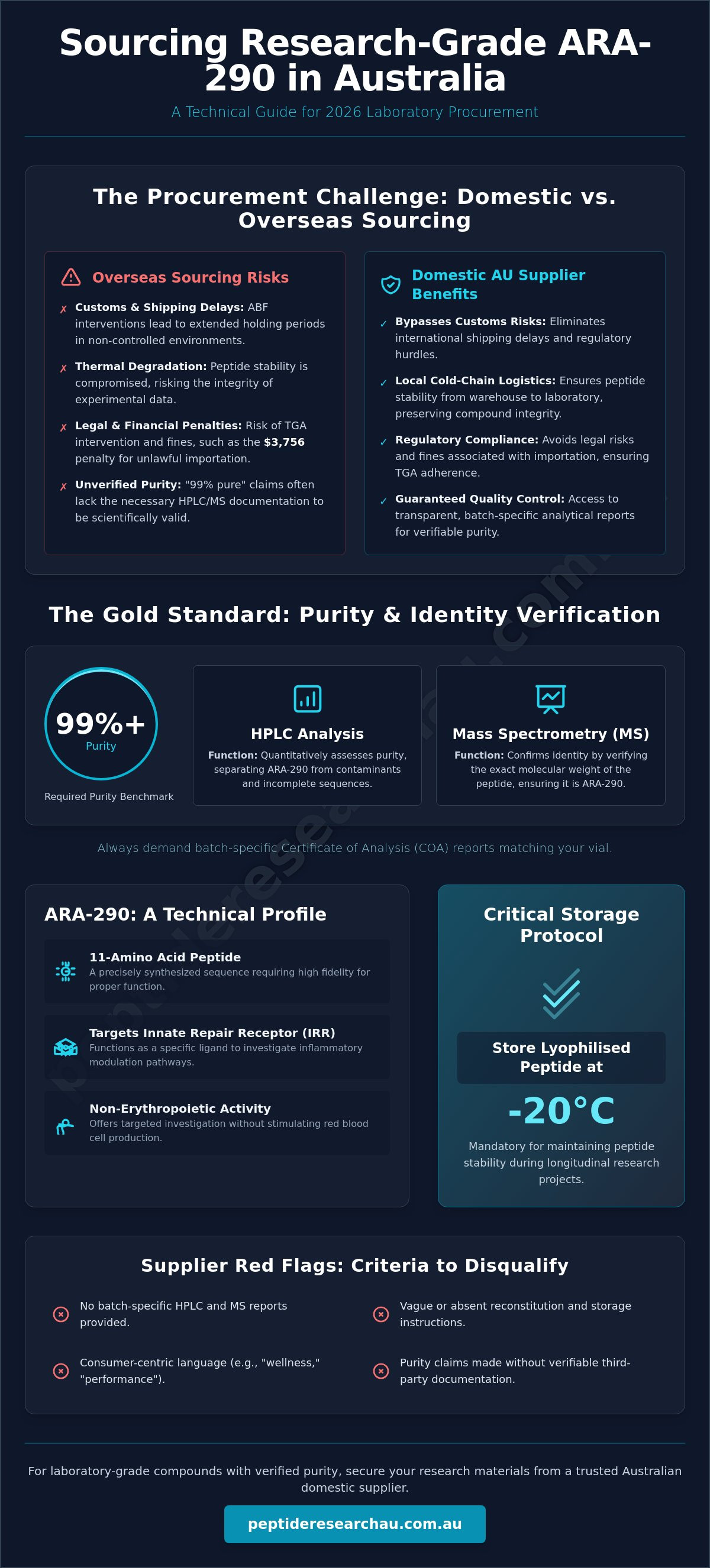
Procuring peptides from overseas vendors introduces variables that often compromise experimental data. Australian Border Force (ABF) interventions lead to extended delays in non-temperature-controlled environments. For sensitive compounds, even a few days of thermal exposure can initiate degradation. Domestic suppliers mitigate these risks by maintaining a localized cold chain. This ensures that the lyophilised powder remains stable from the laboratory warehouse to the researcher’s facility. Local sourcing also eliminates the legal vulnerabilities associated with international importation. In April 2024, the TGA issued fines of $3,756 for the unlawful importation of peptides, a trend that has only increased through 2026. Domestic procurement bypasses these risks and facilitates faster turnaround for time-sensitive laboratory projects.
Distinguishing Between Research and Clinical Grade
Laboratory-grade ARA-290 is defined by its purity and the transparency of its analytical data. In a research context, a purity benchmark of 99% or higher is standard. This ensures that observed biological effects are attributable to the peptide rather than synthesis contaminants. Generic peptides often lack this level of refinement. Researchers should identify specific red flags when evaluating an ara-290 peptide supplier au:
Absence of batch-specific reports: Suppliers should provide both HPLC and Mass Spectrometry data for every batch.
Consumer-centric marketing: Language targeting "wellness" or "performance" rather than professional study indicates a lack of scientific rigor.
Vague handling instructions: Professional suppliers provide detailed protocols for reconstitution and storage.
It's vital to clarify that ARA-290 is strictly for laboratory research purposes in Australia. High-purity batches ensure that the mechanism of the Innate Repair Receptor (IRR) can be studied without interference from by-products. By selecting a supplier that prioritizes chemical precision, researchers protect their methodology and contribute to the collective understanding of neuropathic modulation.
Quality Benchmarks: HPLC Testing and Purity Verification
Purity isn't merely a marketing metric; it's a fundamental requirement for scientific validity. ARA-290 is an 11-amino acid peptide that requires precise synthesis to interact correctly with the Innate Repair Receptor (IRR). Even minor deviations in the sequence or the presence of synthesis by-products can alter experimental outcomes. High-Performance Liquid Chromatography (HPLC) remains the non-negotiable standard for assessing these compounds. It provides a quantitative assessment of the primary peptide against secondary peaks representing truncated sequences or residual solvents. A professional ara-290 peptide supplier au must provide a clear chromatogram for every batch to ensure researchers aren't working with compromised material.
Mass Spectrometry (MS) serves as the necessary companion to HPLC. While HPLC determines purity, MS confirms identity by measuring the molecular weight of the compound. This ensures the peptide delivered is actually ARA-290 and not a different sequence with a similar refractive index. Independent, third-party testing is essential because in-house claims often lack the objectivity required for high-stakes research. When interpreting a Certificate of Analysis (COA), researchers should verify that the batch number on the report matches the vial. This level of transparency is critical when referencing data from a clinical trial for Diabetic Macular Oedema or other neuropathic studies where chemical precision is paramount.
Verification Standards for ARA-290
For high-level research, a purity target of 98% is the absolute minimum. Anything less introduces unknown variables into the study. Researchers must also monitor Trifluoroacetic acid (TFA) levels. TFA is a common salt used during peptide synthesis, but high concentrations can be cytotoxic to certain cell cultures, potentially skewing results in inflammatory modulation studies. Reliable suppliers often provide TFA-removal processes to ensure the compound is suitable for sensitive biological assays. Always insist on batch-specific data. Using "representative" samples is a significant red flag that suggests a lack of rigorous quality control.
Stability and Lyophilisation Quality
The physical state of the peptide is a direct indicator of its handling history. Lyophilisation, or freeze-drying, is the standard method for stabilizing ARA-290 for long-term storage. A high-quality vial should contain a uniform, white "cake" or powder. If the substance appears sticky, discoloured, or shrunk, it's likely been exposed to moisture or thermal stress. Vacuum sealing is equally important. It prevents oxidation and maintains the integrity of the lyophilised powder during transit. At Peptide Research AU, we emphasize these stability benchmarks to protect the integrity of your laboratory work. Ensuring the vial remains under vacuum until the moment of reconstitution is a simple but effective way to maintain the 99%+ purity standards required for modern research.
The Science of ARA-290: Mechanism of Action and Research Potential
ARA-290 represents a specialized class of research compounds designed to exploit the protective properties of erythropoietin (EPO) without its haematological side effects. As a non-erythropoietic 11-amino acid peptide, it's derived specifically from the B-helix of the EPO molecule. This structural modification is significant; it prevents the peptide from binding to the homodimeric EPO receptor responsible for red blood cell production. Consequently, researchers can study its tissue-protective effects without the risk of increased haematocrit or blood viscosity. Finding a high-quality ara-290 peptide supplier au is essential for laboratories investigating these pathways, as the chemical precision of the sequence determines its receptor affinity.
Targeting the Innate Repair Receptor (IRR)
The primary mechanism of ARA-290 involves its high affinity for the Innate Repair Receptor (IRR). This receptor is a heterocomplex formed by the erythropoietin receptor and the beta-common (CD131) receptor. Unlike standard EPO receptors, the IRR is typically dormant. It only becomes expressed on the cell surface during periods of metabolic stress, hypoxia, or tissue injury. When ARA-290 binds to this heterocomplex, it initiates a robust anti-inflammatory and anti-apoptotic response. This downstream signaling reduces the production of pro-inflammatory cytokines like TNF-alpha and IL-6. Laboratory models have shown that this interaction provides systemic tissue protection across various experimental organ systems, including the kidneys, heart, and peripheral nerves.
ARA-290 in Neuropathic Research
Much of the current interest for an ara-290 peptide supplier au stems from the compound's potential in neuropathic research. Small Fibre Neuropathy (SFN) and sarcoidosis-related pain are two primary areas of investigation. SFN is characterized by the degeneration of small, unmyelinated nerve fibers, leading to chronic pain and autonomic dysfunction. Leiden University research on ARA-290 has extensively documented how the peptide modulates pain thresholds and may encourage the regeneration of nerve fiber density. These studies suggest that by activating the IRR, ARA-290 helps restore the balance between pro-inflammatory and anti-inflammatory signals in the microenvironment of the nerve.
Researchers often compare these neuroprotective pathways with other regenerative compounds. While ARA-290 focuses on the IRR heterocomplex, peptides like GHK-Cu are studied for their copper-binding properties and extracellular matrix remodeling. For those conducting comparative tissue repair studies, our GHK-Cu Peptide: A Comprehensive Research Guide for 2026 offers a detailed technical overview. Understanding these distinct mechanisms allows scientists to select the most appropriate compound for their specific experimental objectives, whether they're focusing on wound healing, metabolic challenges, or chronic inflammatory modulation.
Procurement and Handling: Reconstitution and Storage Protocols
The integrity of a research study depends heavily on the post-procurement handling of the compound. Once a laboratory selects a reliable ara-290 peptide supplier au, the focus shifts to maintaining the stability of the lyophilised powder. Upon arrival, researchers must conduct a visual inspection of the vial to ensure the peptide cake is intact and free from discolouration. Any signs of moisture or "melting" suggest a breach in the cold chain or vacuum seal. Proper storage is the next critical step. For long-term preservation, lyophilised ARA-290 should be stored at -20°C, where it remains stable for up to 24 months. If the compound is intended for use within a 1-month window, refrigeration at 4°C is acceptable. Researchers must avoid frequent freeze-thaw cycles, as these cause mechanical stress on the peptide sequence, leading to irreversible degradation.
Reconstitution Protocol for Researchers
Reconstitution requires a precise approach to maintain the structural integrity of the 11-amino acid sequence. Sterile laboratory diluents, such as bacteriostatic water or 0.9% sodium chloride, are mandatory. When calculating the required volume for specific concentrations, researchers should aim for a solution that facilitates accurate pipetting. For example, adding 2ml of diluent to a 5mg vial yields a concentration of 2.5mg/ml. The diluent should be aimed at the glass wall of the vial rather than directly onto the powder to minimize impact. A "gentle swirl" technique is essential; the vial should be rotated slowly until the solution is clear. Mechanical agitation or vigorous shaking must be avoided, as it can denature the peptide. For those new to these procedures, our guide on What are Peptides? A Comprehensive Guide to Research and Science in 2026 provides foundational handling principles for various sequences.
Maintaining the Cold Chain in Australia
The Australian climate presents unique challenges for peptide stability. During the summer months, ambient temperatures can exceed 35°C, which is sufficient to initiate the degradation of sensitive sequences if they aren't properly protected. A domestic ara-290 peptide supplier au mitigates this risk by using insulated packaging and medical-grade gel packs for all shipments. This localized logistics chain ensures the product spends minimal time in transit compared to international orders. Upon receipt, researchers should verify the vacuum integrity of the vial. When the needle of the syringe penetrates the stopper, the vacuum should automatically pull the diluent into the vial. A lack of suction indicates a compromised seal, which may have exposed the peptide to atmospheric oxygen and moisture. To ensure your laboratory receives compounds that have been managed under these strict thermal protocols, source your materials through Peptide Research AU.
Peptide Research AU: Your Trusted Partner for Laboratory-Grade Compounds
Peptide Research AU operates with a singular focus on providing high-fidelity research compounds to the Australian scientific community. Our 99%+ purity commitment for every batch of ARA-290 ensures that experimental variables remain controlled and outcomes are reproducible. As a dedicated ara-290 peptide supplier au, we recognize that laboratory success depends on the chemical precision of the sequences provided. We bridge the gap between complex synthesis and practical laboratory application by maintaining rigorous quality benchmarks. This commitment extends to providing the comprehensive data required for peer-reviewed studies and institutional documentation. Accuracy is our primary standard.
Why Choose Peptide Research AU?
We implement a multi-stage verification process for every research compound in our inventory. This includes batch-specific HPLC and Mass Spectrometry testing to confirm both the purity and the identity of the peptide sequence. Australian researchers face unique challenges in procurement, from regulatory navigation to the risks of international shipping delays. Our team provides expert support to ensure your laboratory receives materials that meet global standards. We prioritize transparency, ensuring that every Certificate of Analysis is accessible and batch-accurate. For a detailed overview of our operational philosophy, refer to Peptides Australia: The Researcher’s Guide to Quality, Sourcing, and Standards in 2026.
Streamlining Your Laboratory Workflow
Efficiency is paramount in modern research environments. We provide a centralized source for bulk research compounds and essential laboratory diluents, including bacteriostatic water. By maintaining domestic Australian warehousing, we eliminate the volatility of international logistics and minimize thermal exposure during transit. Researchers don't have to navigate international delays when sourcing locally. Every shipment utilizes secure, temperature-controlled packaging to protect the integrity of the lyophilised powder. This localized approach allows for rapid delivery across all states, ensuring your project timelines remain on schedule. By removing the uncertainties of global supply chains, we allow researchers to focus on the data rather than the logistics of procurement. You can view our ARA-290 Research Collection to secure high-purity materials for your next neuropathic study.
Advancing Neuropathic Research through Chemical Precision
The path to reproducible neuropathic research in 2026 relies on the elimination of chemical and logistical variables. By prioritizing domestic procurement, laboratories bypass the instability of international shipping and the legal complexities of cross-border transit. Verifying 99%+ purity through batch-specific HPLC and MS testing remains the only way to ensure that experimental outcomes result from the ARA-290 sequence rather than synthesis contaminants. Adhering to strict storage and reconstitution protocols further protects the integrity of the compound for longitudinal study. It's essential to work with a provider that understands these technical requirements.
Selecting a dedicated ara-290 peptide supplier au ensures that your laboratory receives materials managed under these rigorous standards. We provide 99%+ purity verified by HPLC, domestic Australian shipping with cold-chain options, and secure laboratory-grade packaging to support your methodology. High-quality compounds are the foundation of scientific discovery and improved wellbeing.
Order Laboratory-Grade ARA-290 for Your Research and secure the materials necessary for your next phase of study.
Frequently Asked Questions
Is ARA-290 legal for research in Australia?
ARA-290 is regulated as a therapeutic good under the Therapeutic Goods Act 1989. While often marketed for laboratory use, it's classified as a prescription-only medicine or poison in various states. Possession without a valid prescription is an offense and carries significant penalties, including fines and potential imprisonment. The common "for research use only" disclaimer doesn't exempt these compounds from Australian therapeutic goods regulations.
What is the recommended storage temperature for ARA-290?
Lyophilised ARA-290 should be stored at -20°C for long-term stability, where it remains viable for up to 24 months. For short-term laboratory use within a 30-day window, refrigeration at 4°C is acceptable. It's critical to minimize light exposure and avoid frequent freeze-thaw cycles. These fluctuations can compromise the 11-amino acid sequence and lead to significant peptide degradation over time.
How do I reconstitute ARA-290 for laboratory use?
Reconstitution involves adding a sterile laboratory diluent, such as bacteriostatic water, directly to the lyophilised powder. The liquid should be aimed at the side of the vial to prevent direct impact on the peptide cake. Use a gentle swirling motion until the solution is clear and transparent. Avoid mechanical agitation or vigorous shaking, as these actions can denature the compound and invalidate experimental data.
What is the difference between ARA-290 and standard Erythropoietin (EPO)?
ARA-290 is a non-erythropoietic derivative of the EPO molecule, specifically targeting the Innate Repair Receptor (IRR). Unlike standard Erythropoietin, it doesn't bind to the homodimeric EPO receptor. This means it doesn't trigger red blood cell production or increase haematocrit levels. Researchers use it to study tissue protection and inflammatory modulation without the haematological side effects associated with the parent EPO molecule.
Why is third-party HPLC testing important for ARA-290?
Third-party HPLC testing provides an objective verification of purity and chemical identity. It ensures that the compound contains at least 99% of the target sequence and identifies any residual solvents or synthesis by-products. When selecting an ara-290 peptide supplier au, batch-specific reports are essential. These documents confirm that the material meets the rigorous standards required for peer-reviewed scientific research and reproducible results.
How long does domestic shipping take for peptides in Australia?
Domestic shipping within Australia typically takes between one and three business days, depending on the laboratory's location. Choosing a local ara-290 peptide supplier au significantly reduces the time materials spend in transit compared to international orders. This rapid turnaround is vital for maintaining the cold chain and preventing thermal degradation. Reliable providers use express, temperature-controlled logistics to ensure the vials remain stable during transit.
Can ARA-290 be used for human consumption?
No, ARA-290 is strictly for laboratory research and professional study purposes only. It's not approved for human consumption, clinical use, or as a finished consumer product in Australia. The TGA has issued multiple warnings regarding the health risks of unapproved peptides purchased online. These compounds may not be sterile, and their quality is often unverified by official health authorities, posing significant safety risks.
What diluent should be used with ARA-290?
Bacteriostatic water is the preferred diluent for reconstituting ARA-290 in a laboratory setting. This solution contains 0.9% benzyl alcohol, which inhibits bacterial growth and extends the shelf life of the reconstituted peptide. Alternatively, sterile 0.9% sodium chloride (saline) can be used for immediate applications. Using non-sterile or inappropriate diluents can cause the peptide to precipitate or degrade, which compromises the integrity of the research.


Comments