
Retatrutide Research Australia: A Technical Guide to the Triple-Agonist Peptide (2026)
- peptideresearchau
- 4 days ago
- 11 min read

The transition from dual-agonist research to triple-agonist synergy marks the most significant shift in peptide science since the inception of GLP-1. For investigators conducting retatrutide research Australia, the move from dual-pathway models to the glucagon-integrated mechanism requires advanced technical precision. You likely recognize that while the potential for metabolic study is immense, the June 2026 TGA compliance priorities have made sourcing and handling these unapproved compounds more complex than in previous years.
This guide provides a rigorous scientific overview of the GIP/GLP-1/Glucagon synergy and the current Australian regulatory landscape. We promise a comprehensive analysis of the "metabolic triad" and the precise laboratory standards needed for reliable data. You'll gain a deep understanding of the receptor interactions, followed by a preview of our detailed protocols for reconstitution and a breakdown of the 2026 Australian research regulations to ensure your laboratory remains compliant.
Table of Contents
Retatrutide: The Triple-Agonist Mechanism in Metabolic Research
Retatrutide represents the current frontier of peptide engineering in 2026. It's a unimolecular peptide designed to target three distinct metabolic pathways simultaneously. While previous generations focused on single or dual receptor activation, Retatrutide (LY-3437943) integrates Glucagon-Like Peptide-1 (GLP-1), Glucose-dependent Insulinotropic Polypeptide (GIP), and Glucagon receptor agonism into a single molecular structure. This design facilitates a more comprehensive approach to metabolic research than its predecessors. Investigators focusing on retatrutide research Australia prioritize the compound's ability to modulate metabolic rate, improve glycemic control, and facilitate significant adiposity reduction in controlled laboratory settings.
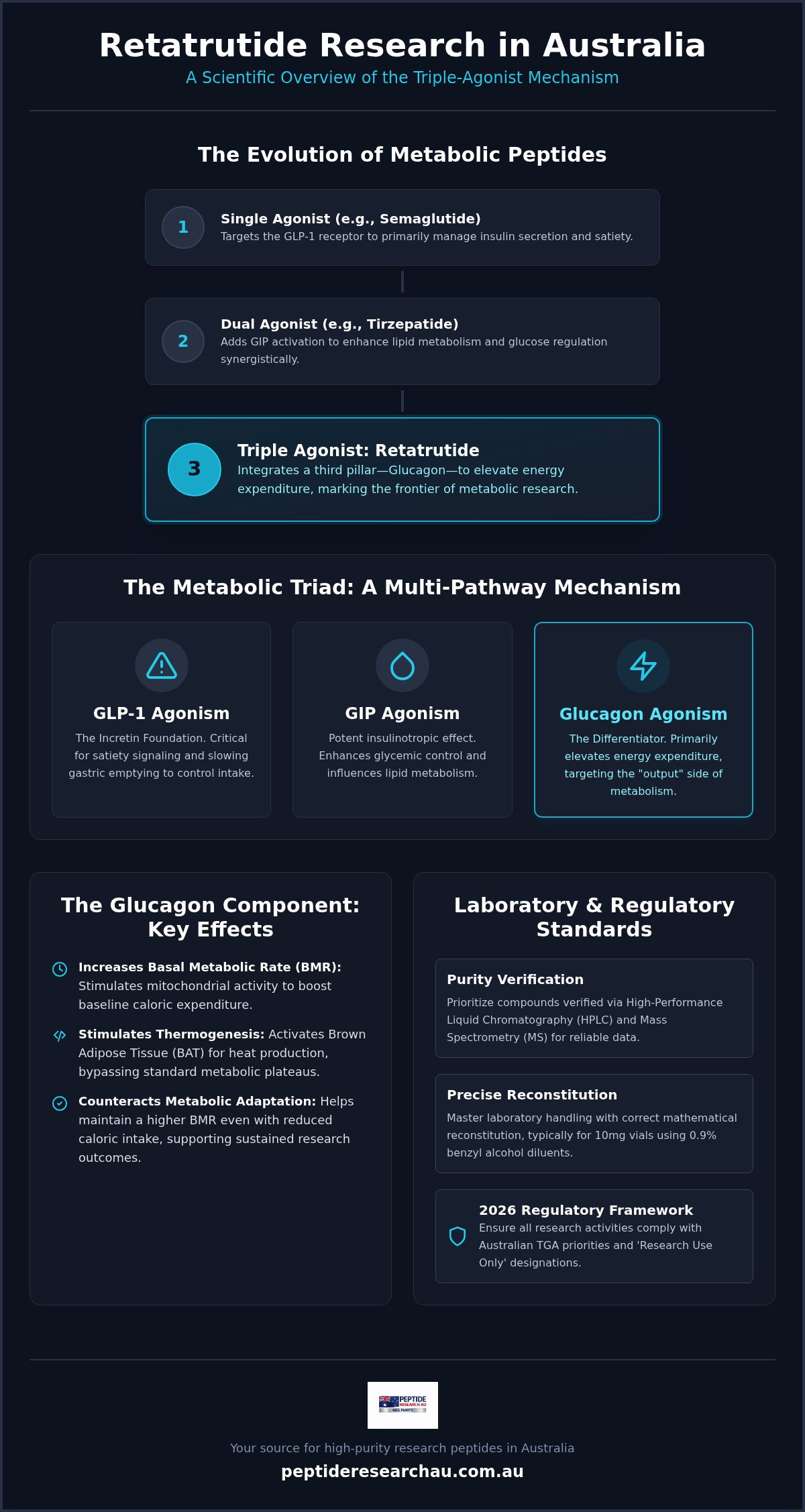
The evolution of these compounds shows a clear trajectory toward increased complexity. Research began with single agonists like Semaglutide, which targeted the GLP-1 receptor to manage insulin secretion and satiety. The subsequent development of dual agonists like Tirzepatide introduced GIP activation, which enhanced lipid metabolism and glucose regulation. Retatrutide completes this progression by adding a third pillar: glucagon agonism. This chemical structure is currently the most sophisticated tool available for studying multi-pathway endocrine responses.
GLP-1 and GIP: The Incretin Foundation
The incretin system provides the fundamental framework for modern metabolic studies. GLP-1 remains critical due to its established effects on satiety and the slowing of gastric emptying. GIP plays a distinct role by influencing lipid metabolism and providing a potent insulinotropic effect in a glucose-dependent manner. Dual agonism became the previous gold standard because it offered a synergistic approach to glycemic control. However, these dual-pathway models often reached a plateau in research regarding basal metabolic rate and non-shivering thermogenesis, leaving a gap that triple-agonists now fill.
The Glucagon Receptor: The Third Pillar
The inclusion of the glucagon receptor distinguishes Retatrutide from all previous research compounds. Glucagon typically increases hepatic glucose production; however, when balanced with GLP-1 and GIP signals, it primarily serves to elevate energy expenditure. This mechanism targets brown adipose tissue and enhances the basal metabolic rate, addressing the expenditure side of the metabolic equation. The synergy between these three signals creates a balanced environment where insulinotropic effects counteract potential glucagon-induced hyperglycemia. Within the context of retatrutide research Australia, this triple-agonist synergy is defined as a 'metabolic triad' for research, providing a multi-dimensional tool for investigating complex endocrine interactions.
The Glucagon Component: Enhancing Energy Expenditure and Thermogenesis
The glucagon receptor serves as the primary driver for increased energy expenditure in triple-agonist models. While GLP-1 and GIP focus on the intake side of the metabolic equation, glucagon targets the output. In laboratory studies, glucagon agonism stimulates the basal metabolic rate (BMR) by promoting mitochondrial activity. This direct stimulation allows researchers to observe shifts in energy balance that aren't achievable through incretin-only pathways. For those involved in retatrutide research Australia, understanding this specific receptor interaction is vital for interpreting data on caloric expenditure.
Non-shivering thermogenesis occurs primarily in brown adipose tissue (BAT). Glucagon activates specific signaling pathways that lead to heat production rather than ATP storage. This process is essential for understanding how Retatrutide might bypass the standard metabolic plateaus seen in chronic caloric restriction studies. According to data from Australian Retatrutide Clinical Trials, these thermogenic properties represent a key area of investigation for long-term metabolic stability. It's a mechanism that sets the triple-agonist apart from earlier dual-agonist compounds.
Metabolic adaptation remains a significant hurdle in obesity research. When subjects reduce caloric intake, the body typically lowers its energy expenditure to compensate, which often halts progress. Retatrutide's glucagon component appears to counteract this adaptation. By maintaining a higher BMR despite reduced intake, the compound provides a unique model for studying sustained adiposity reduction. Researchers can find high-quality laboratory-grade research compounds and diluents to support these complex metabolic studies.
Thermogenesis and Adipose Tissue Research
Interaction with mitochondrial uncoupling protein 1 (UCP1) is a critical focus in adipose tissue research. Glucagon agonism promotes the "browning" of white adipose tissue, effectively transforming energy-storing cells into energy-burning ones. This phenotypic shift enhances the subject's ability to dissipate energy as heat. Studies on retatrutide research Australia often examine how this UCP1 upregulation contributes to metabolic stability over extended periods, providing insights into cellular energy management.
Hepatic Research and Glucagon Agonism
The liver is a major site of glucagon receptor expression. Agonism at this site promotes lipid oxidation, which directly reduces hepatic fat accumulation. This makes Retatrutide a significant subject for metabolic dysfunction-associated steatotic liver disease (MASLD) research. It's vital to differentiate these direct hepatic effects from the indirect systemic improvements caused by GLP-1 and GIP. Glucagon's role is localized and potent, facilitating a reduction in intrahepatic triglycerides that surpasses the capabilities of dual-agonist models.
Sourcing Research-Grade Retatrutide in Australia: Quality and Purity Standards
Precision in retatrutide research Australia depends entirely on the chemical integrity of the compound. Researchers must verify that their materials meet strict laboratory standards before beginning any metabolic study. High-Performance Liquid Chromatography (HPLC) is the gold standard for this verification. It separates the peptide from any residual solvents or synthesis byproducts to determine a precise purity percentage. Without HPLC data, an investigator can't be certain of the dosage or the absence of contaminants that might skew metabolic data. Purity defines the reliability of the entire study.
Mass Spectrometry (MS) serves as the necessary companion to HPLC. While HPLC measures purity, MS confirms the molecular identity of the compound. It ensures the sequence of amino acids matches the specific triple-agonist structure of Retatrutide. Sourcing non-laboratory grade material introduces variables that can invalidate months of data. Substandard peptides often contain truncated sequences or incorrect salts that alter receptor binding affinity. These impurities can lead to unpredictable receptor activation or localized inflammatory responses in laboratory models.
Domestic sourcing offers a significant advantage over international procurement. International shipments face high risks of customs seizure and prolonged exposure to uncontrolled temperatures. Domestic shipping within Australia minimizes these transit times and avoids the legal complexities of importing unapproved peptides. Reliable domestic providers ensure the chain of custody remains secure from the laboratory to the researcher. This proximity reduces the risk of peptide degradation caused by the extreme heat often encountered during international transit.
Understanding Certificates of Analysis (COA)
A COA is the primary document for verifying batch quality. For 2026 compliance, researchers should look for purity thresholds of 98% or higher. Lower percentages suggest an unstable synthesis or inadequate purification. It's critical to cross-reference batch numbers and testing dates to ensure the data is current and specific to the vial in hand. You can find more details on evaluating these metrics in Peptides Australia: The Researcher’s Guide to Quality. Reliable documentation should always be accessible for laboratory auditing purposes.
Stability and Lyophilisation
Retatrutide is typically supplied as a lyophilised powder to maintain structural stability. This freeze-drying process removes water while the peptide is frozen, preventing the hydrolysis that occurs in aqueous solutions. Lyophilisation ensures peptide integrity by removing moisture that facilitates degradation. This state allows the compound to remain stable during domestic transit across Australia's diverse climates. Once received, the powder should be stored at -20°C to preserve its bioactive properties until the point of reconstitution.
Laboratory Protocols: Reconstitution, Storage, and Handling
Precision in retatrutide research Australia requires strict adherence to standardized laboratory protocols. Reconstitution is the most critical step in maintaining peptide bioactivity. Researchers must use 0.9% Benzyl Alcohol, commonly known as Bacteriostatic Water, rather than standard sterile water. The benzyl alcohol acts as a preservative, inhibiting bacterial growth for up to 28 days once the vial is punctured. Using sterile water without a bacteriostatic agent increases the risk of contamination and rapid peptide degradation in multi-dose research scenarios. This choice of diluent is a fundamental requirement for maintaining the integrity of the triple-agonist structure over the duration of a study.
Physical handling during the mixing process determines the final quality of the solution. Peptides are fragile molecules held together by delicate bonds. Vigorous agitation or shaking can cause "shearing," which physically breaks these bonds and renders the compound inactive. The correct technique involves directing the diluent down the side of the glass vial, avoiding direct impact on the powder. This should be followed by gentle swirling until the lyophilised powder is completely dissolved. Never shake the vial. Any foam formation indicates that the peptide has been handled too aggressively, which may compromise the experimental results.
Reconstitution Math for Laboratory Accuracy
Accuracy in micro-dosage studies depends on clear mathematical breakdowns. For a standard 10mg (10,000mcg) vial, adding 2mL of diluent results in a concentration of 5,000mcg per mL. Using standard insulin syringes for measurement allows for high-precision research. For example, 10 units on a U-100 syringe would equate to 500mcg of the compound. Understanding What is Bacteriostatic Water? and its role in these calculations is fundamental for any investigator. To ensure your study uses high-quality materials, you can source laboratory diluents and research compounds from domestic providers who understand these technical requirements.
Optimal Storage Conditions
Temperature regulation is the primary factor in long-term peptide stability. Lyophilised powder should be stored in a freezer at -20°C to -80°C to prevent any degradation before use. Once reconstituted, the solution must be kept in a refrigerator between 2°C and 8°C. Light exposure also accelerates the breakdown of peptide chains; therefore, vials should be stored in their original boxes or amber containers. Maintaining these conditions ensures that retatrutide research Australia remains consistent across all trial phases, providing reliable data for metabolic and thermogenic analysis.
The Regulatory Framework for Peptide Research in Australia (2026)
In 2026, the regulatory environment for retatrutide research Australia remains strictly defined by the Therapeutic Goods Administration (TGA). Retatrutide is currently classified as an unapproved peptide and isn't listed on the Australian Register of Therapeutic Goods (ARTG). This means it hasn't been evaluated for safety, quality, or effectiveness in human therapeutic applications. Researchers must operate within the "Research Use Only" (RUO) designation. This classification isn't a mere label; it's a legal framework that restricts the supply and use of the compound to legitimate laboratory settings. Compliance requires a clear separation between experimental study and therapeutic practice.
Ethical considerations are paramount for any independent research project. Investigators are responsible for ensuring that laboratory-grade compounds are utilized solely for scientific inquiry. This involves maintaining detailed logs of compound usage and ensuring that all handling protocols meet institutional safety standards. Diverting research chemicals for non-scientific purposes violates Australian regulatory guidelines and carries significant legal risks. Maintaining the integrity of the scientific process is the primary responsibility of every laboratory conducting retatrutide research Australia.
Sport Integrity Australia and the World Anti-Doping Agency (WADA) have also maintained a firm stance in 2026. Retatrutide is prohibited in competitive sports under the S2 category, which covers Peptide Hormones, Growth Factors, and Related Substances. This prohibition applies at all times, both in and out of competition. Researchers studying these compounds in relation to physical performance must be aware of these restrictions to prevent any accidental violations within athletic populations. The focus remains on the biochemical and metabolic properties of the peptide rather than its application in human performance.
TGA and Therapeutic Goods Act Compliance
The Therapeutic Goods Act provides the legal basis for distinguishing between research chemicals and therapeutic goods. Because Retatrutide isn't on the ARTG, it cannot be legally advertised or supplied for human consumption. Laboratories must ensure their sourcing and handling protocols reflect this distinction. Compliance involves keeping rigorous records of batch numbers, certificates of analysis, and disposal procedures. These measures protect the researcher and ensure the study remains within the bounds of Australian law. It's the laboratory's responsibility to stay updated on TGA compliance priorities, which were expanded in June 2026 to include unapproved peptides.
The 2026 Clinical Trial Landscape (ANZCTR)
The Australian New Zealand Clinical Trials Registry (ANZCTR) currently tracks several high-level Phase III trials involving Retatrutide. These legitimate clinical studies focus on obesity management and cardiovascular health. While independent laboratory research is distinct from these trials, the emerging clinical data is invaluable. It allows researchers to refine their hypotheses regarding receptor synergy and metabolic outcomes. For a technical deep dive into the molecule's design, see Retatrutide: A Comprehensive Guide to the Triple Agonist. This synergy between clinical findings and laboratory precision continues to drive the field forward.
Advancing Metabolic Science with Precision
The transition from dual-agonist research to the triple-agonist synergy of Retatrutide represents a fundamental shift in metabolic study. Successful retatrutide research Australia depends on your ability to maintain chemical stability through rigorous reconstitution and storage protocols. By prioritizing compounds verified by independent HPLC and MS testing, you ensure the data collected remains reliable and reproducible. The inclusion of the glucagon pathway offers unprecedented opportunities to study energy expenditure and thermogenesis within the current 2026 regulatory framework.
Adhering to established "Research Use Only" protocols ensures your work remains compliant while pushing the boundaries of endocrine research. You don't want to compromise months of data with substandard materials or unstable compounds. You can Source Laboratory-Grade Retatrutide and Research Supplies that feature independent third-party batch testing and domestic Australian shipping to ensure stability. These laboratory-grade purity standards provide the foundation your study needs for accurate results. We're committed to supporting your contribution to the evolving landscape of Australian peptide science.
Frequently Asked Questions
Is Retatrutide legal for research in Australia in 2026?
Yes, Retatrutide is legal for laboratory acquisition when designated for research use only. It isn't approved for therapeutic use or human consumption. Investigators conducting retatrutide research Australia must ensure their work complies with the 2026 TGA priorities regarding the handling of unapproved peptides in scientific settings.
What is the difference between Retatrutide and Tirzepatide?
The primary difference lies in the number of receptors activated by the peptide. Retatrutide is a triple-agonist targeting GLP-1, GIP, and Glucagon receptors. Tirzepatide is a dual-agonist that only targets GLP-1 and GIP. The addition of the glucagon receptor in Retatrutide allows for the study of increased energy expenditure and thermogenesis.
How should Retatrutide be stored in a laboratory setting?
Proper storage depends on the peptide's current state. Lyophilized powder should be kept in a freezer between -20°C and -80°C for long-term stability. Once you've reconstituted the compound, store it in a refrigerator at 2°C to 8°C and protect it from light exposure to prevent the degradation of the amino acid chains.
What diluent is recommended for Retatrutide reconstitution?
0.9% Benzyl Alcohol, commonly known as Bacteriostatic Water, is the recommended diluent for reconstitution. This specific solution contains a preservative that inhibits bacterial growth for up to 28 days. Sterile water lacks this preservative, making it unsuitable for multi-dose research vials where repeated access is required over several weeks.
Does Retatrutide require TGA approval for laboratory study?
No, TGA approval for the Australian Register of Therapeutic Goods (ARTG) isn't required for laboratory-grade research chemicals. However, these compounds must be strictly used for scientific study and cannot be used for medical treatment. Researchers are responsible for ensuring the compound isn't supplied or advertised for human therapeutic use.
Is Retatrutide prohibited by Sport Integrity Australia?
Yes, Retatrutide is prohibited by Sport Integrity Australia and WADA at all times. It's classified under the S2 category for Peptide Hormones and Growth Factors. This prohibition applies to both in-competition and out-of-competition testing, meaning it cannot be used by athletes under any circumstances.
Can Retatrutide be used for human consumption in Australia?
No, Retatrutide cannot be used for human consumption in Australia outside of formal clinical trials. The TGA has explicitly warned that labeling a product "for research use only" doesn't permit its supply for human use. It remains an unapproved peptide that hasn't been evaluated for safety or quality in human subjects.
How do I verify the purity of a Retatrutide research compound?
You verify purity through High-Performance Liquid Chromatography (HPLC) and Mass Spectrometry (MS). A valid Certificate of Analysis (COA) should show a purity threshold of 98% or higher and confirm the molecular weight. This documentation is essential for retatrutide research Australia to ensure experimental accuracy and compound identity.


Comments